 By admin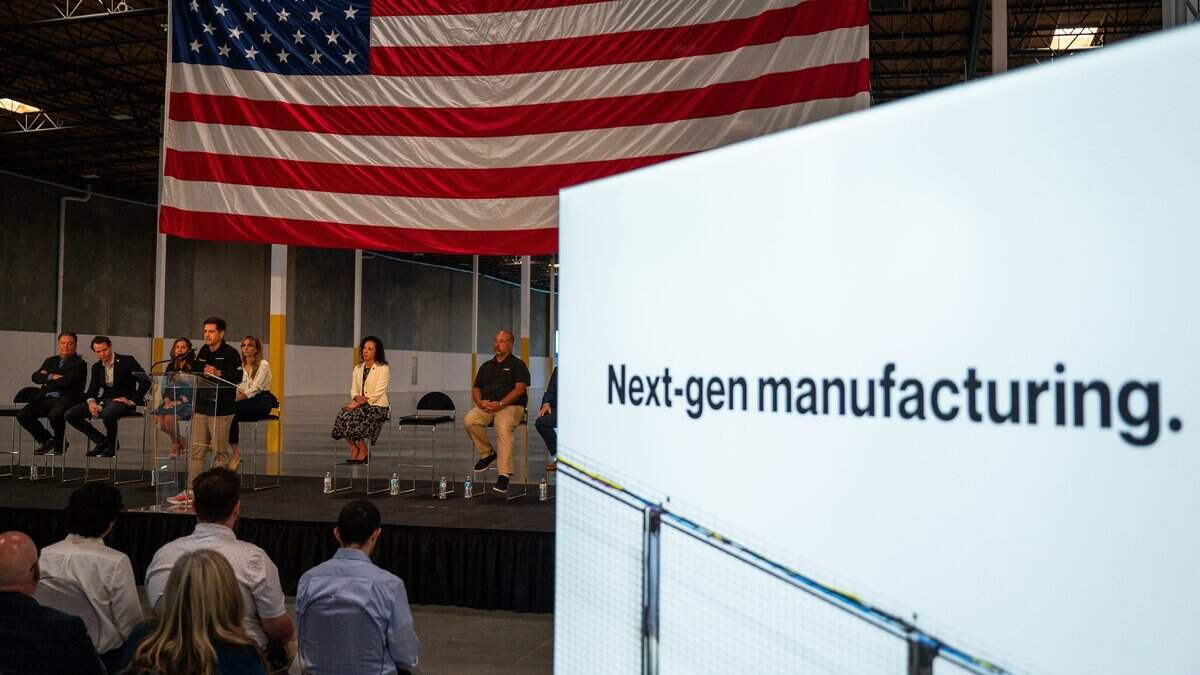
A Bay Area energy firm plans to open a 183,000-square-foot battery manufacturing site near Sacramento’s airport and hire hundreds of local workers, the company announced Wednesday.
Read more Sculpture installed at new home of Elk Grove Library honors book-lending pioneer
Leaders of Burlingame-based Peak Energy credited the move to the dramatic increase in demand for energy storage, driven in part by the proliferation of data centers. And they argued that their batteries can offer utilities a cheaper, safer means of storing energy generated by renewable sources like wind and solar farms.
Peak Energy’s batteries, which are roughly the size of shipping containers, are primarily used by data center operators and utilities. The company aims to start manufacturing in Sacramento County in the first quarter of 2027.
“The key mission for the company is to be able to deploy the lowest-cost electron in the world,” said President and Co-founder Cameron Dales.
The company said the facility represented a $71 million investment and would employ 239 people.
“It’s a big mission,” CEO and Co-founder Landon Mossburg told attendees at a launch event Wednesday. “Energy is getting more expensive.”
Sacramento competed with other sites across the U.S. for the manufacturing site — including Texas, said Greater Sacramento Economic Council CEO Barry Broome. Executives said Sacramento appealed to them on its workforce, proximity to the company’s Bay Area engineers, and for California’s renewable energy infrastructure.
Peak was awarded a $10.5 million tax credit through CalCompetes, a state program. And the Sacramento Municipal Utility District will help the company test its batteries on the local grid with a small pilot program, said Lora Anguay, the utility’s incoming CEO.
“A lot of time we’ve got the sun shining in the middle of the day when people are at work,” Anguay said. “We also have a lot of wind energy late in the evenings when people are sleeping… Battery storage helps us store that renewable energy, and put it back onto the grid during times of use.”
Read more Sacramento Republic FC secures key home win during rare World Cup night off
Renewable energy, unlike natural gas, is a “use it or lose it” proposition, said Sacramento City Councilmember Eric Guerra, who is on the California Air Resources Board for the Sacramento Air Basin, and previously chaired the Sacramento Metropolitan Air Quality Management District. Batteries those made by Peak Energy’s can help utilities store that electricity.
“Old-school battery technology” requires refrigeration, Mossburg said in an interview. Peak Energy’s batteries don’t. That distinction, he said, represented an “incredible engineering problem.” The batteries must be capable of surviving 22 to 25 years in climates as diverse as Arizona and Alaska.
Peak makes sodium ion battery cells, and today that type is about 20% more expensive than the more typical lithium ion batteries, Dales said. But the cost is declining, and he believes they will ultimately become far cheaper.
With traditional batteries, “you’re basically building a giant air conditioner, or a giant refrigerator, around your battery,” Dales said.
“With the right building block — sodium ion batteries — you don’t need that complexity, which ultimately drives costs way down,” he said.
Mossburg previously spent five years at Tesla, first in supply chain, then as an engineering director. He then worked for the Swedish battery firm Northvolt, most recently as the company’s North American president.
He co-founded Peak Energy in 2023, and he said the company has more than $1 billion in customer contracts. Peak is shipping some orders out of Burlingame, but next year has to deliver about 10 times the amount it will in 2026, and the following year it will grow eightfold again.
Read more Homeless encampment lawsuit, mosquito experiment. Sacramento’s top stories July 8
“We needed to be online and scale up really quickly,” he said.
This story was originally published July 8, 2026 at 1:13 PM.