 By admin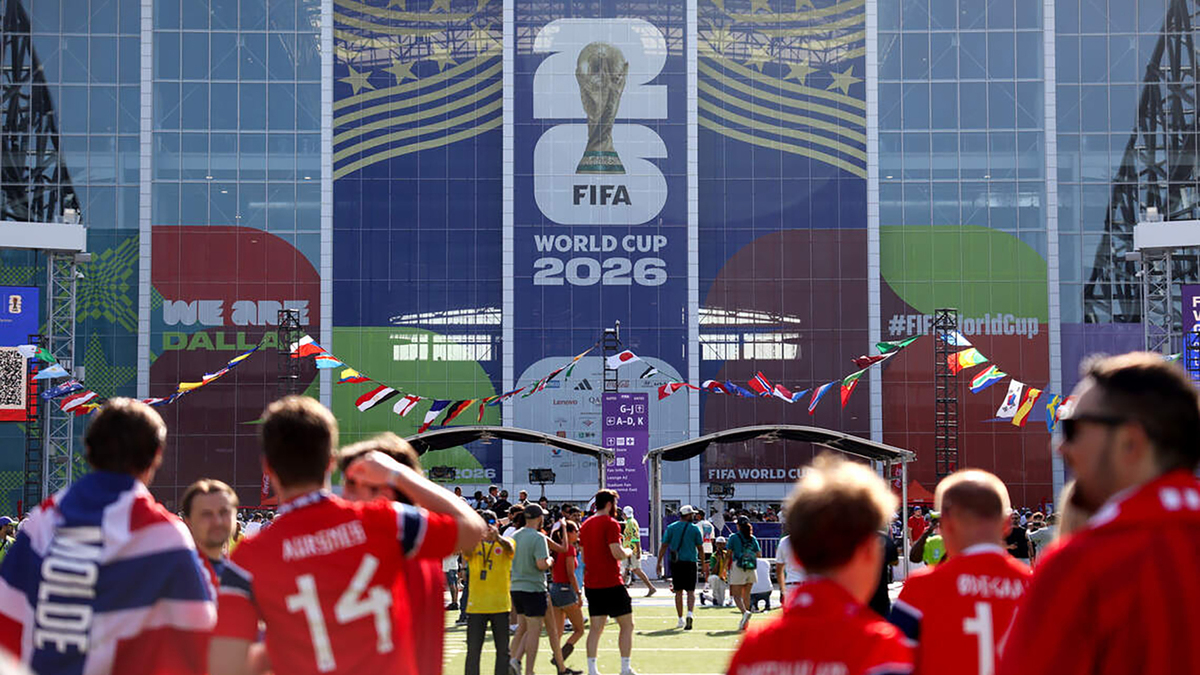
DALLAS – After Dallas-Fort Worth earned rave reviews for successfully hosting nine World Cup matches, one lingering question remains: Why didn’t AT&T Stadium get the final?
Read more Troy Renck: If Broncos fix Sean Payton’s offense on early downs, they’ll reach the Super Bowl
On Sunday, a few billion people globally will watch the Spain-Argentina final played inside MetLife Stadium, which was awarded the game in February 2024, much to the disappointment of D-FW World Cup organizers.
What has played out since has only amplified the question of whether FIFA got it right. Climate-controlled AT&T Stadium, which hosted more matches (nine) than any of the 16 North American cities, received praise for its fan experience, ingress and egress and the quality of the pitch.
Meantime, outdoor MetLife Stadium, which will host its eighth match Sunday, has been criticized for a variety of issues, most notably the heat (which it can’t control), stadium ambience and the grass.
Asked if he was disappointed that Dallas Stadium didn’t get the final, Chad Estis, the Dallas Cowboys’ executive vice president of business operations, told The Dallas Morning News: “Yes. Yes. And always will be. I’m biased but just felt we were best suited for it.”
Estis stressed he’s not complaining, referring to a buffet of World Cup attractions on display at Dallas Stadium, the venue’s name for the tournament. D-FW hosted a cavalcade of stars – Lionel Messi (twice), Kylian Mbappé, Cristiano Ronaldo, Erling Haaland, Lamine Yamal (also twice) – and memorable fan bases like the Netherlands and Japan. Plus, it hosted the semifinal between France and Spain.
But Estis said he never got a “satisfactory” explanation why New Jersey won the final.
“My own personal opinion is there was just an element of New York’s the big city that everybody in the world knows,” Estis said.
When posed the same question, Monica Paul, the president of the North Texas World Cup Organizing Committee, instead chose to focus on the many highlights of the past several weeks and the efforts of countless D-FW leaders and organizers to stage such a global event.
But she addressed the issue at length during a World Cup symposium in April at The Star in Frisco.
“I think we were positioned well for the final,” Paul said during the panel. “You’ve got to look yourself in the mirror at some point and say, ‘Did I leave it all out on the table? Did we do everything we could from a stadium standpoint, a Cowboys standpoint, a city and region standpoint?’ I think we did.
“I think we had the stadium, what they’re getting with the experience, and from a financial standpoint, that was covered as well.”
In the lead-up to the announcement of the site location for the final, Paul said, there were two articles that raised their hopes and stirred their excitement about D-FW landing the game, which only made the letdown that much more pronounced when the site was revealed.
She said D-FW was still battling “international perception” of New York being the epicenter of the United States.
Read more How Spain ‘recaptured the spirit of 2010’ in its run to the World Cup final
“I think it was the perception of New York being more of the capital of the United States, basically, of business in the United States and maybe media as well,” she said. “And I think the president of FIFA makes that decision, so I can’t battle that.”
Years ago, New York City-area stakeholders laid it on thick in their attempt to get the final.
In September 2021, according to NJ.com, a delegation from FIFA was on hand on the top floor of Jersey City’s Hyatt hotel to hear leaders from New Jersey and New York City make their pitch. In a dark room, a video played on big screens, with the narrator, New York City native Robert DeNiro, delivering the message that “the world’s game” belonged on “the world’s biggest stage.”
The New Jersey stadium, across the Hudson River from New York City, does have another thing going for it.
For World Cup matches, FIFA can sell more tickets to games at MetLife Stadium, whose capacity is around 80,000, compared with some 70,000 for matches at Dallas Stadium.
But MetLife Stadium has largely been panned during the World Cup. Both The Athletic and Sports Illustrated ranked it as the worst of the 16 venues, citing issues ranging from game-day atmosphere to challenging transit in the New York City area.
Then there’s the grass. After France played one match at MetLife Stadium, Front Office Sports reported that France coach Didier Deschamps lamented “there might be some cement below the grass.”
Worries about the grass at Dallas Stadium are what kept Dan Hunt, co-chair of the North Texas Organizing Committee, up at night the entire tournament. But it did more than just hold up.
“The pitch looked flawless,” he said. “I’ve seen some other stadiums where it started to show wear and tear. But generally speaking, across the entire tournament, they’ve been great.”
Bolstered by the success of this men’s World Cup, Hunt said D-FW will pursue the women’s World Cup final in 2031.
And he has no regrets about how they pursued the final of this World Cup. Hunt said they could not have done a better job putting the bid together and attributed the final going to New Jersey largely to the perception of New York.
“It’s a great city, and recognized globally,” Hunt said. “But this is that moment I told everybody about before the tournament started. This is our coming out party as a global city. And I think everybody around the world will now tell you that Dallas is truly a global city.”
Read more Fatal plane crash, State fair preview. Top Sacramento Bee stories on July 16
Copyright 2026 Tribune Content Agency. All Rights Reserved.