 By admin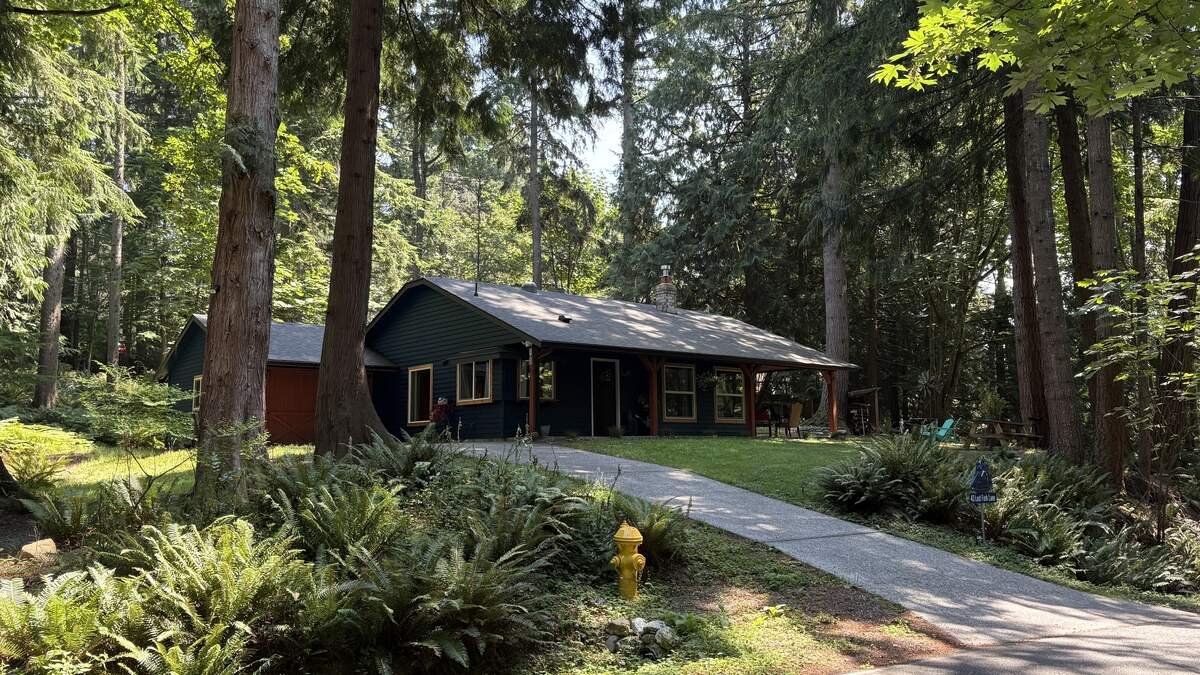
Three years before Joseph Charles Henrichsen emerged from the woods in the Shasta-Trinity National Forest and abducted two U.S. Forest Service biologists at gunpoint with an assault rifle, he terrorized his neighbors near Bellingham, Washington.
Read more He doesn’t live in SC, yet, but he filed to run for Lindsey Graham’s Senate seat
In the grip of a worsening mental health crisis, Henrichsen, often carrying a firearm, upended life along a pleasant forested street with violent threats, fireworks, an assault against an elderly man and even a loudspeaker that looped allegations about his neighbors, according to court records reviewed by The Sacramento Bee and The Bellingham Herald.
Threatening neighbors ultimately led to his arrest — and an opportunity for the state of Washington to commit Henrichsen for psychiatric treatment. Following a six-month stint in county jail, a judge ordered Henrichsen to be evaluated for civil commitment. But he walked free from a state hospital just days after his transfer there, records show.
“He shouldn’t be on the streets and that’s what us and other neighbors told the police,” one resident whom Henrichsen repeatedly threatened said in a phone interview Tuesday. The man asked for his name to be withheld in case Henrichsen is released from federal custody or had relatives or friends who might retaliate on his behalf.
Henrichsen’s 2022 incarceration in Washington came after he left two zip ties looped together like handcuffs outside a neighbor’s door. After county sheriff’s deputies arrested him, they removed around two dozen guns from his home.
Last week, Henrichsen, now staying in a trailer in a Northern California forest campground, again took out his zip ties.
This time he used them to bind the hands of the two biologists after confronting them with an AR-15 style rifle while they were out surveying frogs, according to federal court charging documents. That abduction began a 15-hour standoff, in which an elite Federal Bureau of Investigation hostage response team ultimately negotiated the release of both government employees and the surrender of Henrichsen, 49, and his 23-year-old son, Phoenix Henrichsen.
Both men were charged Monday in a Sacramento federal court with kidnapping government employees. California sheriffs and federal officials have described a highly dangerous situation that ended without death or serious injury as a result of both good training and good fortune.
The motivations of Henrichsen and his son remain unknown.
A string of threats and bizarre acts
In the lakeside community of Sudden Valley outside Bellingham, former neighbors were horrified, if not entirely shocked, to learn the man they’d feared years earlier was involved in the high-profile kidnapping.
Whatcom County Sheriff’s Office deputies arrested Henrichsen on March 4, 2022, alleging he committed a hate crime against a neighbor whose landlords were of Russian and Ukrainian descent. Alongside the zip ties, court documents show Henrichsen left a note saying “assassinate Vlad Putin” with a vulgar drawing on the doorstep, and threw fireworks at the property. The resident told deputies Henrichsen had a visible pistol in his pocket.
After reportedly seeing Henrichsen walking around the yard toward the back of his house before returning to his home, the resident walked over to “try and resolve the problem.” He said Henrichsen came to the half-glass door and stared at him. Henrichsen then picked up a shotgun and “conspicuously” handed it to his son before opening the door to stare at the neighbor.
He returned home and called the police. Whatcom County Sheriff’s Office deputies found six human silhouette paper shooting targets set up around his yard, according to court records. Henrichsen was actively barricading his doors as they approached his house, but ultimately surrendered peacefully after speaking with a deputy first outside and then inside his home.
Court documents show this was one of multiple contacts with law enforcement that police attributed to a “spiraling mental health condition.” Henrichsen was banned from a grocery store after stealing and going on rants about “decaying world events and politics,” including the war in Ukraine. He also threatened to assault a neighbor who confronted him about his yelling.
Several days after his father’s arrest, a sheriff deputy returned to check on Phoenix Henrichsen. “I was concerned about Phoenix Henrichsen’s welfare based on my limited interactions with him as he seemed very quiet,” the deputy wrote in his report. The deputy had a judge’s order to seize firearms and Phoenix Henrichsen helped him find his father’s many guns. Pistols and scoped rifles were stored in a safe and tucked around the house and garage in bags and lockers.
The deputy also noted more zip ties fashioned into handcuffs, as well as a tactical plate vest and a ballistic helmet. Before leaving, the deputy asked Phoenix Henrichsen to tell him if he found other weaponry. More than two weeks later Phoenix Henrichsen called to say he had found three more rifles, two pistols, a compound bow, a machete and other gun parts in the garage.
Two weeks after Henrichsen’s arrest, a county judge ordered a competency evaluation. The father refused to participate, but his son provided insight into his father’s mental state.
Phoenix Henrichsen described his father as “unstable” and “prone to emotional outburst.” He said his father had come to believe that people were jealous of him and his family and seeking to “bring him down.” Henrichsen’s condition worsened after his ex-wife, Phoenix Henrichsen’s mother, died in August of 2021, though Phoenix Henrichsen didn’t believe his parents were very close.
He said he was unsure if his father had ever received inpatient psychiatric treatment. He also indicated that Henrichsen had been out of work for about six months and was previously found to have a brain lesion.
The evaluator concluded the elder Henrichsen likely merited a diagnosis of schizophrenia or another psychotic disorder. Likewise, the evaluator found Henrichsen needed inpatient treatment to restore his mental competency before he could stand trial.
Diagnosed, then freed without treatment
A Superior Court judge agreed with the findings and signed an order on April 7, 2022 to have Henrichsen admitted to a state psychiatric hospital for 45 days of inpatient treatment. But Henrichsen was still in jail awaiting treatment 132 days later.
And instead of Henrichsen getting stabilized, delays in the system eventually led to his release, apparently without treatment.
Henrichsen’s case occurred as Washington state’s hospital system was struggling to keep up with cases like his. In 2015, in response to a lawsuit that claimed mentally ill people were languishing in county jails for weeks and months, a federal court mandated Washington state provide competency evaluations and restoration services within two weeks. In subsequent years, including the year of Henrichsen’s case, the state was found twice to have violated the settlement agreement, and ordered to pay millions in fines.
The Washington State Department of Social and Health Services, which oversees state psychiatric hospitals, claimed it couldn’t admit Henrichsen within the 14-day period due to an increase in treatment requests and COVID-19 protocols. The department also said Henrichsen was only eligible to receive treatment at two facilities due to the alleged violent charges, further constraining their ability to admit him.
A judge found the agency in contempt of court on May 19, 2022, and began to fine it $200 a day. Judges elsewhere in the state were holding the agency in contempt around that time over similar delays, court filings show.
Prosecutors repeatedly tried to get the state to admit Henrichsen into competency treatment, but with no clear path to do so, they ultimately couldn’t justify Henrichsen’s continued incarceration. His public defense attorney filed a motion to dismiss the case on July 22, 2022, arguing that Henrichsen’s constitutional due process rights had been violated. Prosecutors objected, but the judge dismissed the charges.
Reached this week, his defense attorney in that case declined to comment.
Henrichsen was released from the county jail and sent for a civil commitment evaluation at Western State Hospital, a state-run psychiatric hospital in Lakewood, Wash., on Aug. 30, 2022. The prosecutor’s office said it was notified the following week that the hospital would not civilly commit him, and he was released.
Court documents do not make clear what treatment, if any, Henrichsen received during his confinement. Research shows that long jail stays, if not combined with mental health programming, can often worsen psychological conditions.
A spokesperson for the Washington State Department of Social and Health Services said she could not provide any information specific to Henrichsen due to patient privacy laws.
However, she explained that individuals must meet statutory criteria under Washington’s Involuntary Treatment Act to be civilly committed. These criteria include presenting an imminent likelihood of serious harm or being gravely disabled as a result of a behavioral health disorder at the time of the evaluation.
Read more Forest Service kidnapping suspect terrorized neighbors for years. Washington state let him go
What specific criteria for involuntary treatment Henrichsen did not meet is not clear.
More harassment, then eviction
Within a year of his release, Henrichsen had returned to harassing and scaring his neighbors, according to a request for a restraining order filed in May 2023.
In the request, which a judge granted, the neighbor accused Henrichsen of slashing two tires on his truck that May. He allegedly threw a rat trap at their door and played a message over a loudspeaker accusing the neighbor of having rats on his property on a loop for hours and operated a large inflatable tube man taller than his house in his driveway.
One Sunday, Henrichsen assaulted an elderly couple walking along a road, knocking over an 80-year-old man and striking his wife, according to a memo compiled by the neighborhood homeowner’s association.
“These repeated behaviors demonstrate volatility and a willingness to use physical violence,” the association general manager wrote in the memo. Henrichsen’s “behavior is increasingly unpredictable and controlled.” Sheriff department officials, however, told her they were unable to intervene unless Henrichsen committed a new crime.
Ultimately, it was not the police, but Henrichsen’s mother, who would drive him from Sudden Valley.
The Henrichsens were living in a house owned by his mother, who resided in Ohio. While she gave them permission to stay there, the homeowner’s association demanded that she evict them, the neighbor who declined to identify himself said. Deputies served a court eviction notice in June 2023, and Joseph and Phoenix Henrichsen were ordered to pay over $69,000 to Joseph’s mother Barbara.
How they passed the three years between their eviction and last week’s surfacing in the Shasta-Trinity National Forest is not yet clear. But how they resurfaced is by now widely known.
A tense rescue
Northern California law enforcement officials learned of the kidnapping through a voice message the elder Henrichsen left for a Forest Service employee. Henrichsen informed that person, who has not been identified, that he’d taken two hostages, wanted to speak to the FBI, and had “live rounds ready to f——- (inaudible) anyone who f—- with me,” according to charging documents.
As he and his deputies began to mobilize, Siskiyou County Sheriff Jeremiah LaRue said they were unsure if the fantastical-sounding call was even real at first.
Then, camera footage from a drone hovering over the Henrichsen’s trailer captured a man stepping outside with a bound hostage and holding an assault rifle.
“Once that happened, people realized this person was serious,” LaRue said in an interview Tuesday.
Law enforcement officials from state, local and federal agencies, including SWAT team members from different agencies, poured steadily into the National Forest as officers made the long trek to Gumboot Lake. The FBI’s Hostage Rescue Team, known as a highly elite unit, was flown in from the agency’s headquarters in Quantico, Virginia. There may have been as many as 60 members of that team, LaRue recalled.
“They didn’t seem fazed by any of it,” LaRue said. “They had a plan in place, and they were going to ensure that those two individuals were apprehended. They were very focused and confident.”
It never became clear to the sheriff, who was not directly involved in the negotiations, if the Henrichsens made any specific demands.
But the general agitation about politics and current events that Henrichsen had shown in Sudden Valley were still apparent.
“He wanted to talk to the FBI about ‘what’s going on in the world,’ I believe is the most specific information,” the sheriff said. Federal investigators have not revealed what the Henrichsens may have said to their hostages, and those Forest Service employees have not publicly spoken about their ordeal.
U.S. Forest Service Chief Tom Schultz declined to identify the biologists last week.
“The negotiations were happening, and the hostages weren’t being released for hours and hours and hours,” LaRue said. “That’s when things start to get tense because you wonder ‘what is this person’s motive? What are they planning to do?’”
Just after 1 a.m., negotiators broke through in their talks. The Henrichsens agreed to release the hostages. That kicked off some of the tensest moments of the standoff, LaRue said.
“I remember feeling a sense of relief, but also dread in knowing that this person is armed and not knowing what their motives and what their tactics might be,” he said. “My concern was that this hostage could be let out and wouldn’t be able to get to a place of safety before she was either harmed or brought back inside the trailer.”
It wasn’t a long stretch of ground, maybe a hundred feet or so, from the trailer to an armored BearCat tactical vehicle behind which the biologist would be safe.
“But it seemed like it was miles that she had to travel to get to a place of safety in my mind,” LaRue said. “Time sort of slowed down.”
Those scary moments were repeated six minutes later, as the second hostage made the same short but perilous journey. At around 2:30 a.m., the FBI negotiators persuaded the Henrichsens to throw the rifle out of the trailer and surrender.
The hostages told investigators that Phoenix had “watched over” them when his father was out of the trailer. Henrichsen appears to have sought to make arrangements for his son during the long negotiations: According to the charging documents, at one point the father asked FBI agents to contact a friend who he believed could take care of his son.
Before leaving the trailer and facing his arrest, the elder Henrichsen again implored negotiators to treat Phoenix with care, LaRue said.
“I do remember Joseph indicating that he wanted something about his son coming out and being safe,” LaRue said.
A preliminary hearing in the Henrichsens’ case is currently scheduled for Aug. 3, in Sacramento. If convicted, the Henrichsens could face a maximum penalty of life in prison.
Read more Sacramento County files suit against Big Tobacco. Here’s why it’s not about smoking