 By admin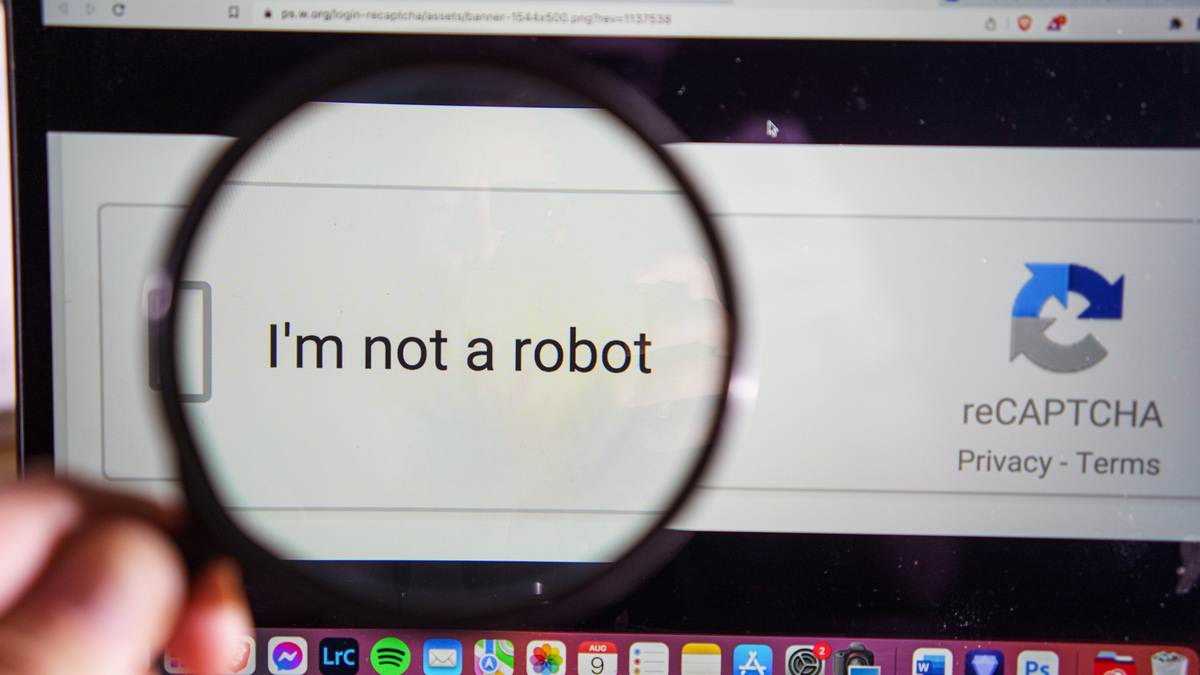
Most of us are familiar with CAPTCHA, which stands for Completely Automated Public Turing test to tell Computers and Humans Apart. You sign on (or in) to something and you then are confronted with weird letters or numbers or some other puzzle requiring you to slide one image on top of another.
Read more Fetch a friend: Placer County Animal Services offering $10 pet adoptions in August
CAPTCHA was first coined in 2003, although other attempts to keep bots from imitating humans have a longer lineage. The unanticipated problem now is that the rise of artificial intelligence is making machines capable of passing these tests. If a machine can pass a test, one seemingly logical solution would just be to make the test harder: alas, that risks locking out at least some segment of a human population that then would not be smart enough to crack the code.
This prescient issue is buried in a recent, must-read Free Press article by Niall Ferguson and John-Clark Levin that laments the growing impotence of the old-fashioned historian in the face of bots and algorithmic amplifications.
The writers lament the rise of antisemitism and attribute it, in no small part, to the failure of the “old-fashioned” tools when it comes to fighting back against Holocaust denial, now a routine practice in certain extreme online circles on both the right and the left.
Bots, Ferguson and Levin argue, have taken what used to be the work of a bunch of basement cranks and made it sufficiently mainstream to gain a staggering amount of currency among young activists, ever further removed chronologically from the Holocaust itself.
Ferguson and Levin argue that those ubiquitous CAPTCHA tests will be useless in as little as five years, meaning that humans are going to have to identify themselves in other ways if bots are not going to hijack everything.
Read more Folsom Lake College student snags top prize at CA State Fair with digital art entry
But how? Some kind of fingerprint? The inputting of a passport number when our MacBook fires up? A digital REAL ID attached to a Social Security number or some other digital ID card?
All of the above bring privacy concerns, of course. Most of us would not love the idea of either a government or a private entity tracking our every online move (although some of that already happens). As an example, take a look at the Democrats’ long-lived aversion to voters being forced to show identification in order to vote, arguably fine when a (human) election judge is looking directly into a voter’s (human) face, but hardly workable if or when major elections move online or if automated forms of voting swamp these safeguards.
It seems to us that a functioning democracy is going to require us to know if we are talking to a human being or not. Period. Perhaps that’s not needed for trivial interactions like travel issues – already, it can be hard to know when chatting online – but when it comes to our own human history, surely that’s a different matter. Surely.
Maybe improved ways will be developed of authenticating humanity without specific identification, alleviating the problem.
We are going to need to think a lot more about developing such safeguards, and soon. And then we have to trust that those rising AI masters of our universe won’t create bots capable of subverting that, too. In the end, humans may just have to focus a whole lot more on stopping them.
Read more Arson suspect arrested in Tuolumne County’s Dove Fire. Court Fire 100% contained
This story was originally published July 28, 2026 at 1:04 AM.