 By admin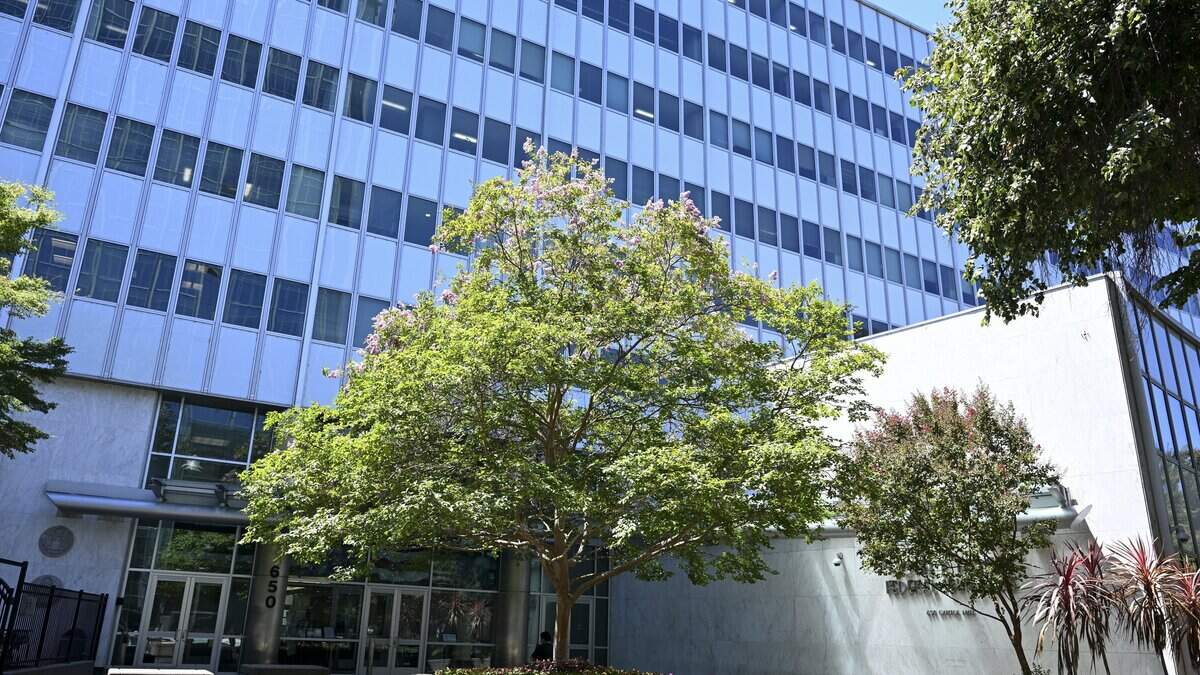
A planned U.S. Immigration and Customs Enforcement agency compound near Gilroy that state and local officials are suing to block will be used to house immigration detainees for short amounts of time before they are transferred to other facilities — not as a long-term detention center, the agency said Wednesday.
Read more ATP roundup: Alex de Minaur gets through tight Washington opener
The description marked the clearest statement yet by ICE about its plans for the facility, which according to court documents will include six concrete-reinforced holding rooms along with ICE offices and an armory.
The project has drawn fierce local opposition in the mostly agricultural communities south of San Jose where it will be built, and the agency has temporarily stopped construction on it in advance of a court hearing in September.
“The construction in Gilroy is not for a detention center like the Golden State Annex or the California City Immigration Processing Center,” ICE spokesperson Jason Sweeney said in an email to The Sacramento Bee, referring to two complexes in Kern County. “It is for an ICE office that will support local operations and the enforcement of federal immigration laws, similar to ICE’s downtown Sacramento office.”
ICE’s offices at the John Moss Federal Building in Sacramento include holding rooms where detainees are placed temporarily, sometimes after arrests that take place after they arrive for appointments with the agency. Conditions at similar holding rooms in San Francisco were challenged in a recent lawsuit, and the agency was ordered by a federal judge to improve conditions and reduce the length of time that people were kept there.
A lawsuit aiming to stop the Gilroy project, filed in federal court in June by California Attorney General Rob Bonta and officials from Santa Clara County, alleges that construction there began under a veil of secrecy and that the Trump administration failed to assess its potential impact on the community and the environment as required by law.
Court documents describe the facility as a detention center, with poured concrete benches in rooms meant to house immigrants and a controlled entrance to the areas where people will be held.
Clarifying that its holding rooms are for short-term use does not change the county’s opposition, said Santa Clara County Counsel Tony LoPresti. Even though there are only six rooms, the agency could hold as many as 100 people there, LoPresti said, and constructing it without notifying local officials or conducting environmental assessments still violates federal law, he said.
Read more You can’t help but feel Eric Bieniemy’s absence as the Chiefs open camp
“It doesn’t hinge on what ICE chooses to call the thing,” LoPresti said. “It hinges on the impact it has on the local community and their responsibility to reach out and actively solicit and consider the input of state and local governments — which they have failed to do.”
Under the federal Immigration and Nationality Act, the agency must select a “suitable” site for a detention facility and consider existing facilities, the state and county complaint alleges. Under another law, the Intergovernmental Cooperation Act, they must work with local municipalities and consider state and local viewpoints, and yet another federal law requires environmental studies to be done, the complaint says.
“ICE is attempting to play with the semantics to sidestep the law,” LoPresti said Wednesday.
On Monday, a coalition of environmental groups led by the Center for Biological Diversity also weighed in against the project. In a friend-of-the-court brief filed in connection with the state and county lawsuit, the group said that the agricultural region where the project is planned is “already overburdened with pollution and environmental hazards” and has been designated a disadvantaged community by the California Environmental Protection Agency.
At the same time, the groups said, it is near sensitive habitat for endangered steelhead trout and threatened species including tricolored blackbirds, northwestern pond turtles and Central Coast and Southern California mountain lions.
Lopresti and Bonta have asked U.S. District Judge Eumi K. Lee to issue a preliminary injunction barring the federal government and Beverly Hills firm ECG 6, which owns the property, from further construction as the case plays out. She has set a hearing to discuss that request for Sept. 9.
Read more A’s take ‘tough’ extra-inning loss to Red Sox despite showing some bright spots