 By admin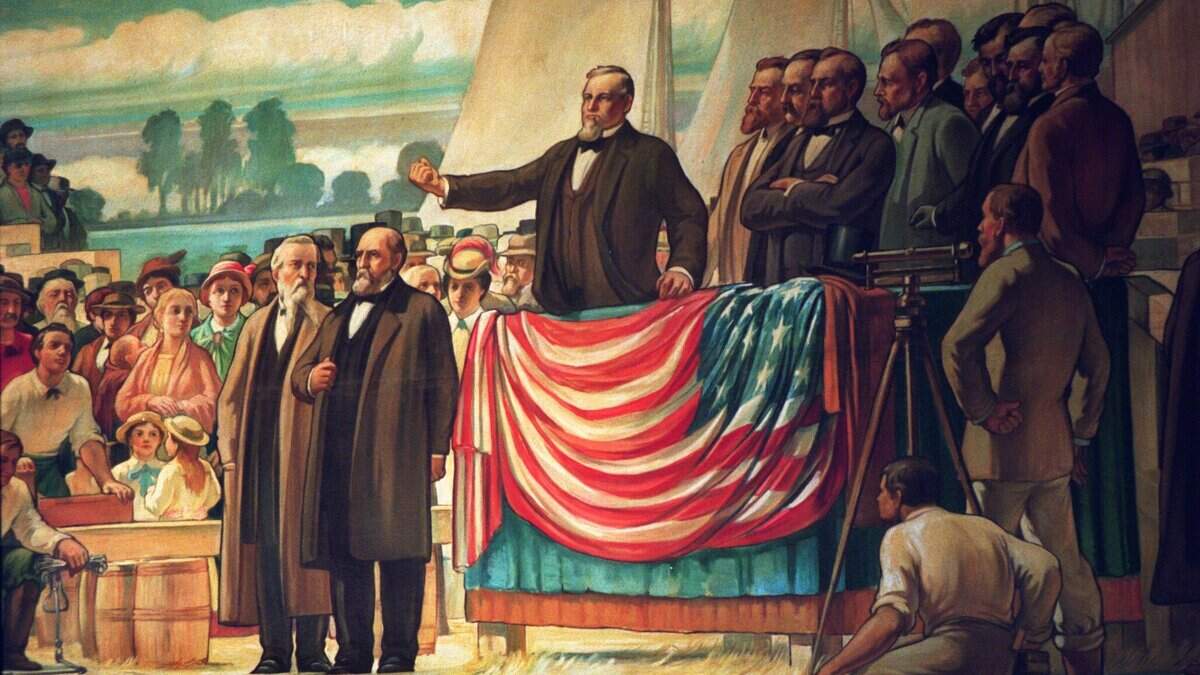
This month marks 164 years since the signing of the 1862 Pacific Railway Act, which reshaped cross-country transit and helped cement Sacramento as a train city.
Read more Yes on Measure W campaign launches for 1,250-home Willowgrove project in Davis
Nowadays, you can travel across the country by plane in just a few hours, or in a few days in a road trip by car. In the mid-19th century, the journey could take six to 10 months. Travelers could choose to either sail around the continent and come through Panama or cross the continent by horse and wagon. Upon the railroad’s completion in 1869, that journey was cut to seven days.
“The first transcontinental railroad and the completion of it changed the world forever,” says Ty Smith, Sacramento city historian and former director of the California State Railroad Museum.
Travelers heading west would arrive in Sacramento, the gateway to the gold rush and all of California’s riches.
Theodore Judah’s dream
Initial research into linking the two coasts by rail began in the 1850s, with then Secretary of War Jefferson Davis overseeing topographical land surveys. The states fought over choosing a northern, central or southern route. It was only after the secession of the South in 1860 — which Davis would lead as President of the Confederate States of America — and the start of the Civil War that the railway began to take form.
“The central route was probably the most difficult, because it had to cross the Sierra Nevada (mountains), but after South Carolina’s secession, it became the main option,” says Kim Whitfield, chief interpreter at the California State Railroad Museum.
Civil engineer Theodore Judah played a key role in making Sacramento the western terminus of the railroad. Judah had worked as the chief engineer of the Sacramento Valley Railroad and was convinced that building a railroad across the Sierra Nevada was possible. He began seeking investors, and found success in Sacramento entrepreneurs Leland Stanford, Collis P. Huntington, Mark Hopkins Jr. and Charles Crocker.
The “Big Four,” as they would come to be called, founded the Central Pacific Railroad and made Judah chief engineer. Judah went to Washington D.C. to lobby for the railroad, even opening a small railroad museum in the U.S. Capitol to win over legislators.
Judah’s efforts were successful and President Abraham Lincoln signed the Pacific Railway Act on July 1, 1862. The bill authorized the creation of the transcontinental railroad and provided land grants and government bonds to the railroad companies responsible for building it.
Smith says that Lincoln was doubly motivated to sign the bill. The transcontinental railroad would help secure California and its plentiful resources for the Union while also aligning with the country’s embrace of Manifest Destiny — the idea that the United States had a right to grow westward.
“Lincoln was a railroad lawyer, so he understood the importance and centrality of connection, and (of) the ability to move things,” says Smith.
In January 1863, the Central Pacific began laying track eastward. In December, their rival company, the Union Pacific Railroad, began building west from Omaha, Neb.
Judah himself would never see the railroad being built. He died of yellow fever after falling sick on a trip to New York in November 1863.
“His death represents why it was so dangerous to have to make those crossings. There was malaria, yellow fever — lots of disease.” says Debbie Hollingsworth, state park interpreter at the Railroad Museum.
Read more Do you remember these? Nostalgic foods still around at the California State Fair
Chinese laborer contributions
Laying the rails required grueling and arduous manual work, and much of it was done by Chinese laborers. Many had come for the gold rush, largely from the southern Chinese province of Guangdong.
High foreign miner taxes forced them to look for other sources of work. Crocker, one of the Big Four, proposed hiring them to construct the railroad but faced pushback. “I believe that all our people were prejudiced against Chinese labor, and that there was a disposition not to employ them,” said Crocker in an 1877 Congressional report.
After hiring a small 50-person crew as a test run, the railroad company found Chinese laborers to be reliable and efficient. By 1868, over 90% of the Central Pacific Railroad’s workforce was made up of Chinese laborers. At one point, the railroad even began recruiting workers directly from China. In all, the Central Pacific hired more than 10,000 Chinese workers during the railroad’s construction.
“You just wouldn’t have a transcontinental railroad by 1869 without the work of Chinese railroad workers,” says Smith.
When the railroad was completed, many continued to work for the railroad in some capacity. Most of the individual names and stories of these laborers have since been lost. Whitfield says that the arson of Chinese homes and villages has made it difficult for historians to piece together records. At the California State Railroad Museum, an exhibit is dedicated to these laborers and includes photos of their descendants as a means of showing their legacy.
“They were like everyone else,” says Whitfield. “They had come to make their fortune.”
The impact on Natives
The impact on the railroad on Native Americans, throughout the country and in California, was extreme.
One of the first clauses of the Pacific Railway Act of 1862 reads, “the United States shall extinguish as rapidly as may be the Indian titles to all lands falling under the operation of this act and required for the said right of way and grants hereinafter made.” Settlers moving westward displaced existing Native communities and the railroads often sold Native land granted to them by the federal government.
Whitfield is careful to emphasize that while railroads were a major disrupter to California Natives, they survived and continued traditional practices and maintained relationships to tribal land.
“Native people are still here — they didn’t disappear,” says Whitfield.
The push westward
On May 10, 1869, the Central Pacific and Union Pacific Railroads met in Promontory, Utah – uniting their two tracks and making the transcontinental railroad whole.
Almost immediately after the railroad’s completion, crews began improving the hastily laid tracks and upgrading the railway. A westward extension, bridging Sacramento with San Francisco, and other connecting lines across the railroad’s path soon followed.
Even though passenger travel by train has fallen to the wayside with the advent of faster travel methods, its impact on Sacramento remains plain in its streets.
“If you’re ever driving through Sacramento and wondering why someone put a railroad in the middle of the city, it’s actually the other way around,” says Whitfield. “The trains were here first.”
Read more The Punishments Facing Argentina After FIFA Open Full World Cup Investigation