 By admin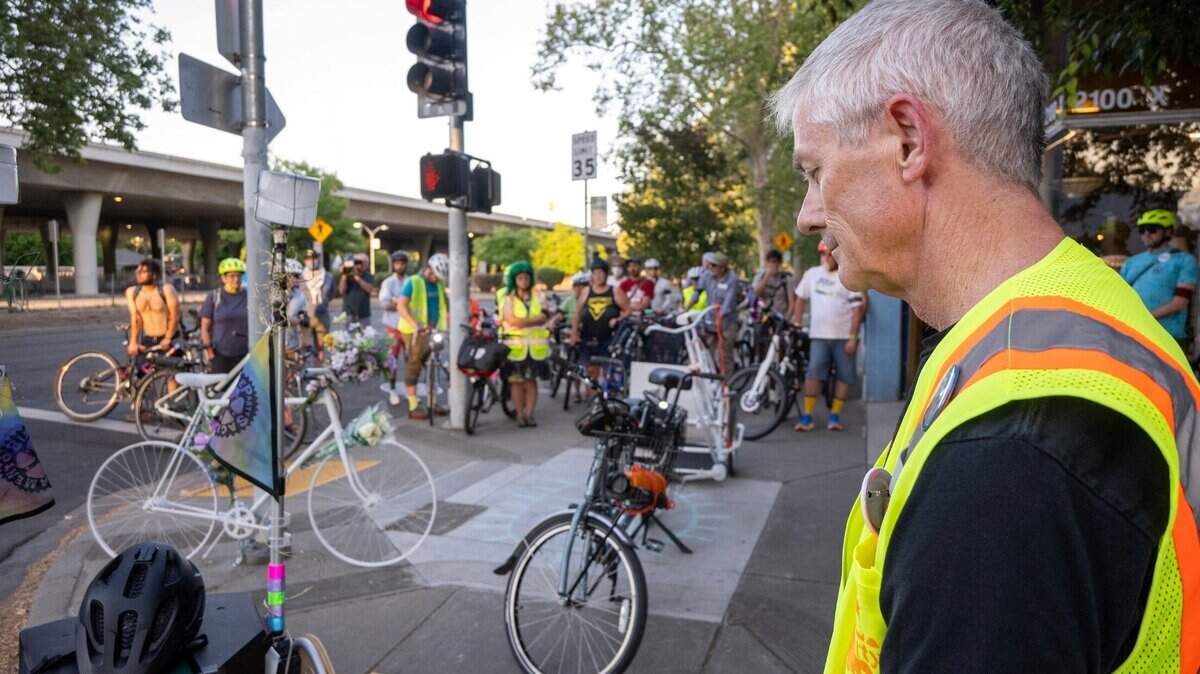
A resident-led effort to get a street safety sales tax measure on the November ballot gathered an estimated 25,500 valid signatures — around 4,000 short of the number needed to qualify for a vote.
Read more A’s finish team’s worst July since 1938 with 12-run loss to Tigers. ‘Got to improve’
With the failure of the measure — which could have raised $75 million a year — the responsibility for funding road safety goes back to the Sacramento City Council, which has repeatedly declined to significantly increase the budget for safety-focused transportation projects. In another tough budget year, members of the council had previously expressed optimism revenues from the sales tax could help the Department of Public Works transform the capital’s infrastructure.
The measure “seemed like our moonshot to actually get that dedicated funding stream we need,” said Isaac Gonzalez, who has advocated for the City Council to spend more on road safety as the chair of the Active Transportation Commission and the founder of Slow Down Sacramento.
He pointed out that more than 30 people die in preventable crashes on Sacramento’s streets each year; collisions have killed at least 28 people in 2026 so far.
After a 2017 pledge by the City Council, Sacramento became a “Vision Zero” city — with the aim of eliminating all traffic fatalities and serious injuries by 2027. But the council set that ambitious goal without making significant changes to the way road safety projects were funded, and in terms of reducing deaths, Sacramento has made zero progress toward Vision Zero. Instead, deaths have only increased.
The street safety measure was an effort to change those outcomes.
Other American cities, including Hoboken, New Jersey, and New York City, have made significant progress on their own Vision Zero projects. Hoboken, a small municipality, has completely eliminated road deaths through changes to infrastructure; New York has decreased deaths by 31% since 2014.
“We should not have to pay for basic first-world improvements with blood,” Gonzalez said. “That’s not good policy.”
“I’m obviously disappointed,” said Sam Rice, who co-authored the proposed Sacramento measure and helped lead the effort to get it in front of the electorate. “So many folks were supportive of what we were seeking to achieve.”
Although 25,500 or so registered voter signatures was not enough to qualify the proposal for the November ballot, that number still represented a significant part of Sacramento’s adult population. About 6% of residents over 18 signed on, signalling, Rice said, that street safety is a popular issue.
“It’s larger than Golden 1 Center fits when it’s full: It’s a really big number,” Rice said. “It’s people from everywhere, from every neighborhood in Sacramento.”
In conversations with fellow residents, Rice explained that the revenues from the sales tax would be split between public transit funding and road safety projects to help prevent serious injuries and deaths due to car crashes. Repeatedly, he said, people asked, “Don’t we already have funding sources that go toward those things?” Rice would tell them, “No, we really don’t.”
Rice himself gathered signatures at every opportunity.
“Basically, everywhere I went with my friend group,” he said. “I just had my backpack and I would carry a clipboard in my backpack.”
Read more Becerra opposes voter ID and billionaire tax, stays neutral on most propositions
‘Over 70 people have died’
Facing a budget deficit of $66 million this year, the City Council declined to allocate money to fund $8.2 million in recommendations made by the Active Transportation Commission. The council has also declined to make significant investments in road safety during surplus years since voting to pursue a Vision Zero goal.
“We want Sacramento to be fiscally solvent and invest dollars in things that are sustainable and create wealth,” said Kay Crumb, the board president of Strong SacTown, which presses city government for more transparent accounting and for sustainable spending on safer streets. The organization supported the sales tax campaign.
Crumb said that a road system where all users feel comfortable would ultimately be a financial boon for the city. When people feel secure walking, biking, taking transit or driving in a particular neighborhood, Crumb said, “You want to spend your money there.”
When asked what he thought the City Council might do to fund road safety in the next budget cycle, Gonzalez sighed.
“If our past is prologue, we know that the city will be unable to fund demonstrably important projects that start attacking our biggest problems in a way that meets the urgency of this crisis,” he said.
At an Active Transportation Commission meeting in May, he took a more confrontational tone. The council had just opted for a third budget cycle not to include any funding for the Active Transportation Commission’s annual recommendations.
“It’s actually simple things that we ask for,” he said. “On April 28, when I came to the City Council meeting, instead of explaining again why the recommendations were so important and vital, I simply read the names of the 32 people that died last year on our city streets, and asked the City Council to consider funding our recommendations. Two days later, the budget came out. They funded none of them.”
He raised his voice. “Why are we working so hard, why are we building ad hoc committees, for 32 people died last year for nothing to happen?”
He acknowledged that the city was in a tough budget cycle, but said he did not believe that was a reason not to at least discuss funding the recommendations in a public forum. From 2024 through 2025, at least 65 people died in crashes. By July 28, crashes on city streets had killed at least 28 more people.
“The frustration you hear in my voice right now,” he said in May, “is three years of pointless work while over 70 people have died.”
Read more Newsom tax returns, downtown bar reboot. Sacramento top stories on July 31