 By admin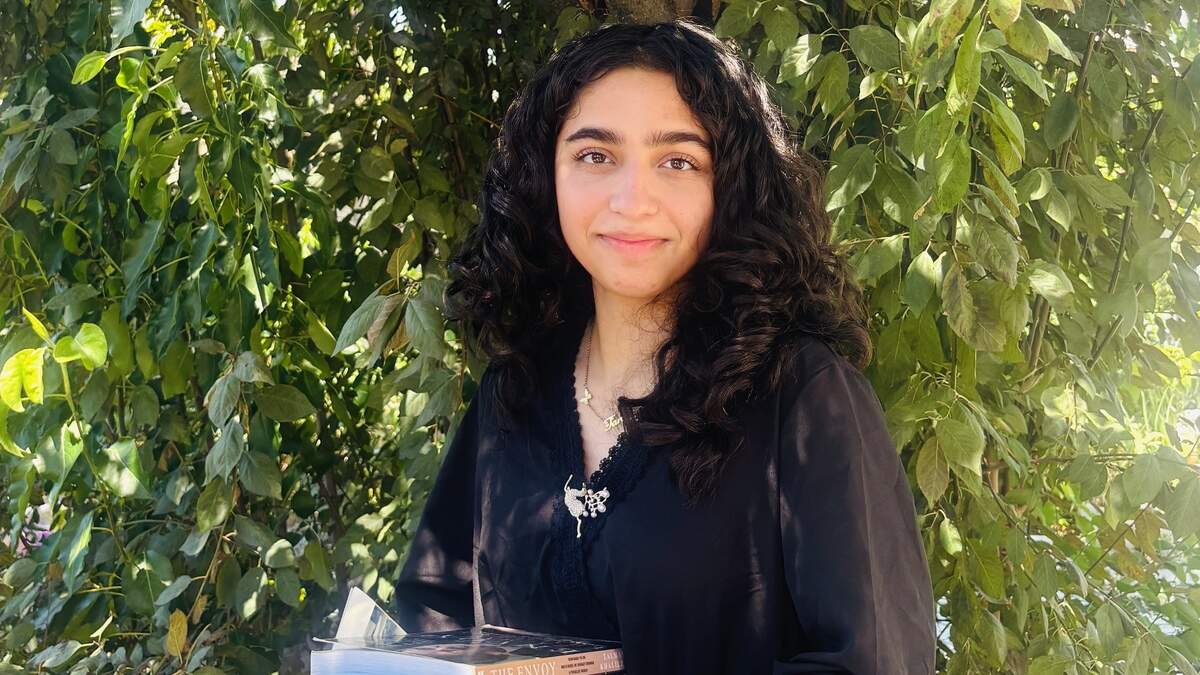
Five-year-old Farin Fahim clung to her mother so tightly every day before school, her teachers had to peel her off. As a young immigrant from Afghanistan, her new U.S. school scared her.
Read more Amador vineyard estate includes pool, wine cave on 25 acres in Sierra foothills
But Fahim’s first-grade teacher at Howe Avenue Elementary School in Arden Arcade, Carla Elkins, showed Fahim that school was a safe place where learning, regardless of English comprehension, was welcome.
During her early days in first grade, Fahim could only read and speak in Farsi. As time went on, she “soared,” Elkins said, learning English and participating more in class and engaging with her classmates and learning material.
“I teach reading systematically,” Elkins recently said. “Before anything else, I teach social, emotional awareness. It’s impossible to deliver curriculum if the students don’t feel safe and heard.”
Now, 16-year-old Farin Fahim is a student at Center High School in Antelope, just a few miles north of Sacramento.
And those days of clinging to her mom are long gone.
Fahim is representing California and the United States in the World Literacy Foundation as part of the Youth Ambassador Program, a three-month program where a global community of over 1,000 young adults aged 16-25 from 60 different countries are working to encourage literacy in their local communities and globally.
The program began June 8, and will end on Sept. 6. Throughout the program there will be learning modules, a fundraising and advocacy portion called “Youth Power in Action,” with a celebration week slated to round out the activities and recognize the ambassadors for their hard work.
Fahim first heard about the program while searching on social media for humanitarian opportunities for young people. When she found the World Literacy Foundation, she thought it would be a great fit for her given her passion for literacy and her belief in the power of education, she said.
“I was always wanting to contribute to something that would help society, but I just didn’t have the resources because I’m so young,” Fahim said. “I can’t go out there directly and get a job or do any of those things that would be able to help the world. So, this was just a good and easier way to do it because you don’t need experience. You just need passion.”
Her passion and proven track record of volunteering led to her being selected for the program, according to foundation marketing officer Annabelle Sterkenburg. She said that the application asks a lot of questions, and Fahim’s answers stood out.
“We saw a genuine care from her about raising awareness for literacy globally,” Sterkenburg said. “She had a history of volunteering. She volunteered at a resource center, she gave out cards to hospice patients and she also tutored 50 students at school. We saw she had a passion for literacy, especially for young girls, and that’s all we ask for.”
Read more Sacramento funds youth violence prevention with little oversight. What to know
As part of the program, she is required to help raise a minimum of $350 for a student in either Nigeria or Uganda and has set up a fundraising page to do this. She also must perform specific initiatives here in Northern California; in her case she’s creating “little libraries” in local neighborhoods.
Little Free Libraries, as listed on that nonprofit’s website, first started in the Midwest in 2009 by Todd Bol as a tribute to his schoolteacher mother. He built a tiny school house, posted it in his front yard and encouraged neighbors to “take a book, leave a book.” The group quickly expanded to all 50 states and over 120 countries.
Fahim said these types of libraries are an easy way for children to be able to access books and education outside the classroom, especially for those who are poor or wouldn’t have access otherwise.
Fahim said she views poverty as the biggest driver of the literacy crisis in children. In middle-income neighborhoods, the of books per child is 13 age-appropriate books to every one child. In low-income neighborhoods, that ratio is one book for every 300 children, according to Rice University’s Kinder Institute for Urban Research. Sociologists call this phenomenon “book deserts” where low-income communities are devoid of the resources needed for early childhood literacy.
To combat these numbers, Fahim wants to put more books in the hands of children during her time as an ambassador. She plans to expand her little free library initiative into a club or community organization once the school year begins.
“Working alongside other youth in my community, I hope to install them in areas around Sacramento that are considered book deserts, where access to books is limited,” Fahim said. “I also plan to use the fundraising skills I gained through this program to raise the funds needed and secure permission to build and maintain the libraries. …
“I feel like, especially in this generation, children are not loving reading as much because they’re not exposed to it as much,” she said, pointing out how much of what students read these days is through technology. “They read little short stories on their Chromebook, but I want to introduce more chapter books, more books that are in their reading level.”
Some of these chapter books, Fahim mentions, are those she first read in school, including Rohl Dahl’s “The Magic Finger,” Gertrude Chandler Warner’s “The Box Car Children” series and E.B. White’s “Charlotte’s Web.”
Elkins, her first-grade teacher “helped me fall in love with reading and inspired the passion for literacy that I have today, and as I’ve gotten older, I’ve realized how important it is for young girls who were once in my position to have teachers, leaders, and role models like her,” Fahim said.
Beyond the program, Fahim hopes to someday become a published author herself.
“I hope to contribute to a world where literacy is the norm and not something that people are lucky to have,” she said.
Read more Is Sacramento a city that gets skipped by most big-name touring musicians?