 By admin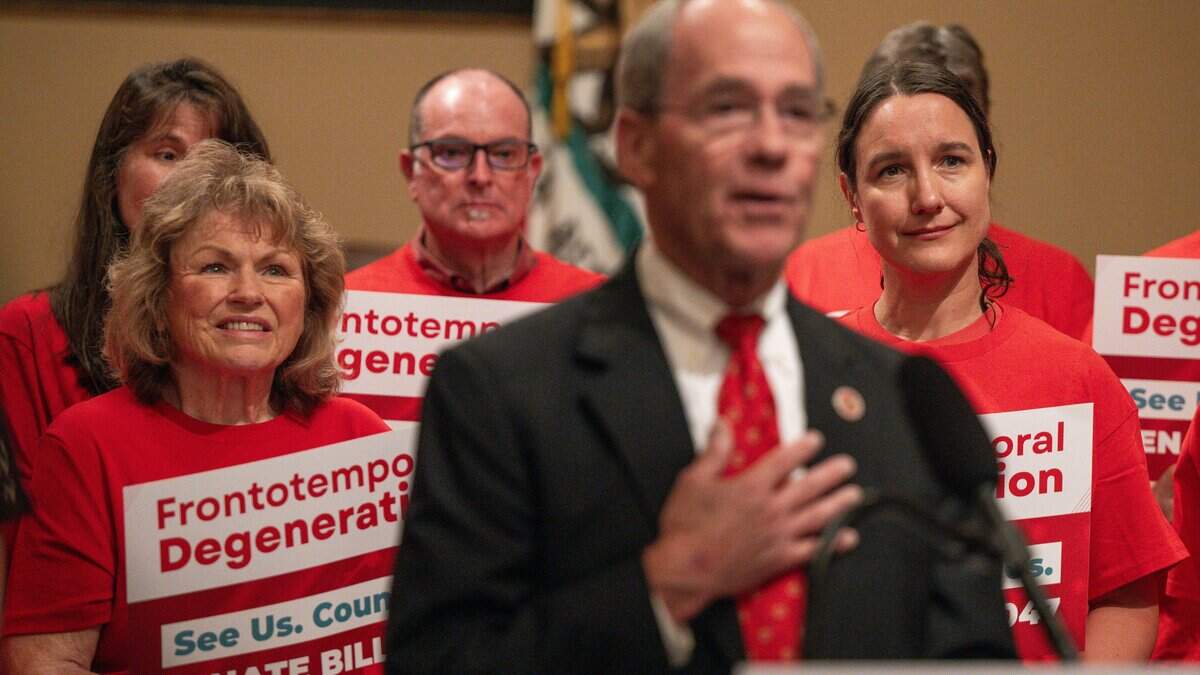
AI-generated summary reviewed by our newsroom.
Read our AI Policy.
- SB 1047 would add FTD to the California Neurodegenerative Disease Registry.
- Implementing FTD data collection in the CNDR would cost about $2.7 million.
- FTD strikes ages 45 to 64 and average life expectancy is 7 to 13 years after onset.
Lawmakers and advocates urged assemblymembers Monday to pass a bill that would formalize data collection for frontotemporal degeneration.
Read more What were the most popular majors among Sac State applicants in 2026?
FTD is the most common type of dementia to affect those under age 60. It can affect areas of the brain responsible for speech, personality, behavior and motor skills, among other functions. Senate Bill 1047 would require the California Neurodegenerative Disease Registry, a branch of the California Department of Public Health, to collect data on FTD.
Current law requires the CDPH to collect data on “neurodegenerative diseases” including, but not limited to Alzheimer’s disease, amyotrophic lateral sclerosis, multiple sclerosis and Huntington’s disease. This system, which the bill would expand to include FTD, allows doctors to enter new diagnoses of neurological conditions into an electronic database.
“This disease impacts countless individuals and families,” said Assemblymember Jacqui Irwin, D-Thousand Oaks, a co-author of the bill. “As with so many complex neurological diseases, more action is needed to better understand its causes, improve treatment options and ultimately find a cure.”
According to the Association for Frontotemporal Degeneration, FTD takes an average of 3.6 years to accurately diagnose because it is often mistaken for Alzheimer’s. FTD typically develops between the ages of 45 and 64. The average life expectancy for an individual diagnosed with the disease is seven to 13 years after symptoms begin.
Beth Walter, an AFTD member since 2008, said her husband and both of his brothers died after being diagnosed with FTD. However, she said a lack of education regarding the disease made obtaining treatment difficult.
“For my many years being affiliated with AFTD, one of the things we’ve struggled with was to convince the medical community and the government … that there were enough cases of this disease to warrant investigation, investment and further research,” Walter said.
Read more A Lincoln woman battled a rare disease for 10 years. How she found health and joy
Meghan Buzby, the organization’s director of advocacy and volunteer engagement, said FTD remains “widely unknown and misunderstood.”
FTD often poses a financial burden to patients and their families because the disease progresses during prime working age, according to Buzby. At the age of diagnosis, many individuals are also raising young children. Buzby said she hopes the bill will have wide-reaching benefits for families dealing with FTD.
“As you all know, California has a world-class biotech sector,” Buzby said. “The data gathered here won’t just help families in our state; it will accelerate research with ripple effects across the globe. It really brings us, finally, closer to treatments.”
Adding FTD to the CNDR registry will deepen doctors’ understanding of the patient population and inform future clinical trials, according to state Sen. Roger Niello, R-Sacramento, one of the bill’s authors.
The data collection and storage needed to implement the proposed system will cost the state about $2.7 million. The bill will be considered for next year’s budget, according to Niello.
“With regard to government funding, all we’re asking for is the information to (be added to) the registry,” Niello said. “There are other organizations that do research into these neurodegenerative diseases. This will give them more information in order to … hopefully find a cure.”
Read more What were the most popular majors among Sac State applicants in 2026?