 By admin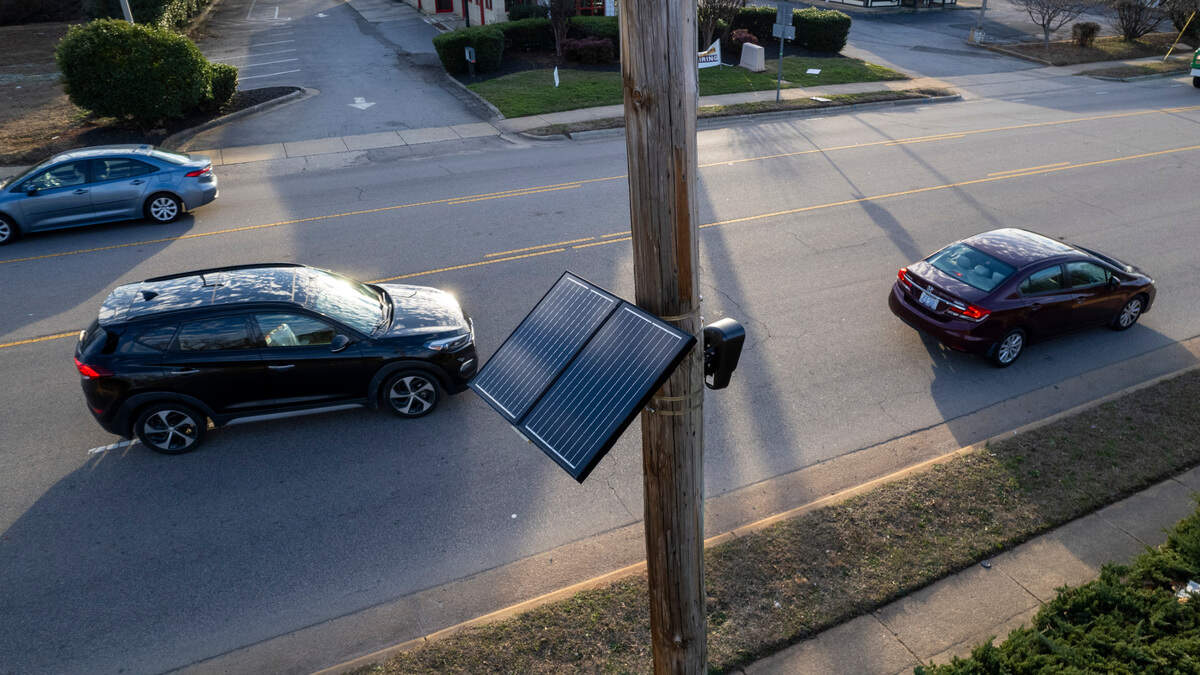
A proposed California law would provide essential protection of privacy and prevent mass surveillance by the police in limiting how the government can keep and use information from automated license plate readers — which are ubiquitous, and give police the ability to monitor our whereabouts.
Read more Placer Supervisor Shanti Landon avoids fine after campaign violated CA ad rules
Senate Bill 1013, also known as the Automated License Plate Recognition Data Accountability Act, would properly balance the interests of law enforcement with the need to protect privacy.
The bill, introduced by Sen. Sabrina Cervantes, D-Riverside, would require that state and local law enforcement agencies delete automated license plate recognition data after 30 days unless there is a need to retain it because the license plate is on an authorized “hot list” (such as a stolen-vehicle, an AMBER/missing-person or a wanted list) or if the data is in the evidence file of an active investigation.
SB 1013 would also prohibit the sharing of information for the purpose of immigration enforcement, arrests or deportation — something that is already illegal under California law.
Simply put, the bill would prevent the government from compiling a massive database on those who are not suspected of anything. A great deal of information can be learned about a person from analyzing their location over time. In several cases — including a decision on June 30 — the U.S. Supreme Court has recognized the invasion of privacy when the government can use technology to monitor our movements.
Privacy precedent
In Carpenter v. United States (2018), the Supreme Court held that when police obtaining a large amount of stored cellular location information about a person without a warrant based on probable cause violated the Fourth Amendment. Whenever a cellular device is on, it automatically connects with cellular towers.
Chief Justice John Roberts explained that this “time-stamped data provides an intimate window into a person’s life, revealing not only his particular movements, but through them his familial, political, professional, religious and sexual associations. These location records hold for many Americans the privacies of life.”
The court stressed that “individuals have a reasonable expectation of privacy in the whole of their physical movements.”
In , decided just over a month ago, the court went even further in stressing the privacy interest we all possess in the government not monitoring our whereabouts. The case involved whether the police need a warrant based on probable cause to use a “geofence,” which allows them to obtain information about cellular devices within a particular location at a specified period of time. In trying to solve a bank robbery in Virginia, the police obtained information via Google from cellular devices that had their “location history” activated and were within a designated area at the time of the crime.
Read more California state scientists picket for raises, end to Newsom’s RTO mandate
The Supreme Court emphatically held that this is an invasion of privacy. Justice Elena Kagan, writing for the majority, explained that “even short-term monitoring” of a person’s physical movements can provide a wealth of information. The court said, “Consider just a few trips that a person is apt to think indisputably private: To the psychiatrist, the plastic surgeon, the abortion clinic, the AIDS treatment center, the strip club, the criminal defense attorney (or) the by-the-hour motel.”
License plate data
The data from automatic license plate readers can be used to monitor a person’s location. By collating it over time, this data can provide a detailed history of a person’s movements revealing very private information. SB 1013 recognizes the value of this information for law enforcement, but prevents the government from having a database that it can use to track all of our movements over a long period of time.
This bill is an important protection of privacy for the public without compromising police investigations.
Studies have been done that show the vast amount of information maintained in these databases serve no law enforcement purpose. The California State Auditor’s 2020 report found that of 320 million images stored by the Los Angeles Police Department, 99.9% were not on any “hot list” of vehicles to be monitored. The auditor also found that the LAPD had no policy limiting sharing of the information and often did so without verifying who was receiving it.
SB 1013 has passed the Senate and the policy committees in the Assembly. Now, the Assembly needs to pass it and Gov. Gavin Newson needs to sign it (though the governor’s signature could be an obstacle, as he vetoed a similar bill last year).
Newsom should carefully read the Supreme Court’s recent decision in Chatrie v. United States. The court powerfully concluded its opinion by declaring that as subtler “and more far-reaching means of invading privacy have become available to the government,” it is essential “to ensure that the progress of science does not erode” our privacy.
That is the purpose of SB 1013, and it is why the legislature should pass it and Newsom should sign it.
Read more Elk Grove Unified approves use of eminent domain for Rancho Cordova schools
Erwin Chemerinsky is dean and professor of law at the UC Berkeley School of Law.