 By admin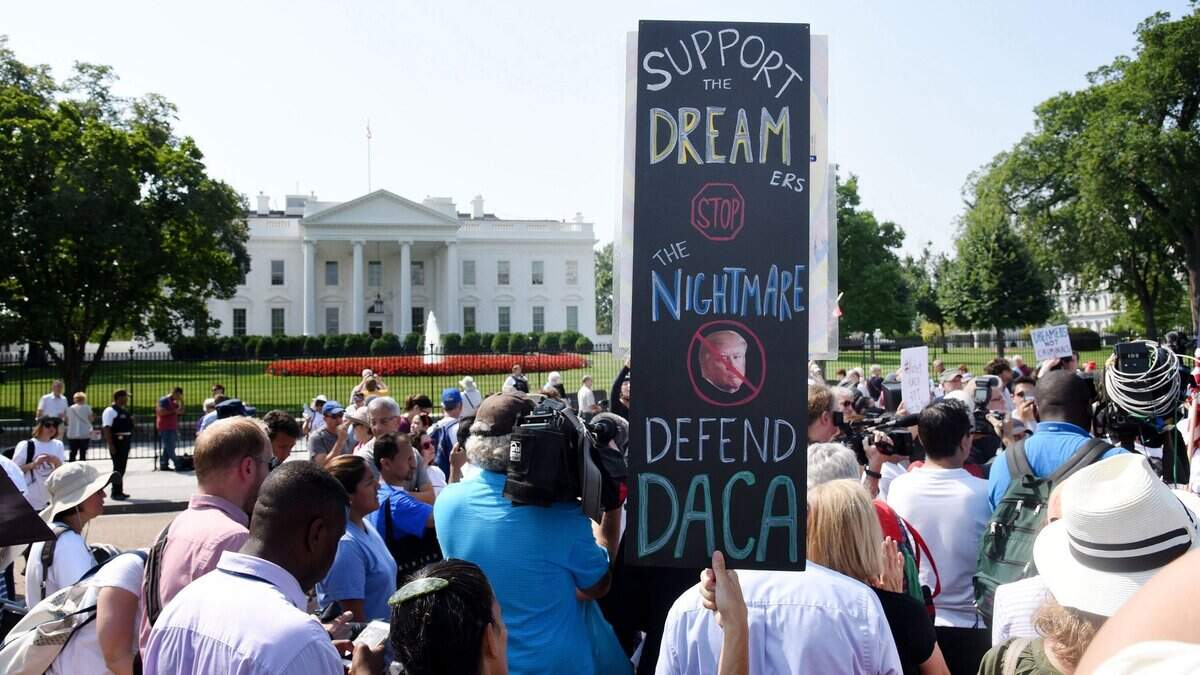
Pretty much all my first memories are in Southern California — it’s the home where I grew up. I came to the U.S. when I was 4 years old from Mexico, a country I have no real recollection of.
Read more Developers turning old Sacramento Coca-Cola bottling plant into hotel
I built my life here. I learned my ABCs, the Pledge of Allegiance and the Star-Spangled Banner. I made friends, went to the mall and studied for the SATs. Like every other story, my journey came with challenges. One of mine was learning I was undocumented. The lack of a Social Security number was a barrier to higher education and a career — until hope came in the form of the Deferred Action for Childhood Arrivals (DACA) program.
DACA was created in 2012 to give people like me, those who came to the U.S. as children and are Americans in every way except on paper, the ability to work legally, go to school and live without the daily fear of deportation. Every two years, we renew our DACA status by meeting requirements and submitting biometrics and a several-hundred-dollar fee. Then we wait.
I submitted my renewal in December three months before my DACA status expired. My renewal finally came through in July — five months after my work authorization lapsed, putting a dream that was years in the making on hold.
Before it expired, I had been selected as the inaugural intern of a first-of-its-kind partnership between my community college and a major Japanese biopharmaceutical company — a program recognized by the U.S. Department of Labor. I was applying what I had learned in the classroom to real work in an industry that develops medicines that save lives, and helping build something that would open doors for every student who came after me.
My employer gave me 30 days of unpaid leave to buy time. It wasn’t enough, and the internship was cancelled. I was let go not because I had failed at my job, but because my federal paperwork was not processed in time. This happened despite doing everything I was asked.
I know I am not alone in this.
DACA recipients across California and across the country are all caught in the same situation. Government data shows that in the first quarter of 2026, DACA renewal decisions issued by U.S. Citizenship and Immigration Services fell by nearly 45%, even as applications came in at the same pace. The agency’s website says that 80% of cases are completed within three and a half months. Mine took nearly seven.
Read more Former Miss North Carolina USA says politics, religion cost her the title
When DACA lapses due to processing delays, the harm is not abstract. It falls on real people, employers and communities.
California is home to 142,000 DACA recipients, more than any other state. We are students, healthcare workers, engineers and researchers. We pay state taxes, support local businesses and fill jobs in fields this state cannot afford to leave vacant — including the life sciences industry, central to California’s economic identity.
I am not asking anyone to feel sorry for me; I am merely asking for what was promised.
U.S. Citizenship and Immigration Services is funded largely by fees that immigrants (like me) pay. DACA recipients deserve applications processed in a reasonable time, with transparency about the process when that isn’t happening. Immigration is complicated, and agencies face competing demands, but it is hard to understand why people who have followed every rule for years are left waiting with no explanation and no recourse.
What DACA recipients like me have always needed is a permanent path to citizenship. But until that day comes, the least we should be able to count on is that the system we trust — and pay into — works the way it is supposed to.
Read more California adoptees can’t get their original birth certificates. That may change
Claudia Romo Bueno is a DACA recipient working toward a degree in biotechnology.