 By admin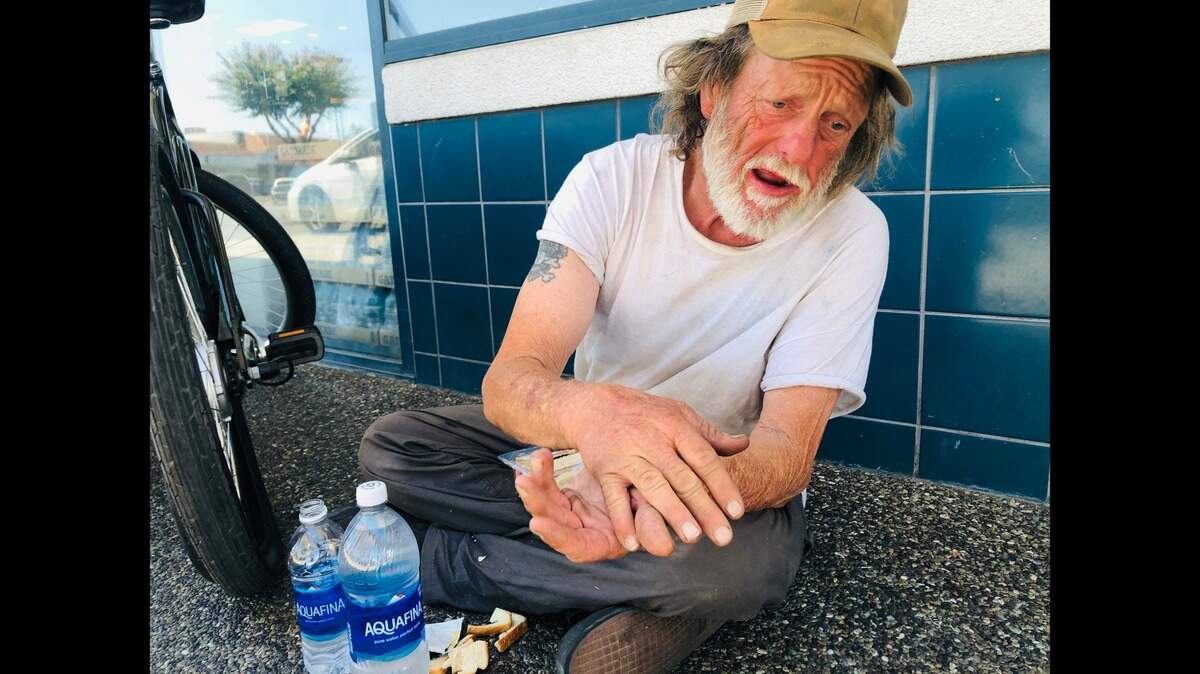
Five years ago, I asked my college dining hall manager for half a dozen paper cups, filled them with coffee and spent an evening sharing them with unhoused residents in New Haven, Conn. and hearing their stories. Amid our conversations, I could not help but notice how winter had marked their skin: windburn, frostbite and chilblains brought on by the punishing cold.
Read more Player wins ‘incredible’ six-figure slot machine jackpot at Sacramento-area casino
Now, 3,000 miles away, I am a medical student in California, where the threat to people experiencing homelessness comes from the opposite extreme. Just recently, a heat advisory blanketed much of the Bay Area, while extreme heat warnings stretched across Southern California.
For people without reliable shade, water or air conditioning, intense heat can mean painful rashes, swelling and life-threatening heatstroke. It also compounds ultraviolet exposure, a leading cause of skin cancer, because the of homeless Californians remain outdoors, with limited sunscreen and protective clothing.
Needed dermatological care
The skin is our first line of defense against pathogens and environmental stressors; its compromise may result in disease. Yet the dermatologic diseases among people experiencing homelessness are too often dismissed as a consequence of poor hygiene or recalcitrance. That framing mistakes structural barriers for personal failure, but in reality, there are severe gaps in access to medical care.
Climate change has emerged as another force, altering ultraviolet exposure and pathogen ecology and increasing the incidence of skin conditions already more common among unhoused individuals, from skin cancer and atopic dermatitis to fungal infections and hidradenitis suppurativa.
Neither compassion nor action alone is enough to care for people experiencing homelessness. A prescription for a certain topical medication may require clean water. A wound-nursing plan assumes a private place to remove clothing and change a dressing, an assumption that is fraught for homeless women and young adults who are at higher risk of sexual assault. Many biologic medications need refrigeration. Monitoring a changing mole assumes someone inspects it regularly.
These barriers influence not only the delivery of care, but also clinician biases. In one case-control study, the same dermatologists recommended follow-up for only 44% of patients experiencing homelessness with acne, compared with 74% of patients not experiencing homelessness, despite similar disease severity. Another found that adults with mobility-related , overrepresented among people experiencing homelessness, were less likely to report receiving full-body skin examinations for skin cancer.
The story of Gregory Sovick, who spent over a decade in the streets of Redding, shows the cost of delay. As reported in CalMatters, a California street-medicine team noticed a mass growing on Sovick’s nose, and a biopsy confirmed malignancy. But medical transportation did not arrive for surgery on the day of the appointment.
Then, Sovick’s encampment was cleared, and the team lost him for more than seven months. By the time he was located, the tumor had grown into his nasal cavity and sinus, threatening his life. It took radiation, housing support and persistent outreach to carry him through treatment.
California protects care services
Since the in 2024, states have directed agencies to clear encampments more aggressively. But California has taken a step worth building on: Senate Bill 634, signed in October 2025, bars local jurisdictions from prohibiting people or organizations from providing medical or survival support to unhoused residents. That protection is a foundation, not a ceiling.
Read more This week in the Nolan Wells investigation: What happened from August 1-8
Encampment operations must be coordinated with street-medicine teams to preserve continuity of care, ensure medications and medical supplies are transported securely and work toward long-term goals of identifying shelter.
Moreover, community-based medicine ought not to rest solely on the shoulders of generalists. Dermatologists — alongside other specialists — should be embedded within street-medicine teams. When patients cannot reliably enter our clinics, care must extend beyond clinic walls.
In the field, dermatologists evaluate suspicious lesions, manage inflammatory diseases, treat infections and teach other clinicians to recognize conditions that warrant specialty referrals. For patients who inject drugs, dermatologists can also identify characteristic cutaneous findings linked to particular substances or injection practices, helping addiction-medicine teams respond with informed, nonjudgmental care, if necessary.
Role of medical students
Medical students, like myself, should support this effort: Many medical schools have free clinics serving low-income communities, but I urge us to invest in mobile models like one operated by the University of Southern California.
Under supervision, students can provide sun-safety education, distribute broad-spectrum, water-resistant sunscreen suitable for diverse skin tones, and help patients navigate referrals and medications. Importantly, they have added capacity to return consistently to build trust. Although student trainees do not yet have the expertise of physicians, we can contribute additional time to listen and see the human and circumstances behind a diagnosis.
Finding connection
The Santa Cruz Beach Boardwalk has become a refuge for me during my first summer in California. Last month, on a solo trip there, I met an unhoused man who asked whether I could buy him a cold drink and a hat for the sun. Over Icees, he told me that he used to bring his children to this same boardwalk. I told him my biggest dream was to be a dad one day and asked whether he wanted to ride the Ferris wheel with me.
As our gondola climbed above the beach, the wheel suddenly came to a stop, leaving us momentarily suspended near the top. We exchanged a glance. Then, the wheel began moving again, carrying us gently back toward the inevitable.
Brian Zhang is a medical student at Stanford University, where he serves as student body president and a dermatology free clinic lead. He is a former Bee opinion intern.
Read more Disenfranchising legitimate American voters is unpatriotic | Opinion