 By admin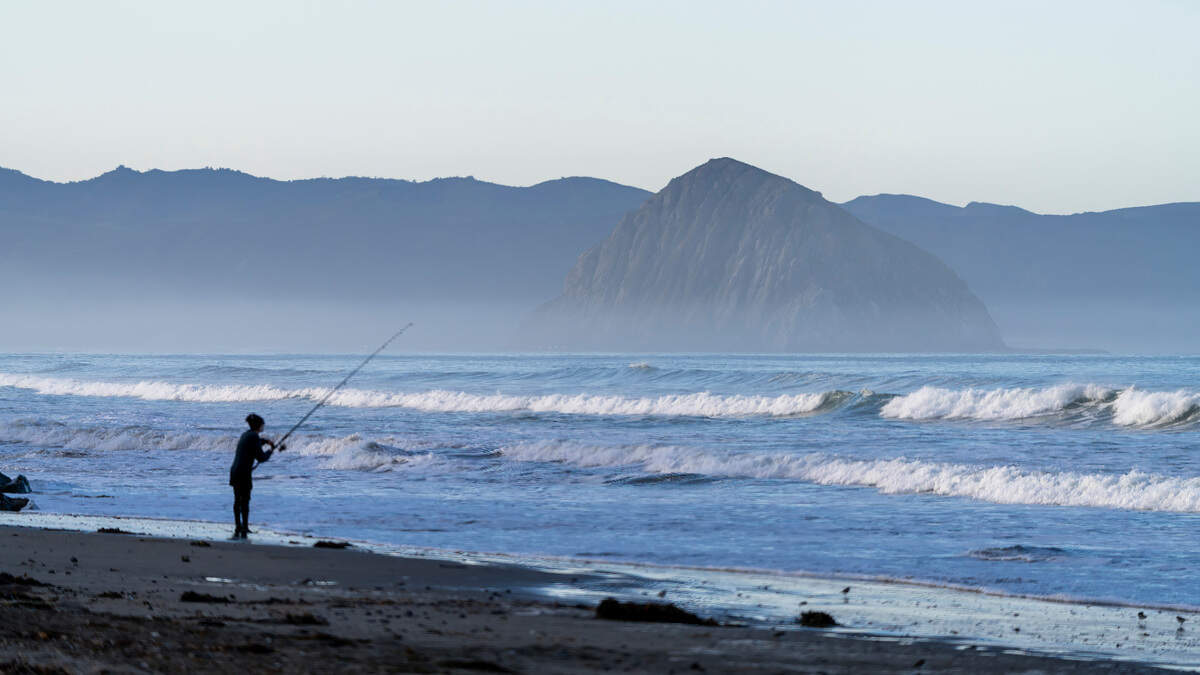
Two Native American tribes applied to the state in 2023 to each establish a new marine protected area on the Central Coast — one off the coast of Morro Bay and the other off Point Sal in Guadalupe.
Read more California climber who set Yosemite speed record dies after Sierra Nevada fall
The protections would prohibit commercial fishing in those areas, and the California Fish and Game Commission could soon decide whether to move forward with the proposals.
The tribes wish to protect the environment and manage the land in partnership with the state, while local commercial fishermen urged the state to deny the petitions so they can continue to make a living.
The California Fish and Game Commission will consider the petitions at a meeting on Wednesday.
Should Morro Bay get a marine protected area?
The Santa Ynez Band of Chumash Indians proposed an 8.45-square-mile State Marine Conservation Area called Chitqawi from Morro Rock to Dog Beach near Cayucos. The petition proposed a ban on commercial and recreational fishing, while allowing the tribe to fish in the area.
“Our goal, as the only federally recognized Chumash tribe in the nation, is to help protect the biodiversity and cultural resources in the waters along the Central Coast through co-management with the state,” tribal chairman Kenneth Kahn said in a statement. “We filed the Chitqawi MPA petition in 2023 to protect the northernmost coastal Chumash village site that is culturally and historically important to the tribe.”
The tribe declined to provide an interview.
The local fishing industry, however, urged the state to deny the petition, Morro Bay Commercial Fishermen’s Organization director Matt Newman said.
About 45 people fish commercially out of Morro Bay. In the proposed marine protected area, they fish for salmon, squid, halibut, rock fish, rock crab and Dungeness crab. Recreational charter fishing boats also fish for rock fish and salmon.
The proposed regulations would force anglers to travel farther from port to find fishing grounds — exposing them to weather and increasing fuel costs.
“You have to basically work harder to catch the same amount of fish,” Newman said.
Morro Bay fisherman Hank Morris catches rock fish with a long line. To use his equipment, he must be 1 mile off the beach at a depth less than 150 feet. There are about five places nearby where the ocean fits those qualifications — and one of those spots is in the proposed marine protected area off Morro Bay. The share of fish he catches there makes up about 10% his income, he said.
“This is very important to the small boat fleet,” he said.
Lori French’s husband, Jeff, has fished for salmon and Dungeness crab out of Morro Bay for more than 50 years. This year, he caught all of his salmon in the proposed marine protected area.
If the protections are established, he’ll have to travel much farther, to say, Bodega Bay or Half Moon Bay, to fish, and he won’t be home as often, French said. He’ll also have to spend more fuel, reducing the viability of his business.
About 27% of all state waters from Piedras Blancas to Point Buchon are covered by marine protected areas, according to the California Department of Fish and Wildlife.
As fishermen are squeezed out of their usual fishing grounds, they will apply more fishing pressure to the few areas left, French said.
“As we lose access, we’re all being forced into the same pie,” she said. “Traditionally, if you’re not making money in one area — and by money, I mean, we’re not making millions, it’s a living — common sense tells you to fish in another area to let that one recover. We don’t have that ability anymore.”
Fishermen follow the state’s regulations to protect fish populations, Newman said.
“Fishermen care the most about sustainability in the future because if you wipe something out, you don’t have a job,” he said.
That being said, they don’t think marine protected areas are the solution. They think the state should stick with existing regulations, instead.
“We have the most regulated fisheries in the world. We have quotas, seasons, minimum size limits, all kinds of gear restrictions,” Newman said. “We have sustainable fisheries here, and we want that.”
Ben Ruttenberg, Cal Poly’s Center for Coastal Marine Sciences director, however, said fishing regulations alone aren’t enough.
Managing a fishery requires scientists to know data about what the ecosystem needs to survive, including the number of fish, the amount of reproduction, the amount of growth, and the carrying capacity.
“It’s really hard to get good information about all of those things,” he said. “If we’re wrong about any of those things, then we are going to overfish the population, even though we’re following all the rules and regulations.”
Prohibiting fishing in parts of the ocean provides an “insurance policy,” he said.
“The amount of fish you’ve got in the ocean is your bank account, and the amount that they’re accruing is the interest rate, and that interest rate can change,” Ruttenberg said. “Having some money set aside for that rainy day helps you avoid overdrafting your bank account if you’re not sure what your interest rate is.”
Meanwhile, a large body of scientific literature shows that in protected areas, the fish get bigger and lay more eggs — then the larvae drift out of the marine protected area to support the fishery.
Read more ALPRs, like Flock, are everywhere in the Sacramento region. What do they track?
“You’re protecting the goose that lays the golden egg — only the goose is getting much bigger and making a whole lot more eggs,” Ruttenberg said.
“Those larvae will drift outside those protected areas into areas that are open to fishing,” he added. “They’ll settle, they’ll grow, and then they can be fished.”
There’s also a spillover of large fish.
“They get really big. They start to compete with each other. They start to move,” he said.
Still, California Department of Fish and Wildlife staff recommended that the state Fish and Game Commission deny the petition and instead designate a State Marine Cultural Preservation Area in the same spot.
This protection would ban the damage or take of cultural resources belonging to any tribe, regardless of federal recognition status. However, commercial and recreational fishing would still be allowed in the area.
This approach would “acknowledge the cultural significance of the area without limiting access to other tribes that have a historical connection to the area” or harming the local fishing industry, the staff report said.
California State Parks has established state cultural reserves on land but never in the water, so this would be the first opportunity to explore such a designation, Fish and Wildlife Marine Region Habitat Conservation Program manager Claire Waggoner told The Tribune.
Should fishing be restricted at Point Sal?
The Northern Chumash Tribal Council co-sponsored a petition with the Natural Resources Defense Council to establish a new, 9-square-mile Marine Protected Area at Point Sal in Guadalupe.
This would prohibit recreational fishing by boat and all commercial fishing, while allowing recreational hook-and-line fishing from shore and “incidental take related to mission-critical military operations of the adjacent Vandenberg Space Force Base,” the petition said.
“We are asking for a very small, important area to be fully protected,” Northern Chumash Tribal Council Chairwoman Violet Sage Walker told The Tribune. “We wanted to focus our energy on asking California to step up and protect this very small, important resource, and start working with the tribes.”
Point Sal hosts important fisheries and a rookery for migrating birds at Lion Rock.
The area is part of the Guadalupe Dune Complex, which is one of the few remaining coastal dune systems in the world. It’s also the site of ancient Chumash homelands, and it hosts one of the sacred celestial points for the Chumash, she said.
It’s important to the Northern Chumash Tribal Council to allow other tribes to access the land, and to allow local residents to practice subsistence fishing from shore, she said.
“It’s got sacred birds. It’s got the rocky reefs with all the animals. You can sit on Point Sal and watch the humpback whales migrate through,” she said. “It’s just a special place in my heart.”
While Sage Walker advocates for the sanctuary, Avila Beach-based fisherman Justin Franklin urged the state to deny it.
For the past 12 years, he’s fished for rock fish out of Point Sal. About half of his income comes from Point Sal, he said.
“Without being able to fish in that area, I’d be out of business,” he said.
Local commercial fishermen are willing to follow state regulations and fish sustainably, they just don’t think restricting fishing entirely is the solution, Franklin said.
“We’re really good at managing our fishing,” he said. “It isn’t like the wild West out there.”
Fish and Wildlife staff did not make a recommendation about this petition one way or another, but instead presented alternative options, including establishing a State Marine Cultural Preservation Area at Point Sal, or a special closure designation to protect bird and seal populations around Lion Rock.
What’s next?
The state Fish and Game Commission will receive Fish and Wildlife’s evaluations of the petitions at the Aug. 12 meeting, where the public can make comments on the proposals.
Then, at its October meeting, the commission could make a decision to approve or deny any of the marine protected areas, or they could direct staff to compile more information or conduct more tribal outreach.
The commission could grant the petitions as submitted, or they could request an alternative design — such as one that allows commercial fishing.
“Anything is on their table,” Waggoner said.
There is no deadline for the commission to make a decision, she said.
Waggoner highly recommended that people submit written comment. The commissioners will read it, and if the meetings get too long, not everyone will have the chance to comment.
“Writing a comment letter is the best way to get your voice heard, and you can make it as long as you want,” she said.
This story was originally published August 11, 2026 at 11:52 AM with the headline “Tribes, fishermen clash over idea for 2 new marine protected areas off Central Coast.”
Read more Wanted man holds off police, sets fire to Parkway apartment in Sacramento standoff