 By admin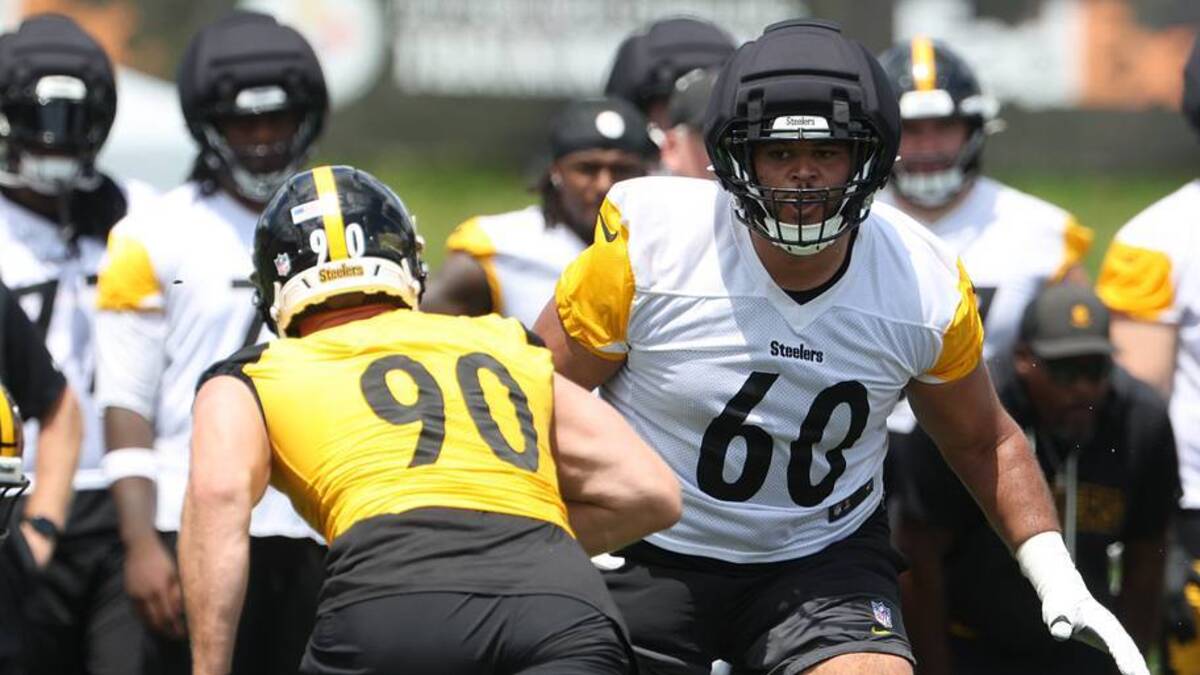
For those of you still recovering from the Haynes King Hall of Fame Game in Week 0, I advise you to receive an IV, sleep in your compression chamber and hit the cold tub. A full slate of largely meaningless preseason action is upon us.
Read more Steelers Linked to Ridiculous QB Trade
But is it really meaningless? Coaches will tell us that specific matchups in joint practices are more helpful from an evaluative standpoint. However, there’s still plenty to watch for, especially with a rash of injuries and depth issues already rearing their heads.
Everyone wants to watch No. 1 pick Fernando Mendoza take his first NFL snaps. Here are six other bullet points I’m keeping an eye on, culled from both my own preseason observations and conversations around the league.
Return of the fullback
When you search “fullback” on X or any other social media platform, the results are usually littered with the less-entertaining position played in the less-interesting sport in the other parts of the world. The decline of the American football fullback reflected what an entertaining but decidedly less physical version of football defined the booming fantasy football era of 2018 to ’24. This offseason, I’ve talked to coaches who expect the fullback to make a bit of a comeback for three reasons.
One, teams have all but exhausted the potential of a second tight end in 21-personnel looking to act as a fullback. Meaning, the idea that a backup tight end can replace a fullback in run-first situations has gone about as far as it can go. Two, because of the evolution of the kickoff, the fullback can be of value on returns again. That way, it is not just a luxury roster spot for 10 or 11 snaps a game, but a multitooled position that can contribute on special teams. Three, having a fullback shrinks the field of play, which helps teams that struggle on the offensive line. A more compact surface area makes offensive tackles less vulnerable and provides a cleaner and easier forum to complete “helping” blocks, like running back and tight end chips. Last year, nine teams had a true fullback log more than 100 snaps, according to Pro Football Focus. Here are the rushing EPA and success percentage rankings of those teams, ranked by number of fullback snaps:
- 1. 49ers: 10th, 13th
- 2. Chargers: 23rd, 25th
- 3. Patriots: 25th, 26th
- 4. Ravens: 3rd, 12th
- 5. Dolphins: 9th, 20th
- 6. Bills: 2nd, 2nd
- 7. Seahawks: 22nd, 23rd
- 8. Broncos: 16th, 11th
- 9. Cowboys: 8th, 7th
So while there are some clunkers in here, we can argue that the second-, third-, eighth-, ninth- and 10th-best rushing teams in the NFL deployed the position on a significant number of snaps, while other teams such as the Chargers and Patriots used the fullback as an aide to help with deficiencies along the offensive line.
This preseason, we’ve seen teams like the Bengals experiment with the fullback position as part of a totally revamped offense. The Vikings have completely transformed their own run game to an outside-zone-heavy system. And while a fullback is not a necessary presence, the Vikings have been a fullback team throughout the nine-year career of two-time Pro Bowler C.J. Ham, and drafted Max Bredeson out of Michigan in the fifth round this year. Bredeson was the only fullback drafted this year, but there are offensive coaches in the NFL who expect the regular usage of a fullback to increase significantly in 2026. The preseason could be a window into how many fullbacks we might see make an active roster or put themselves in position to do so.
New challenge flag process
The NFL recently passed a resolution to allow coaches to designate a challenge flag thrower. The timing of this resolution is interesting because, when I reached out to a pair of NFL head coaches Monday, neither had really been able to dig into the mechanics of it yet-and we’re just a few weeks from the start of the regular season. The consensus was that this would add another step in a procedure that is already fairly efficient: The person in charge of looking for challenge-worthy situations in the booth pings the head coach and the head coach throws the flag. Now, that same procedure would add a different step, since both coaches agreed they would still want to approve of the flag throw. Deputizing someone else to handle that situation would be worth exploring; however, it puts the responsibility on an assistant that a coach’s instinct is to protect. Think of it like game-management coaches, who are rarely-if ever-made available for interviews or publicly held accountable for timeout mistakes or the misuse of the clock. (Plug: I recently had Super Bowl–winning analyst Ryan Paganetti on the MMQB Podcast to talk a lot more about that role.)
That said, the preseason is an ideal ground for experimentation (purposeful or not, as Panthers offensive coordinator Brad Idzik told reporters that his headset went out in the Hall of Fame Game and he had to signal in plays in high school style). Coaches allow subordinates to call plays and will likely toy with the feel of passing off the challenge flag responsibility to see how it feels in a live scenario. There have been examples-see the Nathaniel Hackett Broncos-where teams have changed up their game management tactics in the middle of the actual season, but most of the time these processes need to be ironed out before Week 1. I think we can all imagine a hesitant designated challenge flag thrower factoring into the season in a major way.
Offensive line depth
On average last season, teams played with their most-frequent combination of offensive linemen 42% of the time, according to data from SumerSports. Only eight teams played with their most-frequent combination more than 50% of the time. Four of the 10 teams with the lowest percentages of their most common offensive line group made the playoffs, but none of those teams-the Texans, Packers, Panthers or Chargers-made a significant amount of noise.
Heading into the opening week of preseason games, Steelers tackle Max Iheanachor is out for an undetermined amount of time, which means more exposure for Dylan Cook in the preseason. Commanders tackle Laremy Tunsil won’t be available until late in the regular season, which means more left tackle opportunities for Brandon Coleman. Panthers first-round pick Monroe Freeling, who didn’t play in the Hall of Fame Game, has been moved to the right side following Taylor Moton’s injury. Spencer Fano just locked down the left tackle gig in Cleveland after a lively set of early-camp battles with Jared Verse.
Read more How things played out for the Heat’s last 5 first round draft picks
Many of these updates signify an NFL already scraping level-two depth at the most important position before we’ve seen them in joint practices against unfamiliar opponents or in preseason games (though Coleman and Cook have had starting NFL experience). Increasingly vanilla offensive schemes can prove valuable in one aspect: Coaches are not giving away their best and most creative protections, which include different ways to use backs and tight ends to help the offensive line. That means more prototypical pass sets for offensive linemen on the outside: pure one-on-one work. I think this is more relevant in Pittsburgh, where that will be the norm throughout the season under new coach Mike McCarthy. Cook played well last year and, according to longtime Steelers beat man Mark Kaboly, has been “flawless” this camp. Still, the performance of rookies and high-end backups will define the preseason, much as it does every year. Coaches have not expressed the same optimism in years past about finding capable backups in the middle rounds. We’ll see whether this is in-the-trenches pessimism or a harbinger for depth issues to come.
*As a kind of sub-note to this, I am especially interested in watching Texans rookie Keylan Rutledge, who has debuted on the team’s preseason depth chart as a starting center (and who, as we’re typing this, just started a fistfight with Will Anderson Jr.). The Texans’ offensive line was disastrous last year and prevented the team from uncovering its identity. Rutledge is the type of nasty tone-setter the Texans tried to unearth via their complex personnel formula and, despite the Braden Smith and Wyatt Teller signings, may be the most important piece of a Super Bowl contender‘s offseason makeover.
Giants’ red zone offense
Dan Duggan of The Athleticnoted the other day that he felt signing Najee Harris or trading for a veteran running back could still be in the cards for the Giants despite the promising tandem of Cam Skattebo and Tyrone Tracy Jr. Where this interests me specifically in terms of the preseason is how the Giants perform in their new offensive scheme in the red zone. The numbers, via Warren Sharp, are wild. Last year, the Giants were sixth in EPA per play as an offense outside of the 20-yard line. Inside the red zone, the team was the worst in the NFL-the largest such discrepancy in the league. I think it’s fair to say that if the Giants were a top-10 red zone offense last season, Brian Daboll would still be their coach.
For another interesting wrinkle to this stat, here are two other teams with awful red zone and non-red zone splits last year: the Chargers, from whence new run-game coordinator Greg Roman came, and the Chiefs, the former employer of current Giants offensive coordinator Matt Nagy. While having starters is obviously more indicative of red zone performance, many coaches feel that red zone success is part of a larger mentality and mindset-not to mention a watermark of skilled play-callers who can better operate in tight confines. Seeing how the Giants improve at the goal line could be the determining factor as to whether the team pulls the trigger on a noteworthy veteran signing or trade before the start of the regular season.
New coach debuts
The debuts of Ravens head coach Jesse Minter and Bills defensive coordinator Jim Leonhard are significant because both will-in my opinion-have the largest singular impact on a potential team’s ability to reach the Super Bowl or remain in the car park of elite mediocrity (a phrase I have stolen from longtime friend Dan Hanzus). When isolated against top-performing offenses, the Ravens’ and Bills’ defenses last year were among the worst in the NFL, despite having high-powered potential on the other side of the ball. Having covered Leonhard as a player and seeing the defenses he was bred in, it’s no secret that the Bills are going to be a heavy-simulated-pressure team, à la the great Rex Ryan and Mike Pettine defenses of the early 2010s. Minter will also be running an aggressive, virus-like defense that can make far better use of its available talent.
I’ll be paying less attention to what the defenses look like in the preseason than who actually has a hand in them. ESPN’s Ben Solak noted the whirlwind of rotation players that were a part of Leonhard’s defense in Buffalo’s camp. Over in Owings Mills, we’re hearing a lot about the potential of Jaylinn Hawkins’s addition to a defensive backfield alongside Kyle Hamilton, and how that could help fit the Ravens into Minter’s dream nickel-like defense. But as we noted on the offensive line front, maintaining versatility means improving depth and keeping a stable of players at the ready who can perform within these parameters. The third and fourth quarter may be largely irrelevant under most preseason circumstances, but not with both of these prospective Super Bowl contenders.
Quarterback reps
Seahawks coach Mike Macdonald says he will be considering an adjustment to how he dispenses quarterback reps during the preseason. While prepping Drew Lock is obviously important, I think this is more likely an attempt to firehose second-year developmental project Jalen Milroe. New offensive coordinator Brian Fleury told reporters that Milroe’s ability to have his own subpackage, which we hinted at extensively during last year’s preseason, is dependent on his ability to grow as a quarterback and achieve total command of the offense. Also, with a Super Bowl–winning coach adjusting quarterback rep philosophies, in addition to Mike McCarthy discussing Aaron Rodgers’s potential playing time at 42, we could be in for one of those watershed preseasons where we see a larger philosophical shift in what we ask of signal-callers during the warm-up period.
MORE NFL FROM SPORTS ILLUSTRATED
- NFL Training Camp Roundup: Why Puka Nacua and Josh Jacobs Could Start 2026 Season with Suspensions
- Why JSN Got Compared to Wemby: Top Moments From Episode Two of ‘Hard Knocks’ With the Seahawks
- Albert Breer Empties His Vikings Notebook From Training Camp
- The Vikings Need Less From Kyler Murray Than You Might Think
This article was originally published on www.si.com as Six Week 1 NFL Preseason Storylines To Watch That Aren’t Fernando Mendoza.
Copyright ABG-SI LLC. SPORTS ILLUSTRATED is a registered trademark of ABG-SI LLC. All Rights Reserved.
Read more Sheila Hamp: 9-8 Season Wasn’t Good Enough, Expects Team To Be Contender
This story was originally published August 12, 2026 at 4:00 AM.