 By admin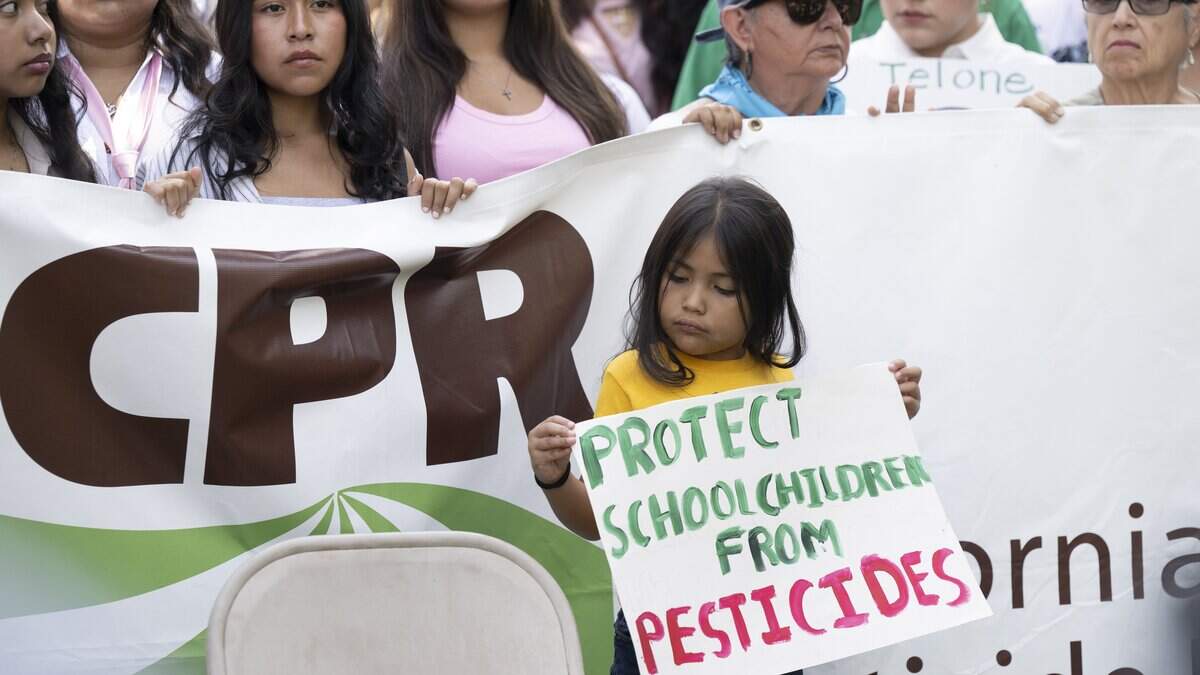
Pesticides are a hot button topic in California and throughout the country, and the California Department of Pesticide Regulation’s new proposed pesticide enforcement changes are no exception.
Read more Slice of Tahoe in Sacramento? Cabin-style home with mid-century appeal hits market
In June, the regulatory agency proposed what it is calling the first “significant” updates to pesticide regulations in 20 years.
The changes focus on increasing accountability for human health violations and repeat offenders, as well as ensuring more consistent enforcement across the state’s 58 counties.
As with any update to pesticide regulation, the proposed changes have led to a range of responses from groups tied to the food and agriculture industries — with anti-pesticide organizations the most vocal publicly.
Some agricultural groups say they are on board with holding rule breakers accountable but don’t want blanket increases in fees on growers who violate regulations.
“We support strong enforcement when violations cause harm or reflect repeated noncompliance, but an isolated, good-faith mistake should not automatically trigger increasing penalties,” said Miranda Driver, executive director of the Yolo County Farm Bureau, in a statement. “County agricultural commissioners need the flexibility to consider each situation and decide the best way to bring an operation into compliance.”
Environmental and farmworker advocates are supportive of some of the changes but generally don’t think they go far enough, including United Farm Workers leader Dolores Huerta.
“I really don’t believe that the regulations are going to stop or minimize the use of pesticides,” Huerta said in an interview with The Sacramento Bee. “I think we have to go a lot deeper on this. The whole use of pesticides has become normalized. Pesticides are poisonous and used to kill bugs, but that also means they can also kill humans.”
DPR’s regulatory updates are a part of the department’s five-year strategic plan that began in 2024. The pesticide regulation department is housed under the California Environmental Protection Agency and is charged with protecting the environment and human health through pest management and regulating pesticides.
The agency has said the rules changes are occurring now for two reasons: the division’s value of “continuous improvement” and a U.S. EPA audit that highlighted some inconsistencies across county enforcement.
In an effort to achieve better consistency, the state revised the regulations to clarify rule language, timelines and documentation requirements.
In California, on-the-ground enforcement for pesticide regulations is conducted by county agricultural commissioners. County staff conduct investigations on reported incidents and work on pesticide compliance with growers. The state agency’s main role is to provide oversight and guidance to the counties.
Lindsey Carter, executive director for the California Agricultural Commissioners and Sealers Association, said that lawmakers were proactive in hearing their concerns in drafting the new rules.
“I think these were probably the most interactive discussions that we have had in recent times (related to) regulatory packages,” Carter said.
She said that the new rules allow for individual regulator discretion for each incident — a top priority for commissioners.
Currently, the regulations are broken down into three separate classes — A, B and C — based on the nature of the violation. With the proposed changes, the first category, class A, would be separated into two subcategories: one focused on health hazards and the other focused on property and environmental hazards. The department’s goal is to increase the severity of the penalty for health hazard breaches.
With that class change, the department will also raise minimum fees for violations that harm human health and raise fines for repeat violators by at least 20%.
Jacob Villagomez, director of governmental affairs for California Citrus Mutual, a trade association representing the roughly 2,000 citrus growers in the state, wants DPR to better explain why the regulatory changes are needed.
He said he is also concerned that the blanket fine increases don’t take into account if a grower self-reports a violation, which he said may discourage farmers from speaking up. Another sticking point, he said, is that the regulations don’t consider if a farmworker declines care in the event of a human health risk from pesticide exposure — a situation in which a grower could still be fined.
Read more Jhonatan Olivares brilla como presentador y como creador de contenido
“The comments we have submitted to this are not to avoid accountability but to ensure the new framework is transparent and proportional to the violation and consistently applied,” Villagomez said. “Ultimately, DPR wants to improve compliance, and we share that same goal.”
James Johas, a former wine grape grower and current pest control advisor for 4,000 acres of grapes, doesn’t see DPR’s proposed pesticide enforcement changes as anything to raise alarms about based on his experience with the agricultural commissioners he works with in Yolo and Sacramento counties.
Johas said he supports “anything that protects the community and workers.” He said he has never been fined by an agricultural commissioner’s office and the two commissioners are willing to work with growers by having conversations before any fines are issued.
“With my experience, just being a grower, it’s always been fine,” Johas said. “I can’t say that is going to be true for everyone. As long as the laws are enforced in a uniform way across the state, I am not against it in any way.”
In the midst of DPR’s updates to its 2006 pesticide enforcement regulations, environmental and farmworker advocacy groups continue to call for a complete overhaul of the state’s pesticide use system.
“It does feel like it is a little too late,” said Erika Alfaro, a public health nurse in San Mateo and representative for the California Nurses for Environmental Health and Justice, of the proposed changes.
Regulations still fail to properly safeguard community health, Alfaro said, especially for children whose development can be hindered after pesticide exposure.
On Tuesday, Alfaro and dozens of other advocates and farmworkers spanning ages from the single digits to 96 gathered in front of the Capitol holding signs reading “DPR: Protect the Children” and “Fumigants Cause Cancer” as they chanted “Sí, se puede,” or “Yes, we can,” a phrase coined by Huerta, the labor leader, who was in attendance.
The rally — spearheaded by Californians for Pesticide Reform, a coalition of more than 200 organizations in the state — was held shortly before a legislative hearing to evaluate the state’s pesticide program, including DPR’s work.
Sandra Garcia, a Tulare County farmworker who was at the event with her organization Campesinas Unidas Del Valle de San Joaquin, said her mother died from pesticide exposure. Garcia said her health is also negatively affected by toxicants. She has been a farmworker for 40 years. Her six children are as well.
“We have already spent many years asking for help,” Garcia said in Spanish. “We want to protect the next generation from these chemicals.”
Californians for Pesticide Reform argues that DPR’s funding structure — which depends on fees from pesticide sales — creates a conflict of interest.
While it supports the increased fine levels in DPR’s new proposed regulations, especially for repeat offenders, the coalition said the fines are still too low.
Another agency tasked with worker safety, the California Division of Occupational Safety and Health, commonly known as Cal/OSHA, has a much higher fine structure than for workplaces that violate state regulations, including by jeopardizing worker safety.
Now that the public comment period for the changes has closed, DPR will have to decide if it will revise its proposal and hold a second public comment period.
The agency is currently reviewing submitted public comments and will “determine the appropriate next steps” after that, DPR spokesperson Kim Rosenfeld said in a statement.
The department expects the new regulations to go into effect in early 2027.
Once the pesticide regulations team finalizes the updates, it will send the rules to the state Office of Administrative Law for review. The Office of Administrative Law has 30 working days to approve or deny the new regulations.
Read more Pho restaurant opens in Arden Arcade, serving a ‘labor of love’ in each bowl