 By admin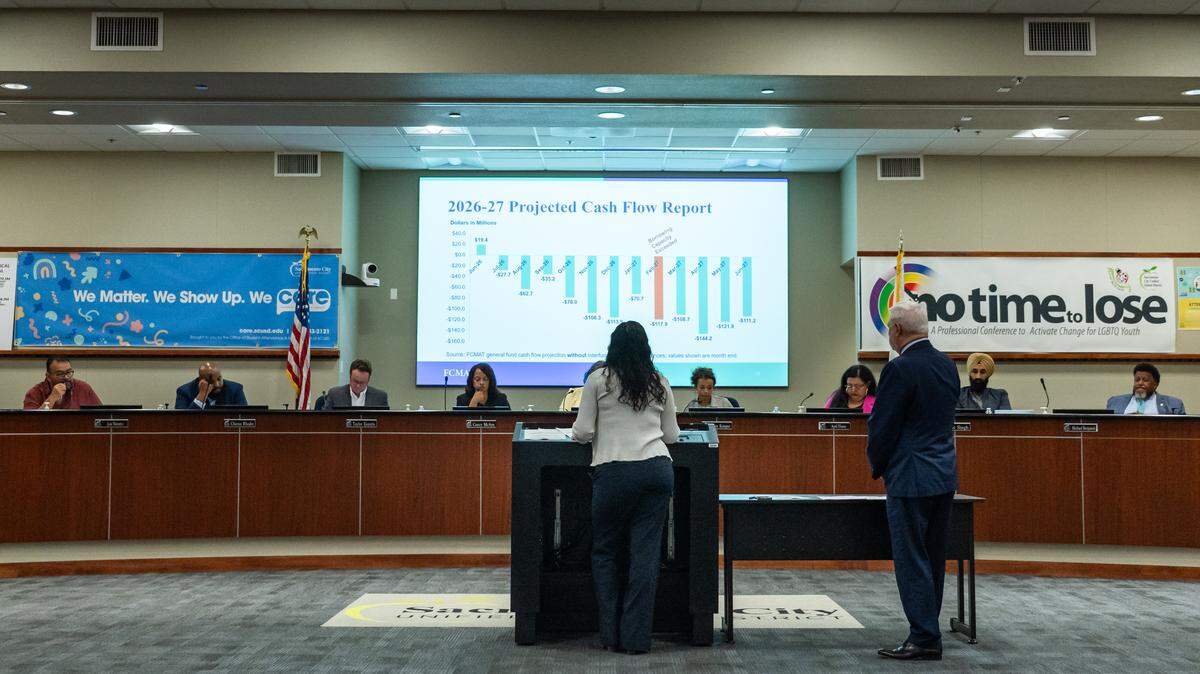
Sacramento City Unified School District is going through one of the most unprecedented fiscal disputes in California, one that has left even the state’s top education officials grappling with the scope of their authority and intervention.
Read more 15th annual Sacramento Banana Festival serves up fruity fun by the bunch
As local and county officials butted heads over how to address the historic deficit, disagreements over how to avoid insolvency grew into an increasingly public power struggle.
It’s a complicated story, featuring three superintendents, lots of budget numbers and an alphabet soup of educational institutions.
Here’s our primer on the situation so far.
The leadership
Cancy McArn, superintendent of the Sacramento City Unified School District: McArn stepped into a pressure cooker role at SCUSD after her predecessor, Lisa Allen, resigned in February amid the district’s deepening budget crisis. As the district’s financial problems intensified, McArn became a central player in an increasingly public confrontation with the county Office of Education over how the district should prevent insolvency. McArn will be replaced if the district becomes insolvent.
David Gordon, superintendent of Sacramento County Office of Education: As head of SCOE, which oversees the finances of the county’s school districts, Gordon has emerged as the head of the agency most directly at odds with SCUSD during the fiscal crisis, repeatedly warning about the district’s structural deficit and shrinking window to avoid insolvency and a state loan. Gordon, who will retire next year, has assigned fiscal adviser Luz Cazares to work with the district as part of the county’s fiscal oversight.
Tony Thurmond, superintendent of the California Department of Education: Outgoing State Superintendent Tony Thurmond was recently drawn into Sacramento’s escalating education budget crisis after the county reversed a July budget agreement between the district and its teachers union that was intended to give the district more time before it runs out of money.
Although Thurmond rejected the district’s appeal, saying it had not met all the conditions required for approval, he agreed with a separate part of SCUSD’s case — that the county’s oversight had not effectively resolved the district’s financial problems when looking specifically at the rescission.
Thurmond’s term ends in January.
The vocabulary
SCUSD: Sacramento City Unified School District is the third-largest school district in Sacramento County, with more than 41,800 students enrolled in 2025-26. It covers most of the city of Sacramento south of the American River, and stretches east into Rancho Cordova.
SCOE: Sacramento County Office of Education provides services to Sacramento County school districts and oversees their fiscal stability.
FCMAT: The Fiscal Crisis and Management Assistance Team is a state-funded financial group that provides fiscal oversight. It evaluates school districts’ financial health and helps them identify and address fiscal problems. Michael Fine, the chief executive officer of the team, has warned that the district could run out of money before the current school year ends, forcing it to ask the Legislature for an emergency loan.
Read more Most underrated college towns in the nation. Which California town ranked No. 2?
SCTA: Sacramento City Teachers Association had about 3,000 members as of August 2025, including roughly 2,300 full-time educators and 700 substitute teachers. SCTA describes itself as the seventh-largest teachers’ union in California. Under state law, the union’s current labor agreements would not be affected if SCUSD goes into receivership, which makes the contract extension in its cancelled July agreement with the district appealing.
State receivership: When a district must take an emergency loan from the state to cover its expenses, it goes into state receivership. The elected school board loses its governing authority, and the superintendent is replaced by a county-appointed administrator who oversees the district’s finances until the loan is repaid with interest.
Rescission: The cancellation or undoing of a contract. SCOE rescinded SCUSD’s July agreement with its teachers union, effectively blocking the deal from taking effect. Under California law, a county superintendent can pause or rescind a school board decision if they determine that it could make it harder for the district to meet its financial obligations.
Structural deficit: A budget gap where expenses are higher or growing faster than revenue, independent of variations in the economic cycle such as recessions.
The math
In September 2025, district staff presented a wave of budget updates showing that SCUSD’s financial position had deteriorated, reporting that its available funds had dropped by about $43 million and warning that, without corrective action, it would fall about $88 million below its state-required reserve by 2027-28.
While the district took a series of cost-cutting steps — including freezing spending on supplies, hiring and most new contracts, as well as laying off employees — successive budget updates showed the financial hole continuing to deepen.
In June, the district’s 2026-27 budget projected a deficit of about $222 million for the current fiscal year, leaving it nearly $284 million in the red by year’s end. Current projections show a $510 million deficit for 2027-28.
On July 30, the SCUSD board approved an agreement with its teachers union, which was projected to provide about $98 million in fiscal relief over three years, in part by using money from a retiree-health trust fund.
After the rescission, the district was told it must identify about $150 million in cash solutions by June 2027.
Read more Sacramento crawls with bug lovers — some in costume — at inaugural Bugtopia expo
The history
