 By admin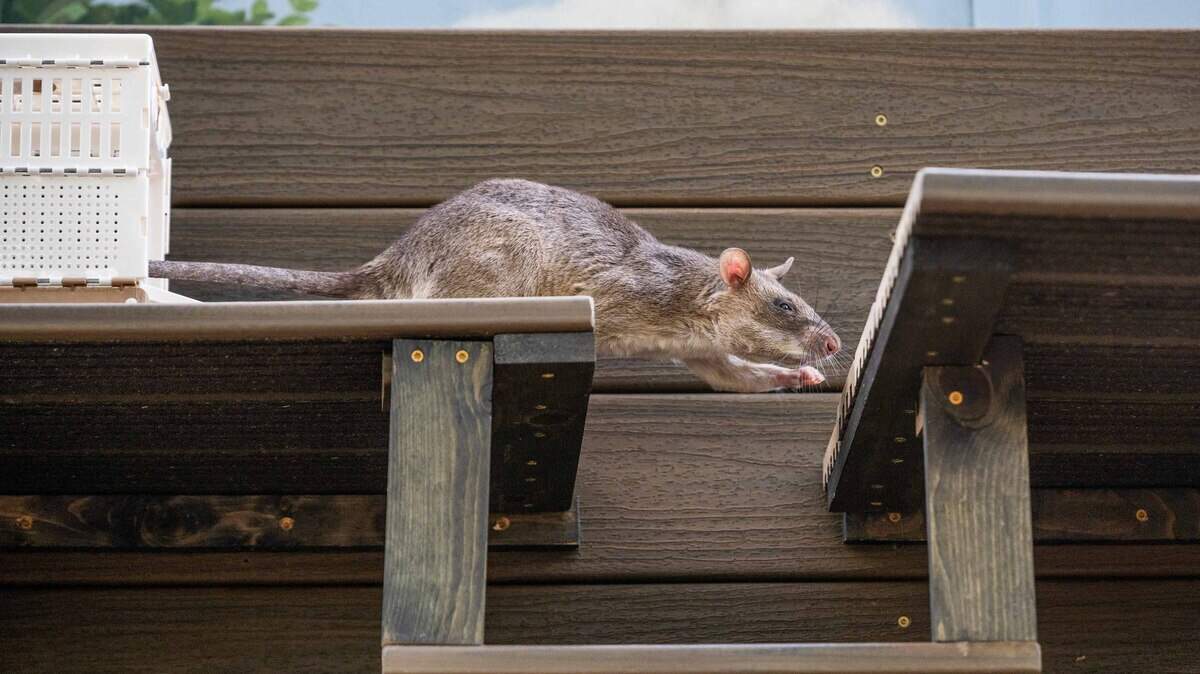
Even the most skilled performers sometimes get stage fright. That’s what happened Thursday morning when the Sacramento Zoo showcased its newest animal resident.
Read more Resort, apartments opening on formerly industrial West Sacramento riverfront
“HeroRat” Bobby Charleton was brought out for the first time to a crowd of more than 100 eager animal-lovers to do his special talent: scent detection on a maze wall. However, the loud noises and the large audience left him feeling shy, so zoo-goers only got a small taste of what’s coming in the next few months.
On Thursday morning, the Sacramento Zoo hosted a public welcome party for its newest crew of African giant pouched rats. Hailing from sub-Saharan Africa, these animals were trained by Belgian conservation nonprofit APOPO to perform some heroic tasks.
Detecting poached animal products, identifying tuberculosis infection and finding hidden landmines are some of the efforts the rats have been critical in furthering.
The zoo is now home to three of these rats, including Bobby Charleton and Pacome, who was in the habitat display revealed during Thursday’s event.
“Today feels surreal,” said Jonelle Mason, a Sacramento Zoo animal care manager. “We’re this tiny little zoo in California, and we have three HeroRats.”
What are HeroRats?
The remarkable animals have been part of an APOPO training program in Tanzania for nearly 30 years, spending most of their lifespan of roughly 8 years learning how to hone their innate smelling skills and working in the field.
In Angola, Azerbaijan and Cambodia, the rats are involved in sniffing out explosive residue to clear acres of unexploded ordnance, while teams in Tanzania and Ethiopia screen hundreds of tuberculosis tests in a fraction of the time that traditional lab work would take.
Also in their home base of Tanzania, the rats are used at major ports to identify cargo that is carrying trafficked animal products.
Currently, APOPO has more than 140 rats in the field across the globe doing this dangerous but important work.
According to Mason, HeroRats must be 99% accurate in detecting their targets in training to become a full-fledged member of APOPO’s fleet. The three rats at the Sacramento Zoo did not meet the strict grade, having achieved 92-96% accuracy during training.
“When you’re testing for anti-poaching efforts and (tuberculosis), you know, you really need them to be top-tier sniffers,” Mason said.
As the newest “ambassador animals” for the Sacramento Zoo, the rats are a key educational asset, helping teach visitors about global animal trafficking issues and how organizations are combatting it.
Read more West Sacramento residents criticize process for choosing new trash hauler
“By coming out to the zoo or supporting the zoo, people are directly helping save wildlife and wild places,” said Matt McKim, chief animal programs officer for the Sacramento Zoo. “Just by coming here, you’re helping save these animals.”
A superpowered habitat
Sacramento’s zoo got a chance to bring in the pouched rats through a chance encounter. One of Mason’s fellow zookeeper friends, based at the San Diego Zoo, spotted an empty space next to the capital city zoo’s cheetah enclosure, and encouraged Mason to try to get a HeroRat habitat started.
“I kind of laughed and was like, ‘Yeah, very funny, right? We can’t get a HeroRat.’ And she said, ‘No, really, we have them, and they’re amazing, and I have the contact info,’” Mason said.
From there, she pitched the idea to McKim, and the zoo team was off to the rat races.
The Sacramento Zoo’s habitat for Pacome, Bobby Charleton and their third compatriot, Aksa, is the first of its kind in the U.S., according to Mason.
Five other zoological facilities in the country have HeroRats as residents, but only Sacramento’s zoo has taken on the challenge to design a permanent public space for the creatures.
“They came with a 71-page care manual,” Mason said. “There’s this really, really intense partnership with APOPO, which is so structured and very unique … there’s just a lot of oversight.”
Staff from all parts of the zoo collaborated over nine months to develop the highly particular habitat. The in-house facilities team used a shipping container to create a shelter for the rats and created an educational play space for children, which depicts some of the critical work the rats do globally.
“It was just such a beautiful collaborative effort, and everybody’s skills came out,” Mason said. “I’m just very, very proud and fortunate to have been a part of the project.”
Throughout their time at the zoo, the rats have maintained their smelling skills and their work through daily training and lots of treats, including sunflower seeds and special smoothies.
Pacome and his friends will take turns being the public-facing rat at the zoo, swapping out roles as behind-the-scenes or front-of-house animals weekly. Once the critters get settled in to their new routine in the limelight, they will start performing at the zoo’s amphitheater, showing off their scent detection skills like Bobby Charleton attempted on debut day.
“When you come back in a few weeks and see his improvement, remember this moment,” Mason said to a charmed crowd.
Read more Data centers’ deep political unpopularity enters debate over CEQA reform measure
This story was originally published August 20, 2026 at 3:45 PM.