 By admin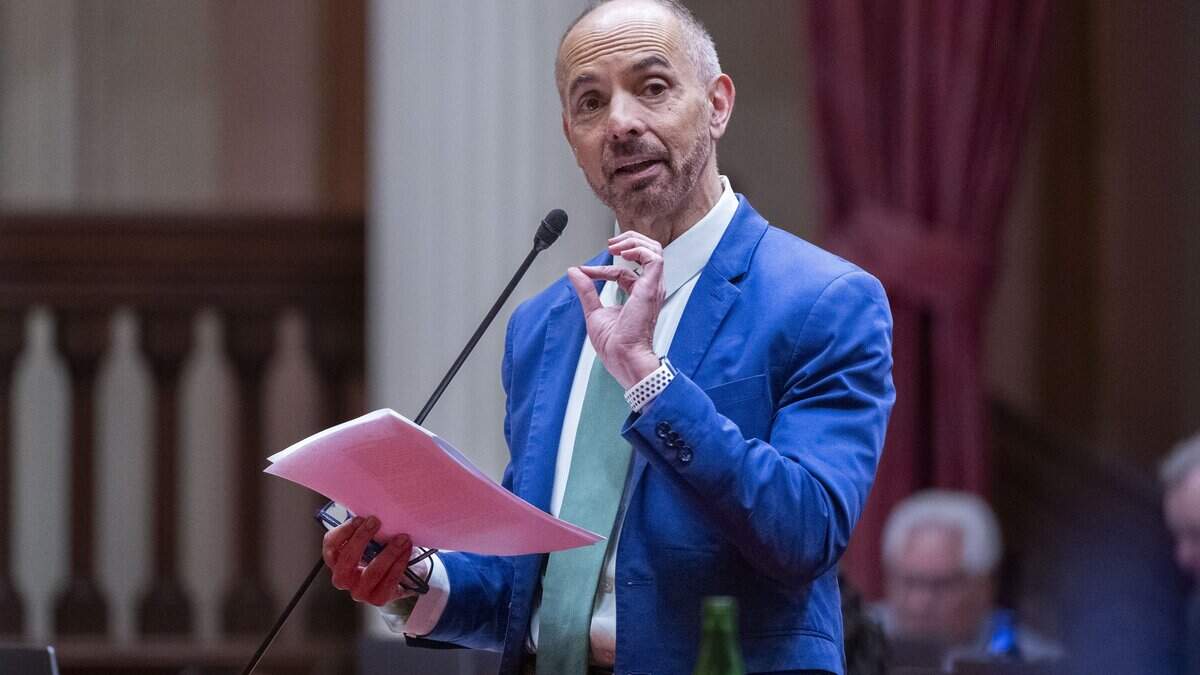
Over the last decade, community colleges in California have slowly entered into what has historically been the purview of the University of California and the California State University: providing bachelor’s degrees.
Read more Sacramento’s Natomas tiny home project for homeless delayed as costs nearly double
With the goal of increasing access and affordability, this new baccalaureate program adds to the California Community College system’s main offerings of certificate programs and two-year associate degrees. At present, more than 30 of the state’s 116 community colleges offer bachelor’s degrees in subjects including respiratory care, dental hygiene and mortuary science.
But to be approved, these degrees must ensure not only that they meet regional workforce needs but also that they do not duplicate programs offered by the UC and CSU systems. This condition aimed to preserve the original mission of each higher education segment and ensure efficient use of state resources.
Now, a pair of bills moving through the California Legislature may ease that restriction. Senate Bill 960 and Assembly Bill 2694, though somewhat different, would both allow community colleges to duplicate programs offered by traditional four-year public universities if they are not within the same geographic region. SB 960, in addition, would authorize duplication of bachelor’s degrees offered at CSUs in the same region if those programs have been oversubscribed for three consecutive years.
“SB 960 provides a student and workforce focused approach to allowing some community colleges to offer a bachelor′s degree,” said Sen. Christopher Cabaldon, D-West Sacramento, who authored the bill, in a statement. “This bill removes an outdated barrier that prioritizes institutional boundaries over students’ futures. By expanding affordable, local access to bachelor’s degrees in critical technical fields, SB 960 strengthens California’s workforce, fuels economic growth and ensures students are not denied opportunity simply because a program is full.”
The expansion’s obstacle: Gov. Gavin Newsom
Both SB 960 and AB 2694, authored by Assemblymembers David Alvarez, D-San Diego, and Blanca Pacheco, D-Downey, cleared key legislative hurdles earlier this month. Their biggest obstacle, however, may be securing Gov. Gavin Newsom’s approval.
Since 2024, Newsom has vetoed three bills that sought to authorize bachelor’s degree programs in nursing at community colleges. He was afraid, he wrote in veto letters, that those bills could undermine existing partnerships between the three segments of higher education in the state. Newsom also said the state must first evaluate the impact of the community colleges’ existing bachelor’s degree programs before expanding it further. In 2014, a statewide baccalaureate degree pilot program was established at 15 California community colleges. In 2021, the program was extended indefinitely and expanded such that up to 30 new bachelor’s degree programs at different colleges across the system can be established per academic year.
Newsom’s apprehensions mirrored some of those held by the CSU and UC systems, both of which have opposed the bills. For the CSU, a significant concern is how the proposed change would affect the “fiscal stability and institutional sustainability of the CSU.”
The CSU’s two main revenue buckets are its state general fund allocation and student tuition, meaning a dip in student enrollment — if students choose to pursue bachelor’s degrees at community colleges instead — would trigger a decrease in its budget. In recent years, the tension between CSU and community colleges over bachelor’s degree program duplication under the current approval structure has left several proposed programs in limbo. A major source of contention is what constitutes duplication and whether geographic distance is a relevant factor.
Read more Sacramento County pays $1.5 million to settle foster care sexual assault suit
In a letter of opposition, the CSU said the transfer pathway between community colleges and its campuses was the most effective way to increase access to bachelor’s degrees. It emphasized investing in such collaborations instead of expanding the community college baccalaureate program. The California Faculty Association, which represents nearly 30,000 professors, lecturers, counselors and librarians at the CSU, also opposed the bills.
Rethinking California’s higher education plan
The UC, which is unaffected by SB 960 in its present form but named in AB 2694, pushed for a complete review of the state’s higher education master plan that was adopted in 1960 and set in stone different functions for the UC, CSU and community colleges.
“Piecemeal changes will not increase access efficiently or equitably, nor will they account for the extraordinary changes our state has experienced since the original master plan was created,” a UC representative said in an opposition letter. “As an alternative, we request that the Legislature allow UC and our higher education partners to develop a new framework for higher education in California, and to come back to the Legislature with a plan that will better meet the needs of our communities.”
Valerie Lundy-Wagner, a higher education expert at the Public Policy Institute of California, echoed this idea. She urged state leaders to think about questions of who does what and how to increase access in a more systematic way.
“All of these innovations are happening — whether it’s the CSU’s new three-year bachelor’s degrees or the community college bachelor’s programs in its current form,” Lundy-Wagner said. “They’re just not happening systematically and with a clear focus on what the state’s goals are for higher education and training.”
The community colleges, meanwhile, came out in strong support of the proposed bills. In a letter representing dozens of community colleges across the state, they wrote that the proposed legislation recognized that “the mere existence of a program within the [CSU] system does not guarantee meaningful access,” especially for place-bound students. Community colleges, the letter added, were “uniquely positioned” to help close gaps in regional workforce needs.
As the legislative session nears its end, and ahead of the final votes, discussions between Assemblymember Alvarez and Senator Cabaldon are ongoing to revise the language in their respective bills to ensure they are complementary to each other. At present, the goal is not to merge the bills but to see how they may work together.
Read more Sacramento City Unified keeps rescinded teachers’ union deal in solvency plan