 By admin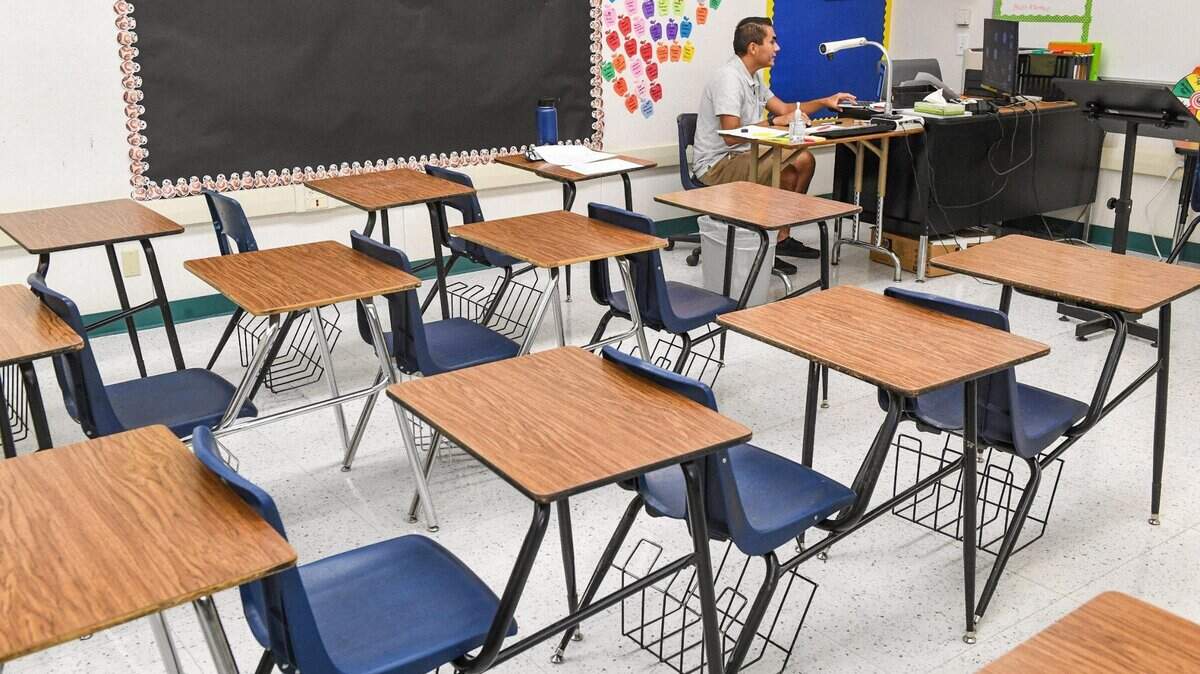
Amid sweltering heat and smoky skies, students and teachers will head back to schools with broken, outdated heating, ventilation and air conditioning (HVAC) systems that California could fix today with existing funds. But repairs have gone undone, and now the funds themselves are in jeopardy, in the name of affordability.
Read more CA deputy DA stabbed off-camera during judge candidate’s campaign shoot. What to know
Affordability talk is everywhere. But as a California public school parent turned healthy schools advocate, the slogan makes me wary. I’ve seen firsthand, through recent debate over school HVAC funding, how affordability talk can create false tradeoffs by selectively accounting for some costs while ignoring others.
In 2024, with utility rates rising, Gov. Gavin Newsom’s administration set its sights on the California Schools Healthy Air, Plumbing and Efficiency Program (CalSHAPE), a grant program the Legislature created in 2020 to fix public school HVAC and plumbing using unspent utility .
The need is real. Many California schools’ HVAC systems require repairs or replacement. Left undone, the faulty machinery could result in higher energy costs and grid load, not to mention unhealthy classrooms that are vulnerable to extreme heat, wildfire smoke and infectious diseases. Half of CalSHAPE’s HVAC grant dollars have gone to underserved communities.
Still, the administration abruptly froze CalSHAPE applications on July 1, 2024. Advocates, including me, successfully opposed Assembly Bill 3121, authored by Assemblymember Cottie Petrie-Norris, D-Irvine, a bill that proposed to liquidate program funds for token ratepayer credits. But the administration has refused to reopen applications, despite in existing funds.
Of more than 4,500 schools that received initial grants to identify HVAC problems, only 172 have secured follow-on funding for upgrades. Unless lawmakers extend now-looming statutory deadlines this session, existing funds will revert to big utilities on Dec. 1, and the program will die.
Because the administration and others have defended ending CalSHAPE as an energy affordability imperative, it’s worth asking: Will taking existing program funds away from schools actually give utility ratepayers meaningful relief?
Read more How many miles did they go to get to The Bee? From sea to shining Sacramento River!
San Diego Gas & Electric has claimed so, pointing to its Sacramento lobbying to revert CalSHAPE funds when questioned about its profit rates at a San Diego City Council meeting. But a shows that, if utilities pass on reverted CalSHAPE funds, ratepayers’ bill relief will be negligible — only $0.20 to $2 per month for one year, depending on whether they are customers of PG&E, Southern California Edison or San Diego Gas & Electric.
More importantly, whether a policy promotes affordability can’t be judged on short-term savings alone. While California ratepayers are unquestionably struggling, ending CalSHAPE won’t address the , most notably wildfire costs.
Upgrades can cut school HVAC systems’ energy use by , relieving pressure on school district budgets and the taxpayers who fund them. A recent cost-benefit analysis by economist Richard Bruns also estimated an average 30-to-1 return on CalSHAPE-funded HVAC upgrades through improved health and educational outcomes. Forgoing these substantial long-term benefits for immediate small-change ratepayer credits is no bargain.
Affordability talk is cheap. Not fixing school HVAC with available CalSHAPE funds is costly. It means more classrooms where students and teachers feel too hot to focus on learning, cough or wheeze from wildfire smoke or miss school with the flu or other respiratory illnesses.
Californians deserve policies that address the real drivers of the affordability crisis and help us meet essential needs today, without sacrificing our future. We can afford — and must demand — nothing less.
JuNelle Harris is a Livermore Valley Joint Unified School District parent and co-founder of the nonprofit Clean Air Allies.
Read more Sacramento top stories: Red light cameras, teachers union deal, workers comp funds