 By admin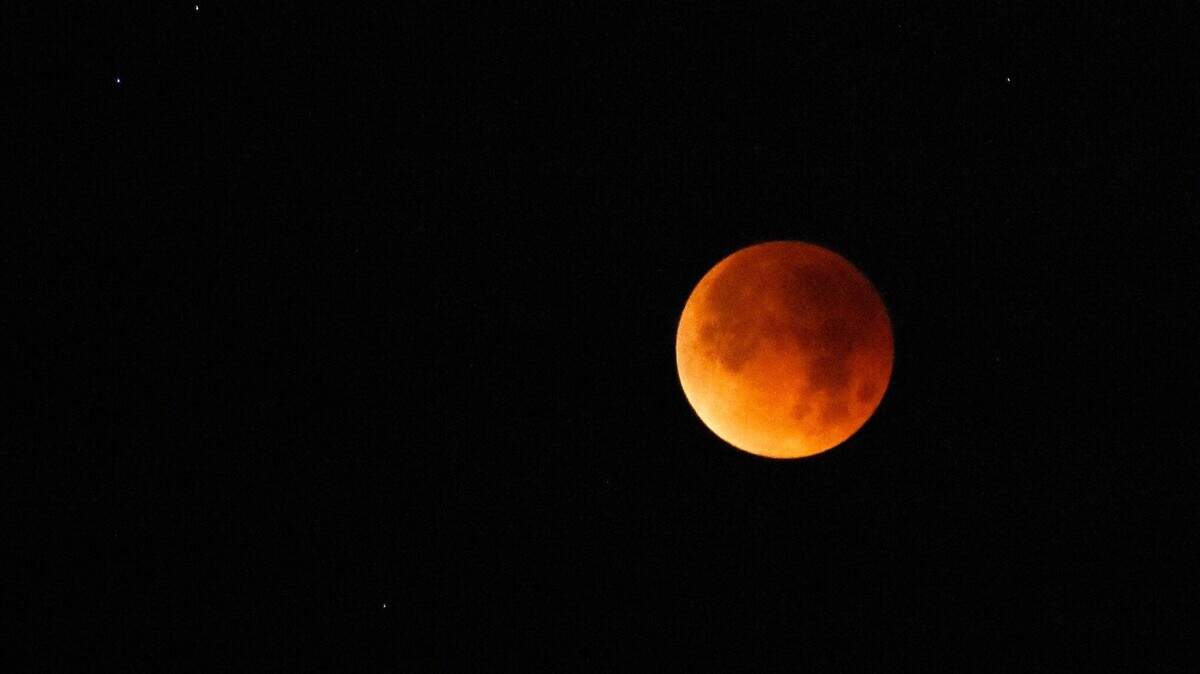
California sky gazers will soon see the moon slip between the Earth and Sun.
The August full moon will undergo a near-total lunar eclipse, appearing to change to its “most impressive” and “deepest” color until 2028, according to Space.com.
Read more Craving Detroit-style deep-dish pizza? New spot in Sacramento’s Land Park can help
To get the best view of the reddish moon, head to areas with clear skies and low light pollution.
Here’s how visible the partial lunar eclipse could be where you live:
When is full moon in August 2026?
In August, the full moon will coincide with a partial lunar eclipse.
The full moon will reach peak illumination at 9:18 p.m. on Thursday, Aug. 27, according to online clock Time and Date.
Why is August’s full moon called the sturgeon moon?
August’s full moon is known as the sturgeon moon, according to the Old Farmer’s Almanac.
It’s named after the giant freshwater fish that were “readily caught” in the Great Lakes region during this part of summer, the almanac said.
What is a lunar eclipse?
According to Space.com, a lunar eclipse happens “when Earth is between the sun and a full moon.
As the full moon passes into Earth’s umbral shadow, it will dim and “look slightly reddish-orange,” Space.com said. “However, it won’t be a true “blood moon” because at no point will there be lunar totality — when the entire lunar surface falls under Earth’s shadow.”
The lunar eclipse will be almost full due to Earth’s shadow covering 96% of the full moon.
What are best times to watch the lunar eclipse?
The near-total lunar eclipse will start at 10:34 p.m. on Thursday, Aug. 27, according to AccuWeather.
North and South America will have some of the best views of the blood-red moon.
“Viewing conditions will depend on the local weather, with western U.S. states, northern Chile and inland Brazil statistically offering the best odds of clear skies,” Space.com said.
The partial lunar eclipse will peak at 12:12 a.m. and end at 1:52 a.m. on Aug. 28, AccuWeather said.
Read more CalPERS won’t seek return of $20.6M tied to rescinded Sac City Unified deal
What’s in the weather forecast for Sacramento? Modesto?
Parts of California will experience “fair” viewing conditions for the near-total lunar eclipse with rain clouds potentially blocking views, forecasters said.
According to the National Weather Service’s current forecast for Sacramento, the Northern California city had a 20% chance of rain on Thursday night, plus “increasing clouds.”
Sacramento was expected to experience 72% cloud coverage, according to AccuWeather.
Modesto will experience similar conditions.
On Thursday, Modesto was expected to be “mostly cloudy” with a 20% chance of rain, according to the weather service.
What about Fresno and Merced? San Luis Obispo?
“Mostly cloudy” conditions were predicted in Fresno and Merced, a 20% of rain after 11 p.m., according to the National Weather Service.
Fresno’s cloud coverage will increase by 32% by Thursday night, according to AccuWeather.
The weather service’s latest forecast for San Luis Obispo called for cloudy skies with a 20% chance of showers.
Where are the best places to stargaze?
For the best views of the near-total lunar eclipse, head away from the city.
The ideal stargazing locations offer “unobstructed views of the horizon,” National Geographic said.
“Mountains, moorlands, deserts and remote islands are good choices,” the publication said, “thanks to their isolation, clear conditions and lack of light pollution.”
Read more Can state lawmakers save Sacramento City Unified from itself? The clock is ticking | Opinion
This story was originally published August 27, 2026 at 10:06 AM.