 By admin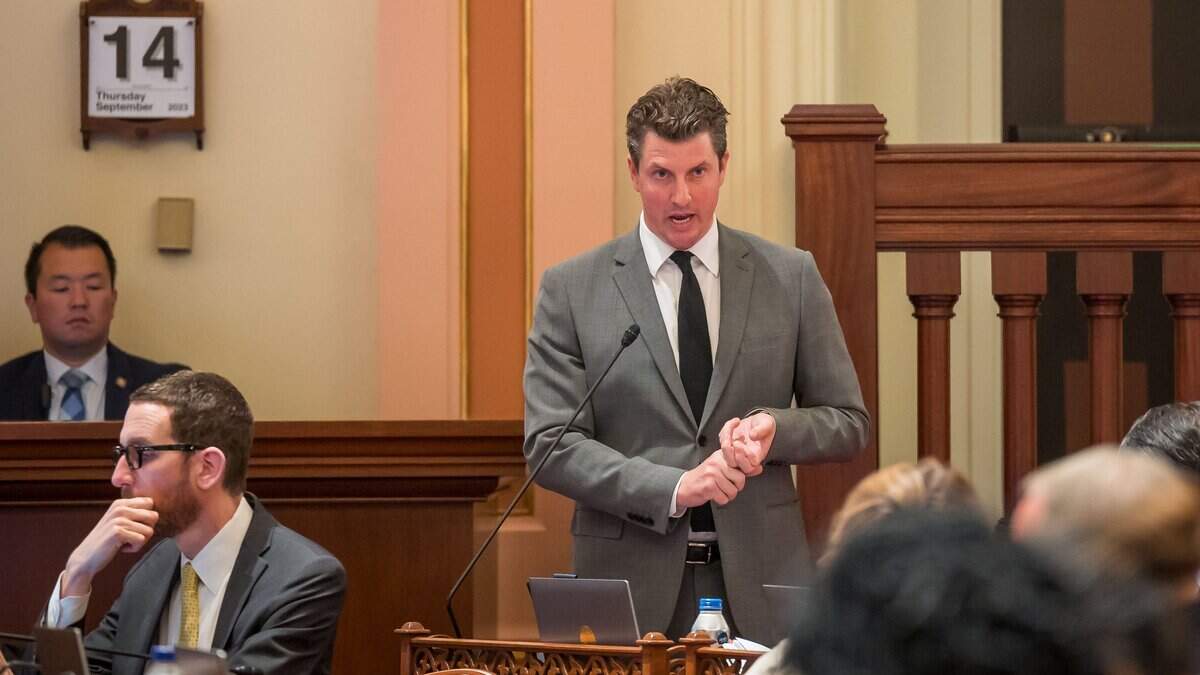
California lawmakers are weighing whether to include an ethnic category for Jewish identity on state demographic forms — an effort supporters say would give the state a clearer picture of a population that can be difficult to capture in government data.
Read more 1 dead after car goes down Highway 50 embankment near Twin Bridges
SB 1387, authored by Sen. Henry Stern, D-Sherman Oaks, would allow Californians to voluntarily identify as ethnically Jewish when state agencies collect demographic information. Stern argues the data could help the state better understand antisemitism, educational outcomes, health disparities and other needs among Jews who may go uncounted when Jewish identity is measured only through religion.
A 2021 Pew Research Center survey found that just 11% of American Jews said being Jewish is mainly a matter of religion. By comparison, 22% pointed to culture and 21% to ancestry, while many others described their Jewishness as some combination of the three.
“When our state asks, ‘Who are you?’, we want to know the state sees us,” said David Bocarsly, CEO of Jewish California, which worked on the bill with Stern. “That’s what other groups expect, and that’s what I think we should expect too.”
‘Purely public numbers’
For some Jews, the idea of the government collecting information about Jewish identity carries historical baggage that complicates the push for greater visibility. Even supporters of the bill have voiced concerns about privacy and the possibility the data could be misused in the future.
Bocarsly acknowledged why government collection of Jewish identity data can create unease. He pointed to the federal government’s recent efforts to obtain information about Jewish employees at the University of Pennsylvania, saying the episode heightened concerns among some Jews about government “lists” amid lingering intergenerational trauma from the Holocaust.
“That is all very real, and I think that happening while our bill was going through the cycle certainly conflated the two,” Bocarsly said. “But these are not the same things. No lists of Jews, this is all just purely public numbers.”
Stern emphasized that identifying as ethnically Jewish would be optional.
“It’s a box, not a list,” he said, adding that the data would be reported in anonymous, aggregate form rather than tied to individuals.
Assemblymember Chair Rebecca Bauer-Kahan, D-Orinda, who chairs the Privacy and Consumer Protection Committee, supported the bill during a June 23 hearing. She acknowledged that government collection of Jewish data can feel unsettling, recalling that she had previously declined to identify her kids as Jewish on a school form used to request excused absences for Jewish holidays.
Still, she said, Jewish Californians should have the choice to identify themselves that way.
“I really feel strongly that if this was any other group, this would have been passed and signed into law already,” Assemblyman Joe Patterson, R-Rocklin, said at the June 23 hearing.
Stern said now is a practical time to add Jewish ethnicity as an option because California is already updating the demographic information it collects, meaning the change would come at little additional cost to the state. Those updates include adding a Middle Eastern and North African category and expanding the collection of information about sexual orientation across state agencies.
Joshua Shanes, a professor of Jewish history at UC Davis, said he worries about the legislation advancing at a moment when “a lot of people perceive Jews getting special protection from the government.”
With the federal government attempting to cut funding to universities over allegations of antisemitism, Shanes said he would like to see stronger reasoning for why Jewish identity should be added to the state’s ethnic categories when other religious identities are not.
Read more Starr King K-8 staff member struck by vehicle in Carmichael school’s parking lot
More than symbolic
Supporters of the bill — which include a statewide coalition of Jewish community and advocacy organizations — say the distinction is more than symbolic. Without demographic data that captures Jews who do not identify with Judaism as a religion, they argue the state is missing information that could help identify disparities and direct resources.
Bocarsly said education, healthcare and social services are all areas where more complete data could be useful. He said Jewish advocates have struggled to quantify antisemitism in California schools, including while advocating for legislation addressing antisemitism last year, because the state does not collect sufficient demographic data on Jewish students.
John Efron, a UC Berkeley professor who specializes in the cultural history of German Jewry, said treating Jewish identity only as religious can be limiting when trying to understand antisemitism.
“There’s next to no hate crimes against Jews that are rooted in religion,” Efron said. “They’re all of a secular, antisemitic nature.”
In terms of healthcare, Stern pointed to Tay-Sachs disease as an example of how the data could be used. He said knowing where Jewish communities are concentrated could help public health officials target educational outreach to populations at greater risk of certain genetic conditions.
But Shanes questioned whether grouping Jews under a single ethnic category would produce sufficiently specific data for those purposes, or instead obscure differences among Jewish populations with distinct ancestries.
“If Persian Jews are going to click Jew, that will undermine research into, say, Tay-Sachs disease, which is an Ashkenazi Jewish disease mostly,” Shanes said.
‘Tapestry of Jewishness’
Bocarsly argued allowing respondents to select multiple ethnicities addresses concerns that a Jewish category could flatten the diversity of Jewish identities, which are already commonly separated by ancestries such as Ashkenazi, Sephardic and Mizrahi.
“One could select Jewish and Iranian, they could select Jewish and white, they could select Jewish and Spanish or Latino, Jewish and Black,” Bocarsly said. “This actually creates the opportunity to authentically identify however one chooses.”
The bill also touches on a question that Jews themselves have long considered: how to describe an identity shaped by ancestry, religion, culture and individual experience. Those different dimensions make up what Efron described as a vast “tapestry of Jewishness.”
For Efron, the range of reactions to SB 1387 reflects the different ways Jews understand that identity.
Stern placed the disagreement over the bill within a broader, historical Jewish practice of debate and questioning.
“We’re very good at that,” Stern said. “Our tradition is disagreeing with each other.”
Read more Rep. Doris Matsui, Mai Vang launch sharp critiques in general election debate
This story was originally published August 28, 2026 at 5:00 AM.