 By admin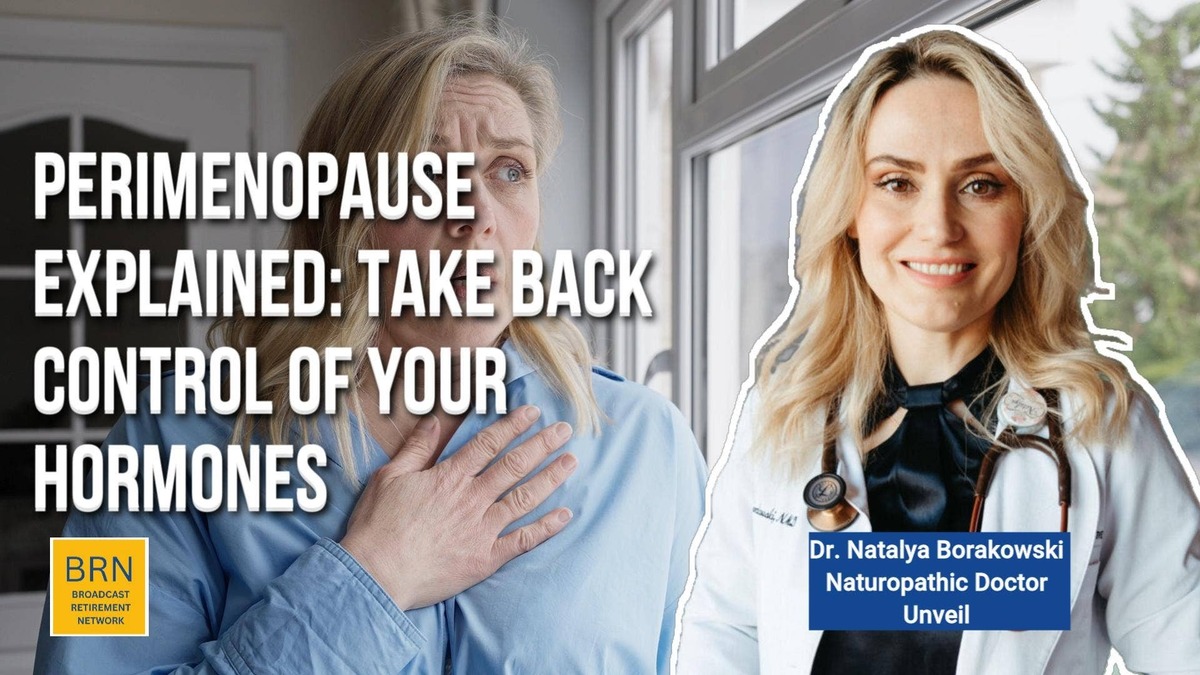
In this episode, we sit down with Dr. Natalya Borakowski, Naturopathic Doctor and founder of Unveil, to demystify one of the most misunderstood phases of a woman’s life — perimenopause. Dr. Borakowski breaks down what hormonal literacy really means, why symptoms can start as early as your late thirties, and how knowing your baseline hormone levels before the transition begins can change everything.
Read more Apple wants AI to listen all day without creeping people out
Jeffrey Snyder, Broadcast Retirement Network
Oh, here we go. Three, two, one. Well, Dr. Borakowski, it’s so great to see you. Thanks for joining us on the program this morning.
Dr. Natalya Borakowski, Naturopathic Doctor, Unveil
So excited to be here. Thank you for inviting me, Jeffrey.
Jeffrey Snyder, Broadcast Retirement Network
Yeah, and we’re gonna be talking about an article that you wrote for a Woman’s News. It’s a great piece on perimenopause and some of the changes that maybe women experience as they age beyond just their looks and demeanor. So what I thought I’d ask is maybe, could you help define what perimenopause actually is?
Dr. Natalya Borakowski, Naturopathic Doctor, Unveil
It’s actually quite simple. Perimenopause, it’s a transition to menopause. So often when we talk about the hormonal transitions, we kind of broadly say the word menopause.
When menopause, it’s actually one single day in a woman’s life and it’s diagnosed retrospectively. It’s 12 months without a period. That’s really all it means.
So everything leading that hormonal transitions, fluctuations to the menopause is perimenopause. Perimenopause just means before. And once a woman goes through that menopause and she’s been diagnosed, then for the rest of her life, she depends, starts to be postmenopausal.
So that’s really simplicity for what’s really happening in a woman’s life. Everything leading to the menopause is before perimenopause and then everything after that is post.
Jeffrey Snyder, Broadcast Retirement Network
Now, I recognize that we’re all individuals and every woman’s gonna be different, but is there a typical age range where someone starts to, where a woman starts to exhibit or receive or have these types of symptoms where they are starting the transition? And does it start at different ages for different women?
Dr. Natalya Borakowski, Naturopathic Doctor, Unveil
That’s the really key, Jeffrey. It starts at different age for every woman. And I think we kind of stepping away of talking about specific age, because for women, imagine if they go through perimenopause in their late thirties, because that happens and then more often than we like.
And then she feels like she’s somehow deficient and she’s missing something because she’s going through this maybe a decade earlier than her friend does, because average age is usually late forties. But average, it doesn’t mean everyone. So if the woman experiencing it later or earlier, it doesn’t make her better.
It doesn’t make her worse. It’s just her own life journey.
Jeffrey Snyder, Broadcast Retirement Network
So, and really good point there. And, you know, externally, when you look at somebody, you can tell, although it’s harder these days to tell exactly what someone’s age is. You know, you can see people get gray hair or they start to lose their hair.
They’re, you know, they get wrinkles and other things. How would you know, you mentioned that the period stops for a period of 12 months when they hit the menopause, but how would you know, you know, do you feel different? Do you have different types of moods or emotions if you’re going through this perimenopause and menopause stage?
Dr. Natalya Borakowski, Naturopathic Doctor, Unveil
Yes, I mean, essentially what I try to teach to all women that come to my clinic is what I call hormonal literacy. First, I have a teenage daughter. So since very young age, once she starts menstruating, I start teaching her about her periods, what this really means.
Because what’s happening to us women, as we’re still fertile, we’re going through that beautiful monthly transition. That’s sort of a emotional tango between our two main hormones, estrogen and progesterone. And every girl must know what that tango means to her because it affects on her mood, it affects on her body, it affects how she’s experiencing her period.
It’s very individual for every girl. So she needs to know what normalcy is. I also encourage girls to do the hormonal testing when she’s still healthy.
Not because she’s trying to get pregnant or there’s some kind of fertility question. That’s usually what really prompts that visit to the doctor. But while you’re healthy, while you feel good.
Why it’s important? Because the normal range for hormones is so wide. But once you start to go through transition, usually the first symptoms could be quite vague and very strange.
The woman just doesn’t feel good. Maybe she just constantly feels tired. Maybe she lost motivation.
Maybe she just feels very blah. So she cannot really bring the specific symptom to the doctor. She just feels like something is shifting.
And that’s the beginning of conversation. So when she knows what is her normal hormonal values were when she was normally menstruating, now she’s transitioning, she can bring those values to the doctor. And then now we kind of run away from all the guessing blood work and we’re trying to treat woman and we’re trying to treat her symptoms.
We’re hoping her transition to be a little bit softer, a little easier. Because what makes perimenopause so challenging, every woman hormonal transition is very different. For some women, it’s a steady decline and they might have less symptoms because of this.
But for many of us, it’s ups and downs. It jumps up too much hormones and then complete withdraw hormones. And that’s what kind of creates a little havoc, a little crazy hormonal tornado on the woman’s mind.
And when she’s not ready for it, it’s very difficult to go through that transition.
Jeffrey Snyder, Broadcast Retirement Network
So in terms of, you mentioned the testing and obviously your specialty, you have a specialty in this area, but let’s just say someone’s watching, a woman’s watching, she’s feeling maybe a little different. How do you go about, and they’re not living in the Arizona area where you reside, how do you go about starting the process to test yourself? And maybe you start before you experience these symptoms.
I don’t know. What’s the process to start the testing?
Dr. Natalya Borakowski, Naturopathic Doctor, Unveil
Yeah, well, ideally, as I said, it’s better to do it before. If you have a doctor, typically it’s OB-GYN that you trust with your feminine care, that’s when you start asking questions while you’re still healthy. Test your hormones prior to pregnancy, after pregnancies, all those major changes of women’s life, it’s good to monitor through the laboratory values.
Read more Breaking: New wildfire reported in Los Angeles County on Sep. 13
Because again, that hormonal value of normalcy for women, it’s so large. It’s very difficult for doctor to really see where this woman normally should be. It’s better for woman to know what her normal values are, will she still feel good?
And once she starts to have the transitions and then she’s no longer sort of like, it’s a very vague symptoms to really describe Jeffrey, but most women who listen to you, they will agree. I just don’t feel like myself. I don’t recognize myself.
That’s usually the questions or concerns women bring to my clinic. And once she started experiencing, that’s when she opens a conversation. Hey, let’s try to figure out what is happening with my period?
Did they shorten, they lengthen? Maybe my menstruation is now different. All those little clues, pieces of the puzzle can start to come up with the full picture.
But the woman need to find the doctor that first is ready to listen, ready to be patient with a woman and treat her and her symptoms, not just laboratory values.
Jeffrey Snyder, Broadcast Retirement Network
Yeah, so, and you make a really good point. And I would imagine that we’ve come a long way since over the last several decades in terms of not only the identification, but also the lab work that’s being done. And also what I wanna talk to you about is maybe some of the therapies, but how has the technology and the research evolved over the last several decades?
Dr. Natalya Borakowski, Naturopathic Doctor, Unveil
Well, we did the huge leap in research for menopause and women’s health starting from last year, actually. What happened, the big breakthrough in November of 2025, FDA finally lifted black box warning against hormone replacement therapy, specifically estradiol. Because for many, many years, for 20 some years, we believed as a medical community that hormone replacement therapy was dangerous.
So when women were choosing between feeling better through the menopausal symptoms and potentially cancer and death, you can say that it was difficult to have those conversations. And then now we have the supportive research showing that hormone replacement, bioidentical hormone replacement, it’s very beneficial for women. So it does help to not just make them feel better or stay youthful, because it’s really not about stopping aging.
Like I actually hate the word anti-aging. I think there’s nothing wrong with age.
Jeffrey Snyder, Broadcast Retirement Network
But overall- It’s better.
Dr. Natalya Borakowski, Naturopathic Doctor, Unveil
Absolutely. We just, you know, we age, we collect a good wine and we get better, right? But yes, there are elements of age that we probably don’t want to experience.
We don’t want to feel frail. We still want to be vibrant. We want to be full of life.
And that’s when those therapies, the modern therapies now could be so supportive. Just as testosterone replacement for men as they start to age, the estrogen and progesterone replacement for women could be quite life-changing. But again, not for everybody.
I don’t want to say that every woman going through perimenopause, menopause must have hormone replacement therapy. It’s not always the answer for every woman.
Jeffrey Snyder, Broadcast Retirement Network
Let me ask you about that. As you were talking about hormone replacement therapy, as a man, I’ve read a lot about testosterone replacement, and that can be in the form of injections, it can be in the form of creams, pills, whatever. I’m assuming when you talk hormone replacement therapy, it’s estrogen or some kind of derivative of estrogen.
How is that typically, how does someone consume that? Is it injections, creams, all of the above?
Dr. Natalya Borakowski, Naturopathic Doctor, Unveil
All of the above, really. So again, it’s very individual. It depends what works for that woman in her lifestyle.
Some women cannot imagine to have like a pallet or needle in their skin. It just terrifies them.
Jeffrey Snyder, Broadcast Retirement Network
I’d be terrified.
Dr. Natalya Borakowski, Naturopathic Doctor, Unveil
Exactly, we don’t want to torture those patients. So that’s why we have other options. We have transdermal patches, we have creams, but some people might have a skin that really doesn’t absorb the medications through that form of delivery.
So then we can talk about other options. Again, injections, or we can do the pallets, which are tiny little implants under the skin. So there are different options, and for every option, there are benefits, and there’s limitations.
So not every option is the best and works for every person. So essentially, again, the indication is find a physician who you trust, who you really feel a good intimate connection with, and then you can really trust with all your symptoms. Because I believe that women or men who are not receiving a good care from their physicians, they don’t really fully be transparent with them.
Because again, physicians cannot read your mind. Sometimes when you omit certain symptoms, you might not be getting the full care your body needs. So getting that initial trust, the connection between the physician and the patient is the number one success step.
Jeffrey Snyder, Broadcast Retirement Network
Yeah, and as you said, it’s about eliminating that stigma that people used to have about hormone replacement therapy that seems to have been elicited. Dr. Borakowski, we’re gonna have to leave it there. Great article, great piece.
Gets your mind going, whether you’re a woman or a man. Thank you so much for joining us, and we look forward to having you back on the program again very soon, doctor.
Dr. Natalya Borakowski, Naturopathic Doctor, Unveil
Thank you, Jeffrey. That was great.
The Arena Media Brands, LLC THESTREET is a registered trademark of TheStreet, Inc.
Read more Premier League’s Explanation for Arsenal Penalty Will Not Calm Mikel Arteta’s Rage
This story was originally published September 13, 2026 at 4:30 AM.