 By admin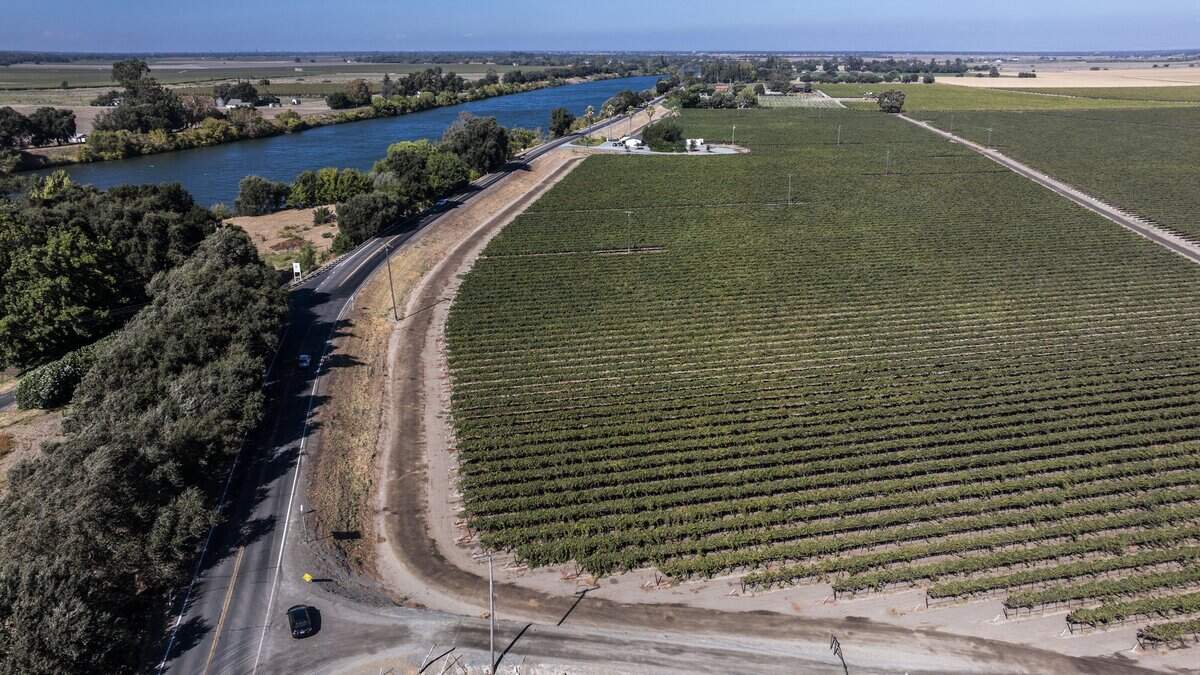
When Canada banned American alcohol as a response to President Donald Trump’s tariffs last year, McManis Family Vineyards took a big hit.
Read more Wildfire expands to 1,000+ acres in Yosemite National Park, moves toward Badger Pass
Exports to Canada, largely to Ontario, had made up approximately 40% of the family-owned business’s export sales — about 75,000 cases. From July 2025 to July 2026, this number fell to approximately 5% of export sales, or about 1,000 cases, the company told The Sacramento Bee in July.
On top of the export hits, the family-owned vineyard had seen a significant drop in its bulk wine sales to larger U.S. wine brands. About 90% of the winery’s business is growing and crushing grapes to produce bulk wine for other vintners, some of which are also navigating the Canadian market loss.
Dirk Heuvel, who has helped run McManis Family Vineyards since 2008, previously said the company had enough bulk wine business to keep it up and running without Canada. He was worried about other wineries.
Now his family is selling the 3,500-acre San Joaquin Valley winery facility and vineyards.
“It was a very hard decision for myself and my family,” said Ron McManis, president and co-owner of the company, in a written statement to The Bee. He declined an interview request. Josh Mendrin, one of the real estate agents for the family’s property, declined to comment.
California growers and winemakers of all sizes are wrestling with an oversaturated market due to a steep drop in consumer demand and the loss of the majority of wine exports to Canada. Canada was the number one export market for American wine, with a loss of more than $500 million in export value since the restrictions went into effect, according to Sacramento-based Wine Institute. c
In recent years, many grape growers have left fruit to rot on vines and many winemakers have product sitting in tanks. Numerous grape growers and winemakers have laid off staff. Pest threats to vineyards are also top of mind for growers.
The wine and grape industries are billion-dollar enterprises in California. The state produces around 80% of all wine in the U.S., according to industry groups. The wine industry supports more than 422,000 jobs statewide, generating about $73 billion in annual economic activity, according to the California Department of Food and Agriculture.
McManis Family Vineyards was founded by Jamie and Ron McManis in 1990. Ron is a fourth-generation farmer and Heuvel, who married into the family and serves as vice president of the company, is part of the fifth-generation. c
The family started the business with a mission of “quality wine at an honest price,” according to the company website. The first bottling under the McManis label was in 2001.
“Every process — from the growing side all the way to the bottling side — there are family members involved,” Heuvel said in July.
The McManis winery facility and its land is on the market for $22.5 million, according to the real estate listing. The prices of the 10 vineyards in Sacramento and San Joaquin counties range from $800,000 to $14 million. c
Read more Evacuation orders lifted as Big Sur wildfire nears full containment
The massive winery facility has the capacity to crush up to 50,000 tons of grapes and bottle between 2.5 to 3 million cases annually, the real estate listing said. The company has been processing between 29,000 to 34,000 tons of wine grapes a year. The land around the winery facility has vineyards and almond orchards.
The listing said the McManis brand can be discussed at a separate price. It is unclear how many employees work for the company.
Many agricultural properties have seen their values decline as water issues ramp up in the state and commodity prices fluctuate with tit-for-tat tariffs, wars and cheaper imported goods. The wine industry has seen business drop off and, in turn, property values and real estate interest decline.
“Nobody wants to buy vineyards because they have an oversupply (of wine) right now,” said Robyn Bentley, a Napa Valley-based real estate broker focused on wine country transactions with Christie’s International Real Estate. “Vineyards are almost impossible to transact currently.”
The McManis vineyards are located in areas of the Northern San Joaquin Valley where, according to a 2025 report from the California chapter of the American Society of Farm Managers and Rural Appraisers, market demand for wine grapes is “very limited” and market activity is “limited.” Properties are often selling without grape contracts or with contracts nearing expiration, the report found. As a result, land value is decreasing. Vineyard values declined by 10% to 25% compared to 2024. c
The report found that not only are consumer consumption trends affecting the values, but also water access and the location within the specific wine grape growing region known as the AVA.
Farmers face water restrictions from the Sustainable Groundwater Management Act, or SGMA. The law is part of the state’s plan to limit groundwater usage in order to rebuild the supply after decades without pumping restrictions. Communities and farmers were pumping out more groundwater than nature could replenish.
Market conditions for Northern San Joaquin Valley vineyards are expected to worsen in 2026, the agricultural real estate report said.
The most recent grape crush from the U.S. Department of Agriculture’s National Agricultural Statistics Service shows wineries crushed 2.62 million tons of wine grapes in the Golden State in 2025, down over 8% from 2024. The average prices for red and white wine grapes per ton were down 4.4% and 0.9%, respectively, from 2024 to 2025.
George Christie, a Sonoma County-based real estate agent focused on the wine industry for Sotheby’s International Realty, said there is a lot of uncertainty around vineyard and winery sales right now.
“For folks looking to get out, this is their retirement,” Christie said. “They worked their whole adult life building up this brand and a reputation as a vineyard, as a grape supplier, and they don’t want to sell and are trying to time it and don’t want to sell out at the bottom.”
Read more California assemblymember says he may request audit of Highway 50 project