 By admin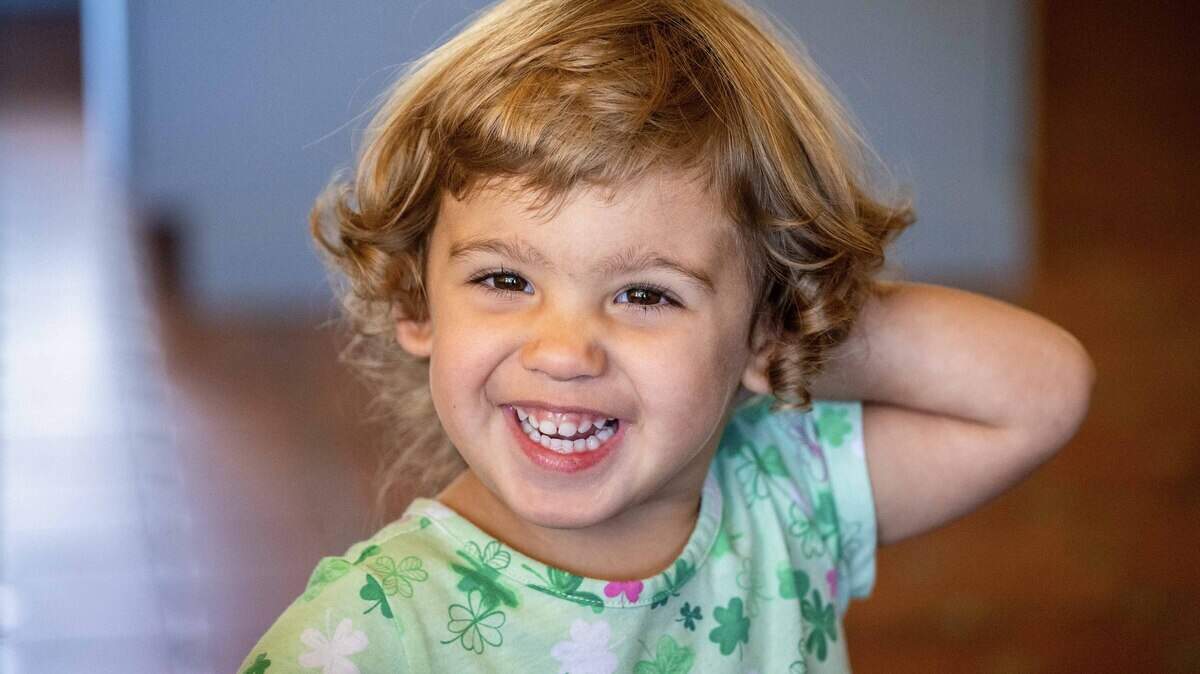
This column is the third of five detailing a promising college student’s descent into homelessness, and how government services have only exacerbated her downfall. It also is part of “The Poverty Line,” a series examining how safety-net systems are faring amid California’s rising affordability and mental-health crises.
Read more What to know about Proposition 39, California’s voter ID measure
Laura Alicia Carlisle was born on Nov. 15, 2024, behind the Express Stop liquor store on Sacramento’s Juilliard Drive. Tests would soon show that Laura was addicted to fentanyl, just like her homeless mother, Califia Carlisle.
Firefighters from a nearby station whisked mother and daughter to Mercy General Hospital in the middle of the night. The phone would soon ring at the home of Califia’s father, a stunned Christopher Carlisle, who learned he was a grandfather.
Carlisle and his fiancée at the time, retired attorney Anne Marie Flaherty, raced to the hospital to briefly see Laura and Califia. When they returned the next morning, Califia was gone.
She had walked out of the hospital to return to a life of addiction, her schizophrenia untreated on the Sacramento streets. Her final words to a nurse as she left:
“Give the baby to my dad.”
And so goes one of the great contradictions in how California oversees its most vulnerable residents. Age matters.
For Laura, Sacramento County Child Protective Services and the juvenile court system have steadfastly pursued what they believed was in the baby’s best interest. Now married, Anne Marie and Christopher Carlisle became foster parents, with frequent visits from protective services.
Laura is legally their child. They are now grandparents and parents, all in one.
As for Califia Carlisle, California institutions have shown scant interest in her worsening plight.
Her father has sought one court or another to help her get the treatment she needs, three times in all. None has succeeded. For nearly a third of Califia’s life, she has not been of clear mind and body. She has not been capable of making decisions about her own future, much less that of her toddler.
If there is a success story in all this, it is Laura. Christopher Carlisle can talk matter-of-factly about the plight of his daughter, but the pain still shows on his face. When Laura enters the room with Anne, he is all smiles. Laura is safe. California did right by Laura.
“This part,” Christopher said, “works.”
The newlyweds now lead double lives. They worry about Califia by day. They put Laura to bed every night.
Anne knew her life was about to change from the moment Christopher first saw Laura at Mercy General Hospital. Holding the baby, he had a grin circling his face she had never seen before.
“It was stunning,” she said.
Christopher, proud grandfather, admits it.
“I’m so happy,” he said.
It took three weeks in a neonatal care unit at Mercy San Juan Medical Center to slowly wean baby Laura of fentanyl that was poisoning her system thanks to Califia. Now Laura, with curly hair and big brown eyes, beams with the innocent smile of someone who hasn’t wanted for a minute of her life.
The Carlisle family lives in a 1970s-era home in the La Riviera community in unincorporated Sacramento County near the American River. The neighborhood is filled with families, children playing in front yards and in the street.
Laura sees it all from her sandbox in the front yard. She wants to play, and play.
“She’s a very, very, very people person,” her proud adoptive mother said. “She’s the happiest baby of any that I know.”
Christopher is 68. Flaherty, 77. Normally, these are years of retirement and a little relaxation. They are too in love with Laura for that. The two married last summer.
Read more Mexico’s Predicted Lineup for 2026 Fall Friendlies: Fresh Faces Lead New El Tri Era
This, by all outward appearances, isn’t a calling. This is a three-way love affair.
The new family has complicated interactions with Califia in ever-changing ways.
During the months-long process to apply for permanent custody of Laura through the courts, Christopher maintained an arm’s-length relationship with Califia. As the mother, Califia had the right to challenge the process. The court had tried and failed to find her. And Christopher has no idea who is Laura’s biological father.
Califia was oblivious to what was happening, but she is clearly aware that she is a mother. I briefly visited her on Halloween in the parking lot of the Home Depot near Howe Avenue and Folsom Boulevard. She was distant, by all appearances high on something. While I stood nearby, a girlfriend whispered into her ear that she was missing her baby’s first Halloween. Califia listened intently and stared straight ahead, her eyes seeming sad, her lips uttering nothing. Prospects of a coherent interview were not in the cards that day, so I soon left.
At 9:13 a.m. on March 16, Sacramento County Superior Court Judge Philip Ferrari formally approved Laura’s adoption. “We are so happy!” Anne Marie told the judge.
Christopher on occasion shares photos of Laura with her mother. The newlyweds at first wondered if Califia’s motherhood instincts would overcome the demons of addiction and mental impairment within Califia. Would she finally turn a corner toward sobriety and recover her life? So far, that hasn’t happened.
“I personally hold out less hope with each passing month,” he said. “She really doesn’t ask about her that much. The years are passing away, literally.”
Califia is a provider for a different family of sorts, a shifting group of homeless people surrounding the Home Depot. She appears to be the breadwinner. She stands with a sign at nearby intersections, sometimes for hours.
“She makes hundreds and hundreds of dollars a week out there,” said her current boyfriend, 39-year-old Justin Hartung of Ohio, who has been homeless since the COVID crisis and who is not Laura’s father. “She helps everybody out here. I think she wants to get off the streets, but I don’t think she’ll ever leave…. It’s all she knows.”
In Califia’s current condition, there is no thought of arranging an in-person meeting between Califia and her daughter. “She’s got to be straight,” Christopher said.
“I pray for it every day,” Anne Marie said, again and again.
The new parents have more immediate worries about Califia. “She’s not on birth control,” the father said while acknowledging that Califia could get pregnant again.
He has talked to a Planned Parenthood clinic near where Califia usually camps, on streets close to Sacramento State. Christopher was told the clinic could see her on short notice for an evaluation. But Califia would have to be willing, and straight enough to be evaluated. So far, that window of opportunity hasn’t presented itself.
There is only so much Christopher and Anne Marie Carlisle can do.
Jenna Mozdy, a friend of Califia’s since their years together at Sacramento State, is convinced that she can no longer make rational decisions about her life. Her addiction and her mental illness have gone untreated for too long.
And Mozdy, if anyone, should know. She is a former addict, and previously homeless herself.
The proof that society needs to help Califia Carlisle is Laura.
“If she was of sound mind,” Mozdy said, “she wouldn’t abandon her daughter or her family.”
Now living in Santa Rosa, Mozdy decided to return this summer to the Sacramento streets that were once her home, and to track down her wayward friend. Maybe a friend could help Carlisle break her downward spiral.
Read more MLB Home Run Predictions Today: Best HR Prop Bets for Wednesday, Sept. 23