 By admin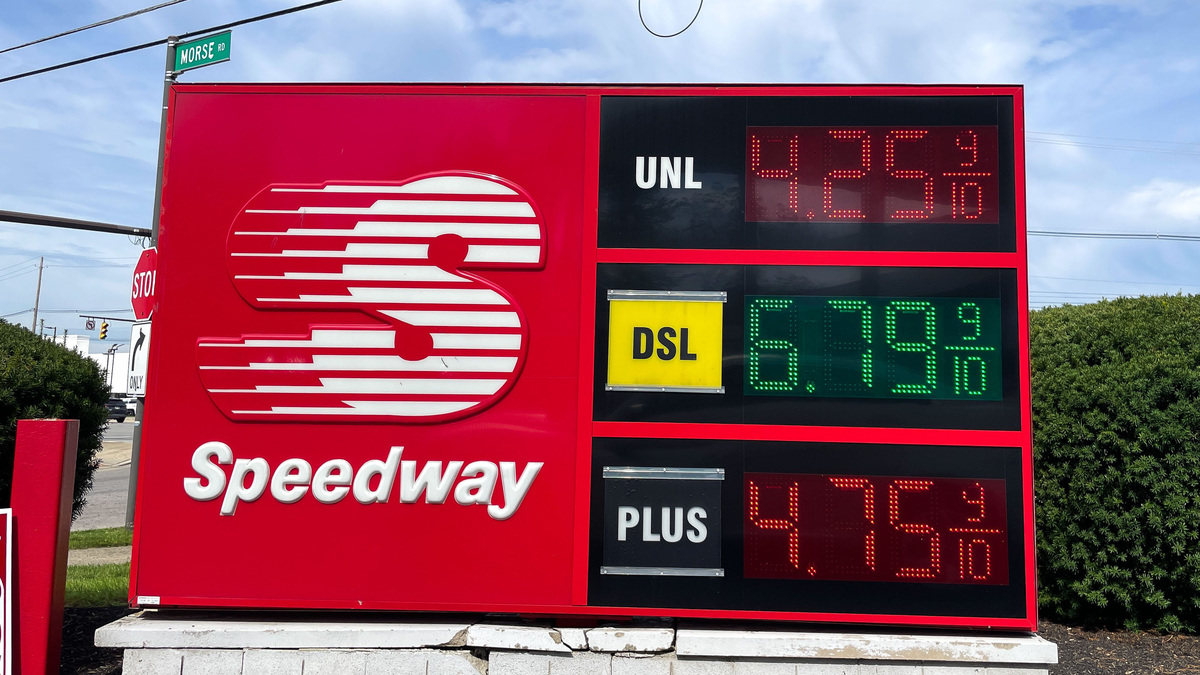
President Donald Trump’s move to reduce the sticker shock on new cars by rolling back federal economy rules could end up costing most drivers more money in fuel costs than they would save on new vehicles, according to analysis from Trump’s own Highway Safety administrators.
Read more Sacramento County trash bills could rise 4.5% a year under new rate plan
The U.S. Department of Transportation said in a Sept. 28 press release that it is moving to lower the required fleetwide average fuel economy for cars from a current requirement of more than 50 miles-per-gallon by 2031 to just under 35 miles-per-gallon.
The fuel economy rollback, which has been dubbed “Freedom Means Affordable Cars” by the Trump administration, comes as the average price of gas in the U.S. was $4.43 on Wednesday, Sept. 30, according to AAA.
That’s up from an average of $4.07 one month ago on August 30, and $3.15 one year ago on Sept. 30, 2025.
Trump administration officials said allowing federal regulators to lower the fuel economy requirements for carmakers would make cars cheaper in the long run by an average of about $1,300.
“Thanks to President Trump’s leadership, we have finally ended the illegal mandate that forced automakers to produce more expensive electric vehicles that American families didn’t want,” U.S. Transportation Secretary Sean Duffy said in a statement that blame for the higher fuel economy rules on former President Joe Biden’s administration.
Drivers could spend an additional $1600 on fuel, analysis shows
But critics pointed out the Trump administration’s own internal analysis showed drivers would spend $1,624 on gas over the lifetime of owning new car purchased under its proposed fuel rules.
“With Americans struggling to afford gasoline that is more than $4 a gallon, the Trump administration is going to force them to pay more at the pump,” Kathy Harris, director for clean vehicles at Natural Resources Defense Council, which lobbies for environmentally-friendly policies in Washington, said in a statement.
“Oil companies will get a windfall from gutting the fuel economy standards, but the rest of us are going to be handing over more of our hard-earned paychecks to fill up the tank,” she continued.
With that in mind, the USA TODAY Cars team took a look at why drivers might spend more on gas than they save on sticker prices under the proposed new rules and what the new rules might mean for consumers.
Why would drivers spend more on gas than they save on car prices?
NHTSA said drivers would spend an extra $1,624 on gas over the life of own a car purchased under its proposed fuel rules. Under the current MPG rules, the agency said drivers would spend $15,333 on gas for a car purchased under the requirements for the 2011 model year. That number jumps to $16,957 under the proposed lower mpg rules.
The agency said that a jump in gas spending is to be expected when fuel efficiency standards are being lowered, according to an analysis published when the proposed rules were finalized .
“Estimated consumer benefits of (Corporate Average Fuel Economy) standards include decreased fuel expenditures, time saved due to less frequent fueling, additional value derived from reallocated (Vehicle Miles Traveled) and realized benefits from rebound travel,” the agency said.
Read more In first — and maybe only — debate, Becerra and Hilton turn to familiar villains
“Because NHTSA is decreasing the stringency of standards, many of these benefits…are lower than they are in the baseline, and their incremental differences are presented as negative relative to the baseline,” NHTSA analysis concluded.
Critics point to the current gas prices and say now is not the time to make filling up cars more expensive for people.
“Less fuel-efficient cars mean more gas burned, spending more at the pump, and dirtier air in our communities,” said Sierra Club Clean Transportation for All Director Katherine García.
Why is the Trump administration trying to weaken the US mpg rules?
The U.S. Transportation Department noted the plan to weaken fuel economy requirements for carmakers will “give automakers the flexibility to manufacturer cars the public wants to buy” and “save the American people $138 billion over the next five years,” in addition to the projected sticker price savings.
Last month, the average price of a new vehicle in the U.S. soared to record levels, near $50,000.
The agency also said that making cars cheaper would result in Americans buying new models that have more safety features, which would benefit drivers by reducing the number of crashes and fatalities that occur on U.S. roads.
NHTSA Administrator Jonathan Morrison, whose agency penned the analysis that cited increases costs for the average driver, also released a statement supporting the reduced mileage, which echoed many of the Trump administration’s talking points.
“Newer cars are safer cars,” Morrison continued. “By reducing vehicle prices, more American families will be able to afford newer vehicles, and sensible standards allow automakers more freedom to design and produce vehicles consumers actually want.”
The Alliance for Automotive Innovation, which lobbies in Washington for most major carmakers, said Trump’s proposed lower MPG rules are an “appropriate course correction” and it believes “NHTSA made the right call to better align fuel economy standards with the law and current market conditions.”
“The standards finalized under the previous administration effectively required a switchover to electric vehicles that was out of step with market realities and customer demand,” John Bozzella, president and CEO of the Alliance for Automotive Innovation, said in a statement.
Keith Laing is an automotive reporter on the National Trending Desk at USA TODAY. Contact Keith at [email protected].
This article originally appeared on USA TODAY: Trump’s MPG rules may cost drivers more on gas than they save on cars
Read more Spirit, PARIVISION advance at Dota 2’s BLAST Slam VIII
Reporting by Keith Laing, USA TODAY / USA TODAY
USA TODAY Network via Reuters Connect
Copyright Reuters or USA Today Network via Reuters Connect
This story was originally published October 1, 2026 at 1:05 AM.