 By admin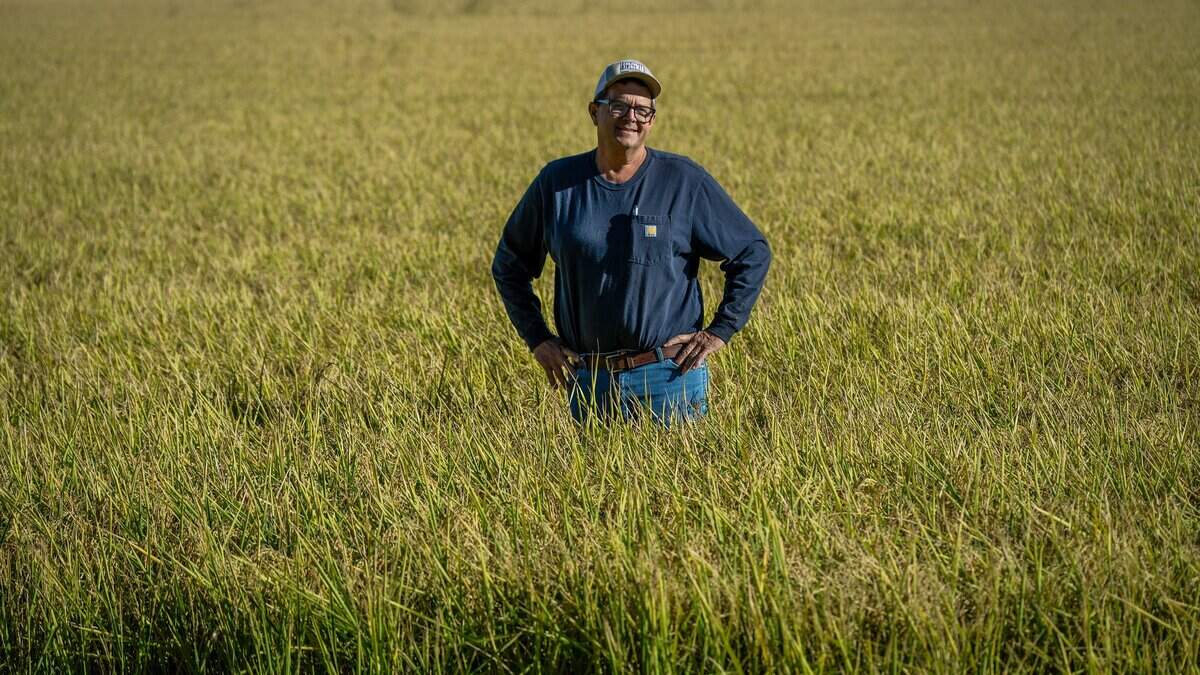
Charley Mathews Jr. pursed his lips and turned to make eye contact with Jamie Johansson, a Republican running for the vacant 3rd Assembly District seat, when Rep. Mike Thompson, D-St. Helena, said some immigrants shouldn’t be deported. Mathews nodded when Democratic congressional candidate Eric Jones said the country needs a “compassionate immigration policy and reform.”
Mathews, a Yuba County rice grower who identifies as a Republican but is a long-time Thompson fan, said he was surprised and encouraged by Jones’ performance at an August candidate forum hosted by the Yuba-Sutter Farm Bureau.
“He fits a different mold,” Mathews said, acknowledging that Jones “needs some refining” on his farm bill talk.
For the 4th Congressional District race this fall, Mathews does not have a Republican candidate to choose from, as Thompson and Jones won the primary this summer.
When Mathews thinks about who he is going to vote for, he said he doesn’t focus on if they are a Republican or a Democrat. He thinks: Who is favorable to the agriculture industry?
That question is top of mind for others in California’s $49 billion agriculture sector. While agriculture makes up a very small portion of the state’s $4.25 trillion gross domestic product, California growers and producers are the main source of the country’s domestic food and wine supply and are regularly caught in the crossfire of political decisions made at the federal level.
The Sacramento Bee spoke with a few members of the agriculture community to get a sense of what they are thinking about ahead of the midterm elections and how those issues will translate as they cast their ballots. Growers and suppliers who spoke with The Bee agree on some of the obstacles before them, yet their agreement does not mean they are in lock step on the political front.
Voters across the country, including in California’s agriculture industry, highlight affordability challenges as their primary concern heading into the election. California growers and producers say they are facing never-before-seen burdens due to rising costs and falling commodity prices.
Costs are increasing for farmers as a result of President Donald Trump’s tariff fights and the conflicts in Iran and Ukraine. The tariff battles involve steel and aluminum, materials used for farm equipment and cans, pushing prices higher, and the trade wars have led to skyrocketing fuel costs and supply chain disruptions.
The Trump administration has offered bailout programs to the agriculture sector in the last year, but the money mostly benefits Midwestern farmers growing row crops such as corn and soybeans. California farmers produce over 400 specialty commodities.
And Congress has yet to pass a new farm bill — a measure that is intended to be revised about every five years to set agriculture policy but has been extended for the last three years. Democrats remain opposed to the current draft of the bill, primarily due to its significant cuts to SNAP, the Supplemental Nutrition Assistance Program.
Hilary Porter: orchards, ag equipment
Hilary Porter has been wrestling with the effects of Trump’s trade wars and real wars.
A fourth-generation tree crop grower with a roughly 200-acre farm in Glenn County, Porter also runs a custom orchard services business in the Central Valley. Her company provides equipment and operators during harvest season. She manufactures some equipment as well.
When she looks at her invoices from the last year, she sees 40% to 100% increases in costs on items such as steel and rubber belting.
“I feel there is some short-term suffering for hopefully long-term gain,” Porter said.
With a crop such as nut trees, Porter is making a decades-long investment. With that, she wants stability in the market, which she has not seen recently due to the volatile tariffs.
On top of the material costs, Porter has been hit with skyrocketing diesel prices — a product needed every step of the way in her operation from producing to harvesting to transporting. Since Iran closed the Strait of Hormuz following conflict with the United States and Israel, diesel costs have hit record average highs, with recent prices over $6 a gallon. California diesel costs are particularly high, with a recent average of more than $8 a gallon.
“Weathering the storms is harder for most in agriculture,” Porter said.
Despite the increasing costs and market volatility, Republicans still have Porter’s vote. She is voting for James Gallagher, R-Yuba City, in his 1st Congressional District race against state Sen. Mike McGuire, D-Santa Rosa. Gallagher beat McGuire and another Democrat in a special election held earlier this year to fill the late Rep. Doug LaMalfa’s seat. LaMalfa, a Republican, had held office since 2013 and was a rice farmer.
Read more How Competition Heating Up for UCLA 5-Star Target
“I think Gallagher’s got a really good connection with the agriculture community … and has worked hard to represent the agriculture community,” Porter said.
Carol Shelton: wine
Carol Shelton is preparing to close her 26-year-old Sonoma County winery.
With no kids of her own and dwindling sales, she decided not to crush any new grapes this year and just sell her existing inventory. That left her wine grape growers without some long-term contracts. Her sales have dropped 25% to 30% over the winery’s good years — about 17,000 cases annually.
As she’s winding down operations, every piece of equipment sold makes Shelton go: “Ow.”
“There goes all my history,” she said.
Shelton said she would have stayed in business for at least another five years if Trump had not been elected for a second term.
Republicans are bowing to Trump, Shelton said, making “rich people richer” and not helping small businesses. Economic uncertainty caused by Trump’s tariffs and the war in Iran are contributing to the challenges for small businesses such as her winery, she said. Consumers’ drinking habits have changed, but Shelton said they also have less money to spend on wine — even cheaper bottles from her brand. Her “Wild Thing” zinfandel, the label she is best known for, is sold for about $20 or less.
At a recent meeting in Lodi with the U.S. Small Business Administration, winemakers and grape growers aired a slew of concerns: Canada’s ban on American alcohol, regulatory burdens, imported bulk wine. One winery recently went up for sale after taking hits from the loss of exports to Canada. U.S. alcohol is banned in the majority of Canadian provinces following the increased tariffs on Canadian goods last year.
Health Secretary Robert F. Kennedy Jr. has contributed to the negative consumer sentiment toward alcohol, Shelton said, by leaning into the dialogue around the health risks associated with wine. Kennedy introduced new federal guidelines on alcohol consumption in January. Shelton also isn’t supportive of Trump’s immigration policies, which affect people who make it possible for her to produce wine.
Shelton votes down ballot for Democrats, including Mike Thompson, who she said does a good job for the wine industry.
“(I’m voting for) anybody that will get Trump out of office,” she said.
Charley Mathews: rice
Mathews, a fifth-generation grower, farms 1,000 acres, 300 of which he owns. He also co-owns two rice drying facilities. His rice gets sold to the Farmers’ Rice Cooperative, which distributes over 20% of all California rice, domestically and internationally, according to the cooperative website. Japan is a highlighted supply partner on the website.
Having held various top roles within local and national rice industry groups, Mathews has traveled to D.C. for lobbying trips roughly 35 times, he said. His first trip was with his father in eighth grade around 1979. He meets with both Republicans and Democrats, typically those on the congressional agriculture committees. Conversations in Washington this year focused on trade and the farm bill, Mathews said.
Business was better in 2023 Mathews said. But, he said, now is an “unusual” time. Prices for commodities in his area are trending downwards. A lot of it has to do with trade, he said, with California commodities facing tough competition from cheaper imports. That’s why trade is so crucial to Mathews when thinking about who gets his vote in any federal election.
Mathews views the Trump administration favorably. The United States and Japan signed a trade agreement last year, a deal which Mathews said supports the U.S. rice industry. Trade deals are “going to save us,” Mathews said.
In June, Mathews voted for conservative James Gallagher in the 1st Congressional District special election. Following that race, California redrew its congressional districts, and now Mathews falls into the 4th District, the race with two Democrats.
While newcomer Eric Jones piqued his interest at the candidate forum in August, Mathews is sticking with Mike Thompson — who Mathews has known for years and said has a “strong relationship” with the rice industry.
“I’ll keep an eye on him,” Mathews said of Jones. “…Everybody gets replaced at some point.”
This story was originally published October 5, 2026 at 6:00 AM with the headline “Tariffs, trade, Trump: Sacramento-area’s agriculture community weighs in on midterms.”
Read more Eagles Stock Report After Rams Collapse: How Offense Is Affecting Jalen Hurts’ Future