 By admin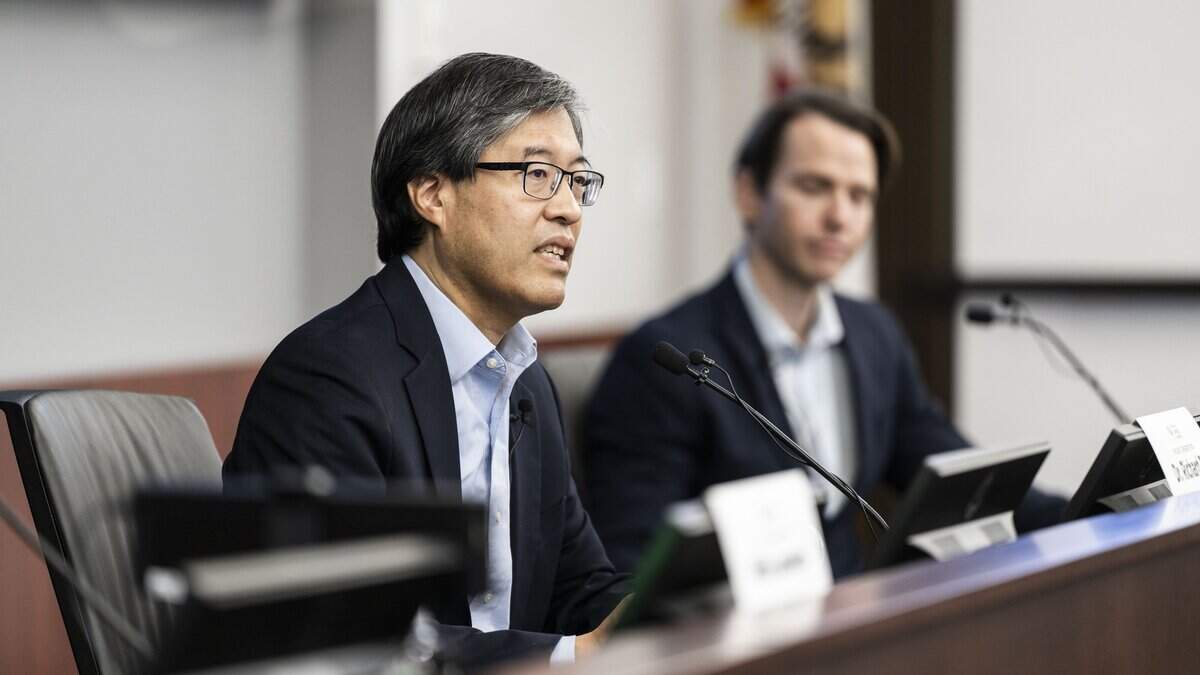
Rep. Kevin Kiley, I-Rocklin, and former state Sen. Richard Pan struck a largely cordial tone at the start of their Thursday morning candidate forum. Before long, however, the two candidates for the 6th Congressional District were back to the attacks that have defined their campaign against each other.
Read more Can California fix its insurance crisis? Candidates debate as Election Day nears
“Donald Trump, RFK Jr. and unfortunately Kevin Kiley, they’ve been trying to reverse the gains that we’ve made here in the state,” Pan, a longtime Democrat, said.
“Richard said that we need to reverse these policies, but you’re the one who put them in place,” Kiley later responded. “You were in Sacramento for 12 years and were part of all of these policies.”
In a continuation of their first debate and ongoing ads, the two candidates emphasized their opponent’s records and ties to a political party in answering questions about energy costs, housing affordability, infrastructure growth and small businesses.
Kiley mostly bashed Pan for his years voting alongside the Democratic Party while in the California Legislature, including a 2017 vote to raise the state’s gas tax. Pan painted Kiley as a President Donald Trump-aligned politician whose congressional record led to cuts in healthcare and ballooned the federal deficit.
In response to the critiques, Kiley emphasized his newly adopted centrist identity and accused his opponent of spreading false, partisan attacks. Pan, meanwhile, cast himself as a pragmatic and health-focused politician who would reverse the policies passed by Republicans.
The forum, moderated by FOX40 anchor Nikki Laurenzo and hosted by the Roseville Area Chamber of Commerce, was one of only two scheduled debates between Pan and Kiley. The two candidates also met in August in a forum hosted by The Sacramento Bee. Kiley has repeatedly criticized Pan for not agreeing to at least five debates before the November general election.
A large portion of the questions Thursday focused on the business climate and ways to stimulate growth in the newly drawn 6th District, which stretches from Roseville and Rocklin in the north to West Sacramento in the south. Roseville, North and South Natomas, North Sacramento and parts of East Sacramento are also within the boundaries.
Kiley stressed tax and regulatory relief as levers for growth.
He pointed to H.R. 1, a sweeping federal bill passed last summer that has led to some tax cuts. Non-partisan economists agree that the tax relief disproportionately benefits wealthy Americans and corporations over middle- and low-income families.
“Those tax levers actually make the difference between businesses being able to invest in new machinery, in research and development and actually being able to create jobs,” Kiley said.
When asked about the bill’s effect on healthcare, Kiley defended his vote on the final version of the legislation. H.R. 1 is estimated to cause anywhere from 5 million to more than 10 million people across the country to lose healthcare access by 2028 due to work reporting requirements.
» Election news in your inbox: Sign up for our election newsletter here
Kiley said, unlike previous versions, the signed legislation merely added “common sense work requirements.” One of the bill’s most serious changes is stricter eligibility requirements for Medicaid.
“We’ve seen that these actually make a lot of sense,” Kiley said. “They work very well, and what ends up happening is that people then actually get employment, and they get insurance through their employer, so they don’t need to rely on Medicaid anymore.”
Read more Everyone hates data centers. Sacramento has good reasons to welcome them | Opinion
Pan, who has repeatedly hammered Kiley on his H.R. 1 vote, shook his head as the congressman spoke on the bill. He referenced an analysis from the Congressional Budget Office, which outlined more than $1 trillion in healthcare cuts.
“Kevin Kiley voted to strip away healthcare for people,” Pan said.
Pan’s answers on helping business and job growth were rooted in reversing the decisions made under Trump, including tariff policies and the decision to engage in a war with Iran. Pan also cited authoring state legislation that repealed a food‑glove regulation as an example that will adjust to bad rules and help small businesses.
“That’s the approach I take because I know that we want to be sure that we have the right regulations to keep us safe, healthy,” Pan said. “But we also need to be sure that if it’s done in a way that small businesses can still succeed.”
On a question about federal infrastructure investment priorities, both candidates highlighted flood control, roads and transportation projects.
In his response, Pan mentioned 2017’s Senate Bill 1 — a transportation funding package that also raised California’s gasoline tax by 12 cents per gallon. Pan defended his vote and blamed rising gas prices on the Iran war, but declined to answer if he would support suspending the federal gas tax when asked.
“We need to go after the biggest source of the increase,” Pan said. “That’s what I focus on first.”
Kiley immediately pounced on his opponent’s answer and pushed back against criticism that he voted against War Powers Resolution, a measure to restrict Trump’s military power that has passed the House repeatedly, but failed in the Senate. Kiley noted that he voted against a bill to provide more funding for the war.
“So the War Powers Resolution wouldn’t actually do anything,” Kiley said. “I guess I can understand why that would appeal to you, Richard. Since that’s kind of your MO — not really doing anything.”
On the construction of data centers, the two men agreed that local communities should be a key part of the process. They also backed safeguards for artificial intelligence.
The two candidates reached another consensus near the end of the debate, when asked what was their first or favorite concert ever attended.
Pan recalled attending a symphony in elementary school, while Kiley expressed his adoration for the Folsom Lake Symphony.
Read more Sacramento news roundup: congressional debate, Trump accounts and a historic train
“We have common ground,” said moderator Laurenzo.