 By admin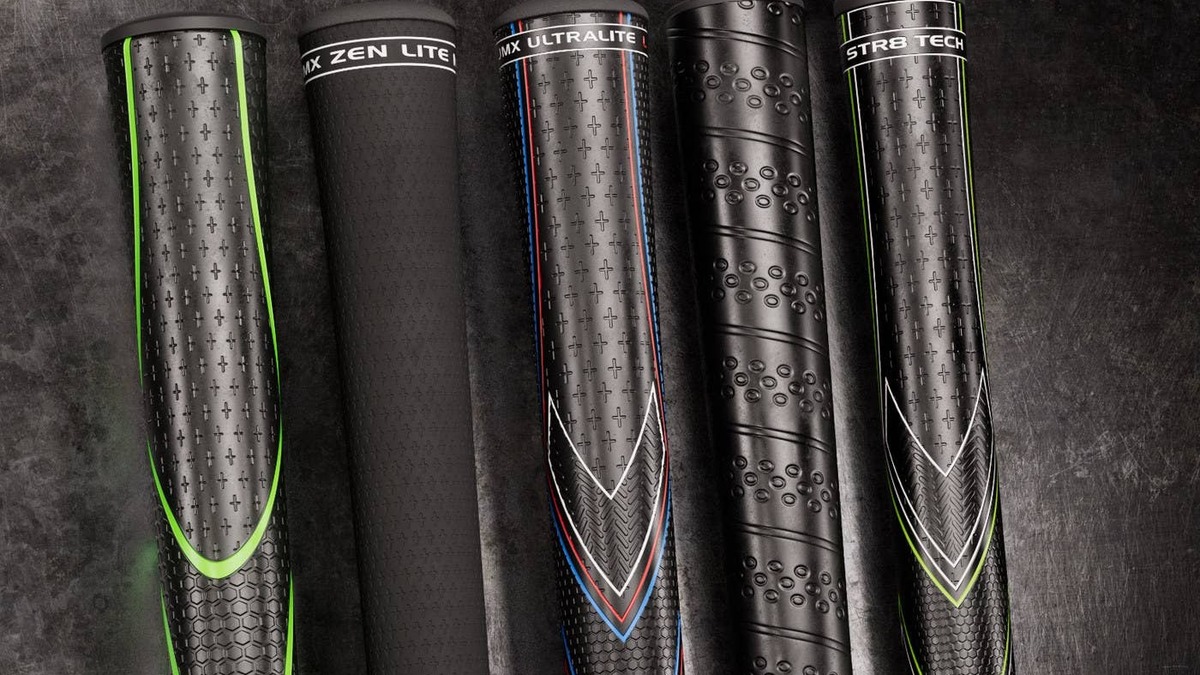
Three decades in the golf business should buy you a little confidence. I know equipment. I have watched club design evolve, sat through fittings, studied launch-monitor numbers and spent a large chunk of my professional life trying to understand why golfers do what they do with a golf club.
Read more Why Passing on a QB Early in 2027 Draft Is Looking More and More Like the Right Call for Dolphins
It has also taught me to say when I don’t know something.
I knew JumboMax. Or at least I thought I did. My working knowledge was probably the same shorthand plenty of golfers carry around: Bryson DeChambeau, really big grips, unmistakable look.
Then I started digging.
The product line is much broader than I realized. The engineering goes well beyond making a grip thicker. Weight is treated as a fitting variable. So are profile, texture, taper and feel. JumboMax has developed an iOS fitting app that analyzes a golfer’s hand. There are lightweight grips, counterbalanced grips, conventional-size offerings, non-tapered models, grips geared toward comfort and shock absorption, and a substantial putter-grip lineup.
The company’s name makes you think you already know the product.
That may be JumboMax’s biggest communication problem.
The Size Is Only the Starting Point
JumboMax traces its launch to 2009, following five years of testing and development. The original question behind the company was simple enough: Why do so many sporting implements and tools use substantial handles while golf has traditionally gone comparatively small?
There is a legitimate ergonomic discussion inside that question.
JumboMax built its approach around getting more of the hand involved in controlling the club. The company calls this Finger-Palm Technology. Its explanation is that a larger handle fills space that exists with a smaller grip, allowing greater contact through the hand and reducing the need to squeeze.
Anyone who has coached golfers under pressure understands why that interests me.
You can spend an entire lesson talking about soft hands and manageable grip pressure. Then put a player on the first tee of something that matters and watch that five-out-of-10 grip pressure become nine-out-of-10 without the golfer realizing it. Tension is rarely just a technical instruction problem.
Changing the physical object in the golfer’s hands is worth investigating.
But JumboMax isn’t simply asking everybody to install an extra-large grip.
That was probably my biggest misconception.
The company offers traditional-size options in parts of its lineup. Its Standard Oversize is positioned similarly to what the rest of the market calls midsize, while Standard Jumbo corresponds to the familiar jumbo category. From there, JumboMax moves into its super-oversize range, beginning with X-Small and progressing through Small, Medium, Large and X-Large.
The UltraLite and Zen Lite lines, for example, currently run through seven sizes from Standard Oversize at plus-1/16 inch to X-Large at plus-3/8 inch.
That changes the discussion. “Do I want a JumboMax?” isn’t really the fitting question.
Which JumboMax, at what diameter, weight and profile, is far more useful.
Grip Weight May Be the More Interesting Story
Golfers understand shaft weight. Better players can become obsessive about head weight, swing weight and total club weight.
Grip weight often gets whatever attention is left over.
JumboMax treats it much differently.
Its Tour Series and Comfort Wrap designs are counterbalanced and substantially heavier than the company’s lightweight offerings. At the other end, JMX UltraLite and JMX Zen Lite were developed to preserve more traditional swing-weight characteristics while still allowing the golfer to move into a larger diameter.
The company positions those weight choices around different tendencies. A golfer who wants more clubhead awareness may respond differently to a lightweight grip than someone who likes additional mass under the hands. JumboMax also argues that counterbalancing can influence transition and release characteristics, while lighter grips can work better for golfers seeking speed or trying to retain clubhead feel.
I wouldn’t fit a golfer from those descriptions alone. Nobody should.
I would test them.
That distinction matters. If changing 20, 30 or 40 grams at the shaft or clubhead deserves measurement, changing substantial mass beneath the golfer’s hands shouldn’t be dismissed as cosmetic.
JumboMax even offers a two-grip trial kit specifically designed to let golfers compare lightweight and counterbalanced options before committing to an entire set.
That makes sense to me. Fitting should settle an equipment argument whenever possible.
SAME GRIP SIZE.
DIFFERENT WEIGHT.
JumboMax argues that the amount of weight beneath a golfer’s hands can alter feel, balance and release tendencies. Here is how its two main approaches compare.
JMX Zen Lite
STR8 Tech UltraLite
Reduce grip and overall club weight while retaining the advantages of a larger gripping surface.
Comfort Wrap
STR8 Tech Counterbalanced
Place more mass beneath the hands, changing club balance and the sensations golfers experience in transition and release.
The fitting tendencies above reflect JumboMax’s published guidance, not proven shot-shape corrections for every golfer.
Review JumboMax’s Grip Weight Guide →
There Is Considerably More Engineering Here Than Diameter
Once you get past size and weight, the lineup becomes even more interesting.
StabilityCore is the structural foundation JumboMax uses across its grips. The company’s purpose is to combine the comfort and surface area of a larger grip with enough torsional stability to keep the handle from feeling soft or unstable during the swing.
The UltraLite adds a three-texture surface with different patterns placed in specific gripping areas. Zen Lite uses a firmer rubber construction and is designed for additional feedback and wet-weather traction. Comfort Wrap goes the other direction, emphasizing softness, tackiness and shock absorption.
STR8 Tech removes another convention entirely. It is non-tapered, meaning the upper- and lower-hand portions are the same size. JumboMax’s reasoning is that eliminating taper can help a player create more even pressure between the hands.
There are putter options, too, including pistol shapes, JumboFlat models, an arm-lock grip and a two-piece split grip.
This isn’t one oversized grip being manufactured in different colors.
It is a fitting matrix.
JumboMax also promotes the larger diameter and its StabilityCore construction as potentially useful from heavy rough because additional surface area and stability can resist twisting. For golfers dealing with arthritis or difficulty holding the club, the company recommends larger sizes and its more shock-absorbing designs.
Read more Breeders’ Cup: Nitrogen Now At Keeneland, Classic Q To Filly & Mare Turf
That last application deserves careful language. A golf grip isn’t a medical treatment. What is meaningful is the design problem being addressed: If squeezing a small handle is uncomfortable, increasing its diameter and reducing the amount of force needed to hold it securely may make golf more manageable for some players.
That is a very different conversation from “big grips are for people with big hands.”
INSIDE THE
GRIP ENGINEERING LAB
JumboMax’s central idea is that grip size, mass, material and geometry should be fitted to a golfer, not chosen out of habit.
points
Grip Fitting Is Where JumboMax Really Got My Attention
This is the part of the story I think golf has missed.
We fit golfers for driver loft down to tiny increments. We debate shaft profile, torque, kick point, length, lie angle, bounce, sole geometry and golf-ball construction.
Then somebody walks over to the grip wall and asks, “Standard or midsize?”
JumboMax has built an Intelligent Grip Fitting App for compatible iPhones and iPads that uses Apple’s TrueDepth camera system to capture 21 data points from the golfer’s hand. The golfer then answers four questions about his or her game, and the software produces a recommended JumboMax size.
For golfers without a compatible iOS device, the company also offers an online fitting tool.
Whatever somebody ultimately thinks about JumboMax’s products, I like the premise behind that process: the grip deserves to be fitted.
Not replaced when it becomes slick. Not selected because it has always been the grip you use. Fitted.
The company’s current Tour roster also makes the idea harder to dismiss as some strange Bryson-only experiment. JumboMax lists DeChambeau, Jason Day and Retief Goosen among its Tour professionals, alongside players in long drive, instructors, juniors and creators.
Different swings. Different speeds. Different needs.
Which is exactly why grip fitting makes more sense than grip conformity.
The Test Numbers Are Interesting, but Read the Fine Print
JumboMax also posts results from testing conducted at Keiser University College of Golf in 2022.
Fifteen golfers of varying handicaps participated. They tested eight grip sizes using a 10.5-degree TaylorMade driver with a stiff graphite shaft, with FlightScope collecting the data. Each golfer hit three shots with each grip size.
Fourteen of the 15 golfers produced more clubhead speed than their baseline. The average increase was 3.65 mph. Average carry distance increased 12.68 yards.
Those numbers will get your attention.
They should not become the headline “JumboMax gives golfers 13 more yards.”
The material published by JumboMax itself describes the work as an informal study and specifically states that generalizations about improved performance cannot be made from it. The sample was small, golfers hit only three measured shots per configuration, and the posted methodology says grips were changed progressively from smallest to largest rather than describing a randomized test order.
That’s important context.
It also doesn’t make the experiment meaningless. If 14 of 15 golfers changed clubhead speed while one seemingly mundane piece of equipment was being manipulated, I want to know more.
A small test doesn’t prove that JumboMax will make every golfer longer. It makes grip size worthy of being tested during a fitting.
There is a big difference between those statements.
THE JUMBOMAX
PERFORMANCE TEST
A 2022 test conducted at Keiser University College of Golf found measurable changes in clubhead speed and carry distance when golfers experimented with different grip sizes.
The published material describes the work as an informal study and explicitly cautions against generalizing the results to all golfers. Its limitations include a 15-person sample, three-shot sets and a smallest-to-largest grip testing sequence.
The results support investigating grip size during club fitting. They do not establish that JumboMax grips will automatically add speed or carry distance for every golfer.
And perhaps that’s where my view of JumboMax changed most.
I started with a brand I had mentally filed under “those giant grips Bryson uses.” I came out looking at a company treating the grip as an adjustable piece of golf equipment, with size, mass, construction, texture and profile all available as fitting variables.
I still want the numbers to determine whether any particular combination works for any particular golfer. That’s how equipment decisions should be made.
But JumboMax has convinced me of something before anybody hits a shot.
We are awfully precise about every other part of the golf club for a game that can still be remarkably casual about the part we actually hold.
PGA of America Golf Professional Brendon Elliott is an award-winning coach and golf writer who serves as Athlon Sports Senior Golf Writer. Read his recent “The Starter” on RG.org, where he is their Lead Golf Writer. To stay updated on all of his latest work, sign up for his newsletter or visit his MuckRack Profile.
Related: Why I Switched To Cobra After 20 Years: A PGA Professional’s Honest Cobra Equipment Reset
Read more Do I have to pay to watch the Valkyries-Aces Game 3 in the Bay Area?
Related: FlightScope’s Free Golf Software Update Gets at the Work Between Shots
Related: Min Woo Lee Helped Design PAYNTR Golf’s New CHEF RX RS
Copyright 2026 The Arena Group, Inc. All Rights Reserved
This story was originally published October 9, 2026 at 10:25 AM.