 By admin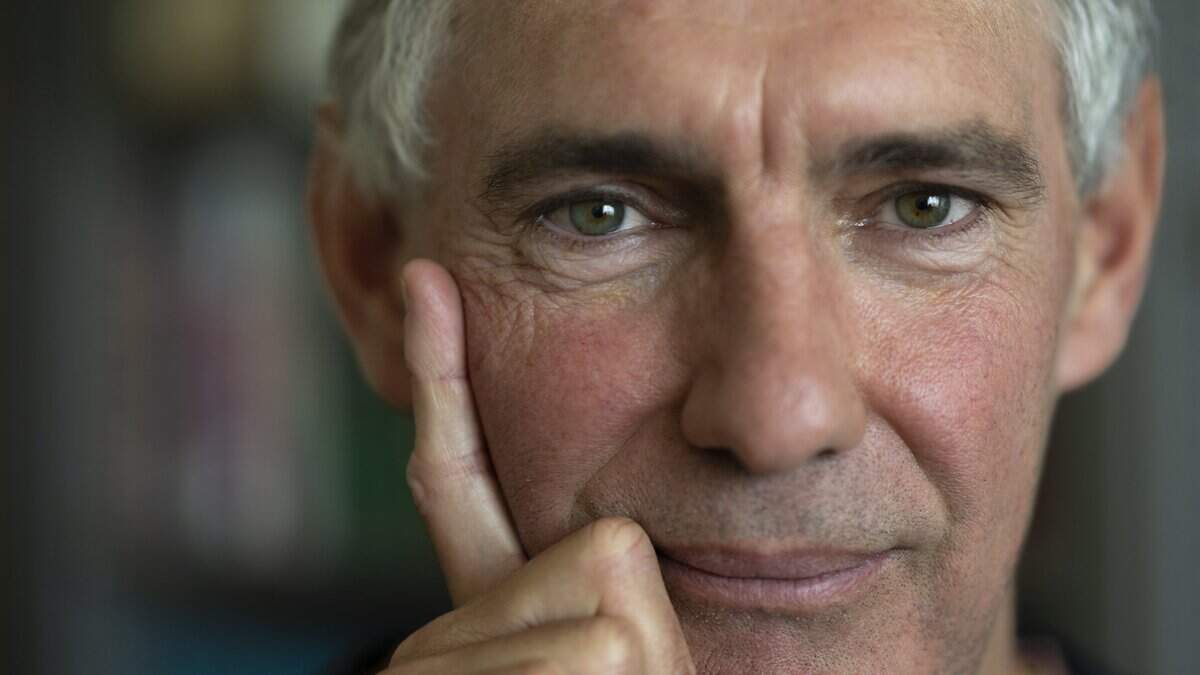
The billionaire wealth tax started with a Zoom call.
Dave Regan, the hard-charging president of a healthcare union, wanted to raise $100 billion to address looming federal healthcare cuts. What about a one-time wealth tax on billionaires?
Read more Bee’s Elk Grove police death investigation prompts state lawmaker to consider bill
He’d come to the right group: a quartet of academics led by UC Berkeley economist Emmanuel Saez. The French economist was an academic star who has spent years studying inequality and taxation.
More than a year later, the tax is on the ballot as Proposition 40. Regan, never a household name, has become less visible in the campaign after accusations of workplace misconduct that he’s strenuously denied.
That’s left Saez and three other drafters of the tax — University of Missouri law professor David Gamage, UC Berkeley law professor Brian Galle and UC Davis law professor Darien Shanske — as some of Prop. 40’s loudest defenders, cramming debates and editorial board meetings in between classroom responsibilities.
Outspent more than 5-to-1 by billionaire-backed critics, Saez says Prop. 40’s best argument is its simplest: it’s time to tax the rich. Saez’s research found California billionaires’ wealth is 25 times what it was in 1982. On the left, billionaires are regularly invoked as oligarchic overlords whose wealth and influence have helped erode the foundations of democracy.
“They hate the fact that the thing is called a billionaire tax because already, that gives us a tremendous advantage — if people just understand that simple point,” Saez said in an interview last month.
The debate has at times gotten personal. Earlier this year, Gamage said a critic created a website that included photos of the academics as well as their contact information and social media accounts, resulting in a deluge of angry messages. It was later taken down.
Even opponents of the tax concede the populist appeal of taxing billionaires. But they argue Saez and his allies are conducting a dangerous ivory tower lab test that will drive away jobs and tax revenue. The No on 40 campaign created a website, whowroteprop40.org, designed to draw attention to instances where Saez and another ally, UC Berkeley economist Gabriel Zucman, characterized the tax as an “experiment.”
Critics include Gov. Gavin Newsom, healthcare groups like Planned Parenthood Affiliates of California and California Medical Association, some labor groups, and billionaires like Google co-founder Sergey Brin.
The idea has divided academics. Six Nobel prize-winning economists endorsed the measure last month, writing in the Financial Times that the measure marked “a turning point in the battle between democracy and oligarchy.”
Critics include Saez’s next-door office neighbor at UC Berkeley’s Evans Hall, economist Enrico Moretti. Moretti shares his occasional lunch buddy’s goal of addressing inequality.
But he said a state-level tax would actually leave California farther from accomplishing progressives’ goals.
“These billionaires are not going anywhere; they’re just going to a different state, and my concern is that they’re bringing with themselves a lot of the jobs that could have been in California,” Moretti said. “It just strengthens the economy of red states and weakens the economy of the most progressive blue state.”
Years in the making
Born in the Basque region to a teacher and manager at a local phone company, Saez was a math prodigy whose tour through elite universities — an undergraduate degree at Paris’ École Normale Supérieure, a Ph.D. at the Massachusetts Institute of Technology and a stint teaching at Harvard — led to a career of exploring the tax system’s role in the growing global wealth gap. In 2009, he won one of his field’s most prestigious awards, the John Bates Clark Medal, for his work.
In the wake of the 2008 Great Recession, conversations around inequality gained increasing currency; as protesters occupied Wall Street or rallied for U.S. Bernie Sanders, I-Vt., Saez and the other Prop. 40 architects traded policy ideas in papers and conferences.
But for much of the men’s careers, a wealth tax seemed like a political dead-end. When Gamage highlighted the merits of the idea in a 2014 paper, it was falling out of vogue; countries like France, Germany, Denmark, Austria and Luxembourg all abandoned the tax over the last several decades.
So Gamage was skeptical of the political viability of the wealth tax when Sen. Elizabeth Warren, D-Mass., asked for Saez, Gamage and Zucman to help her craft a proposal ahead of her 2020 presidential run.
“My perspective, based on the polling we had at the time, was that there was no realistic prospect for a wealth tax in the United States,” Gamage said. “I didn’t see it going anywhere.”
Warren’s innovation, however, was to reframe the tax as narrowly focused on the ultra-wealthy rather than the merely rich. The progressive politician called for a 2% tax on families with more than $50 million of wealth and 5% on billionaires. The idea polled well and got traction in the media — a “sea of change” for an idea that had formerly been confined to marginal academic policy debates, according to Gamage.
Warren’s campaign fizzled out, but President Joe Biden later consulted with the group on a proposal to tax families with more than $100 million in assets. Biden dropped the idea after it was clear it lacked the U.S. Senate votes to pass.
Read more Steelers Get Bad News on Roman Wilson’s Injury
In California, Gamage and his allies partnered with lawmakers to introduce wealth tax proposals in the Legislature. In 2020, then-Assemblymember Rob Bonta proposed an annual 0.4% wealth tax on Californians whose net worth exceeded $30 million. Bonta’s bill went nowhere, as did a subsequent effort targeting billionaires from Assemblymember Alex Lee, D-San Jose, who took on the cause after Bonta was elected attorney general.
Bonta hasn’t weighed in on Prop. 40; a spokesperson said he doesn’t take stances on ballot measures given his offices’ role in crafting their title and summary.
Gamage had mostly given up on the idea while Newsom remained in office. But when Regan and his union, SEIU-United Healthcare Workers West, called the academics sometime late last summer, suggesting a ballot measure that couldn’t be vetoed by the governor, the academics saw a new opening.
The group got to work. Gamage drafted the language, Saez did the economic modeling, Gamage was the team’s state constitution expert, and Galle said he was brought in to help consider “weird things that rich people do to hide their money.”
The tax contained a new tactic. Tirst announced in November, the tax would apply to all billionaires who were residents as of Jan. 1, 2026. That left billionaires little more than a month to not only move residences, but prove to tax officials that they’d severed substantial professional ties to California.
The collaboration was all remote. The academics didn’t meet “in three dimensions” until this summer, according to Shanske, the UC Davis law professor.
Shanske argues the group were guided by data rather than political convictions. In his view, Prop. 40 amounts to a modest tax on billionaires that won’t come at the expense of “meaningful economic activity.”
“It’s a very efficient tax,” Shanske said. “It’s way more efficient than taking millions of health insurance away from millions of people. As it also happens, it’s morally a slam dunk because you’re asking the people who have the most to help provide the most basic human services to their fellow citizens.”
A ‘totally new and enormous undertaking’
To Prop. 40’s many critics, that analysis vastly understates Prop. 40’s potential pitfalls.
Their concerns are legion: that the tax won’t be one-time, that it will be extended to more Californians, that it will underdeliver on revenue, be impossible to enforce, get choked up in court battles and that any revenue it generates will be misspent by the Legislature.
The academics have answers to many of these criticisms, though not ones that critics find persuasive. Yes, some version of a permanent wealth tax could one day be proposed, but that is already a possibility through a future ballot measure or . Gamage and his colleagues defended their revenue estimates and discounted the possibility the tax could apply to a broader target beyond billionaires, a move they said would violate the measure’s statute. And the Prop. 40 architects argue it sharply limits how the Legislature can spend the money and sets expedited timelines for hearing lawsuits.
Then there’s the question of appraising billionaires’ property. Kirk Stark, a tax law professor at the UCLA who described himself as “sympathetic, but skeptical” of the measure, called that valuation process a “totally new and enormous undertaking” for tax authorities.
But the most salient and widely shared fear is that the tax will chase away billionaires whose tax revenues help fund state services. One estimate, from Stanford economists with the Hoover Institution, a right-leaning think-tank, found that the tax will end up costing the state $25 billion in the long run as billionaires flee.
“Our research shows that this wealth tax experiment would be a fiscal and economic disaster,” said Joshua Rauh, a finance professor at Stanford’s Graduate School of Business, in a recent mailer sent by the “No on 40” campaign.
Few topics raise the hackles of the Prop. 40 architects more than the Hoover modeling, which Gamage called “bad faith” and Shanske described as “outlandish” because of assumptions it made about ongoing billionaire flight.
Saez is willing to concede there is some room for honest disagreement on how many billionaires will leave California. But he argues the end result will be far less dire than critics suggest, pointing to his estimates that found billionaires collectively accounted for an average of less than 3% of California income tax revenue from 2023-2025.
The Prop. 40 architects also agree that all things considered, a national billionaire tax would be preferable to a state level one. But that would be a huge political lift, perhaps requiring a constitutional amendment. A state level tax could function as what Gamage described as a “demonstration project” for a federal effort, much as Wisconsin’s 1911 income tax, in the midst of Gilded Age inequality, paved the way for a federal tax two years later.
On some level, Saez and his allies are exhausted and ready to end their press circuit. But on a visit to his Berkeley office last month, the wiry Frenchman had energy to spare; to unwind, the 53-year-old goes surfing near San Francisco, a city that’s come to embody the supercharged class stratifications of 21st century California.
In what Saez sees as a fight between democratic norms and oligarchic power, “at some point there’s going to be a clash,” Saez said. “If Proposition 40 passes, that’s a historical turning point.”
Read more The 15 Best Goalkeepers in EA FC 27-Official Ratings
“It’s the best shot we’ve ever had,” he added.