 By admin
Swaddled in a towel, a small and stout tuxedoed seabird sat on an exam table waiting for blood work on Oct. 12. By then, this once-emaciated common murre had been receiving treatment from Pacific Wildlife Care in California for more than a week, and he was almost healthy enough to be returned to the wild.
Read more Dumpster diver finds baby’s body at Texas motel. Mother and boyfriend are charged
From Sept. 1 to Monday, the nonprofit wildlife rehabilitation clinic Pacific Wildlife Care admitted 867 common murres for care — more than ever before, development coordinator Kelley Boland said.
“It’s the biggest influx of common murres we’ve ever seen,” she said.
Most of those seabirds arrive at the clinic emaciated as part of what seems to be a mass starvation event off California’s Central Coast, Boland said.
But the murre getting his blood work done on Oct. 12 had finally recovered, and he weighed a whole 1 kilogram.
“He’s very fat,” rehabilitation technician Sophie Swan said with pride before drawing his blood.
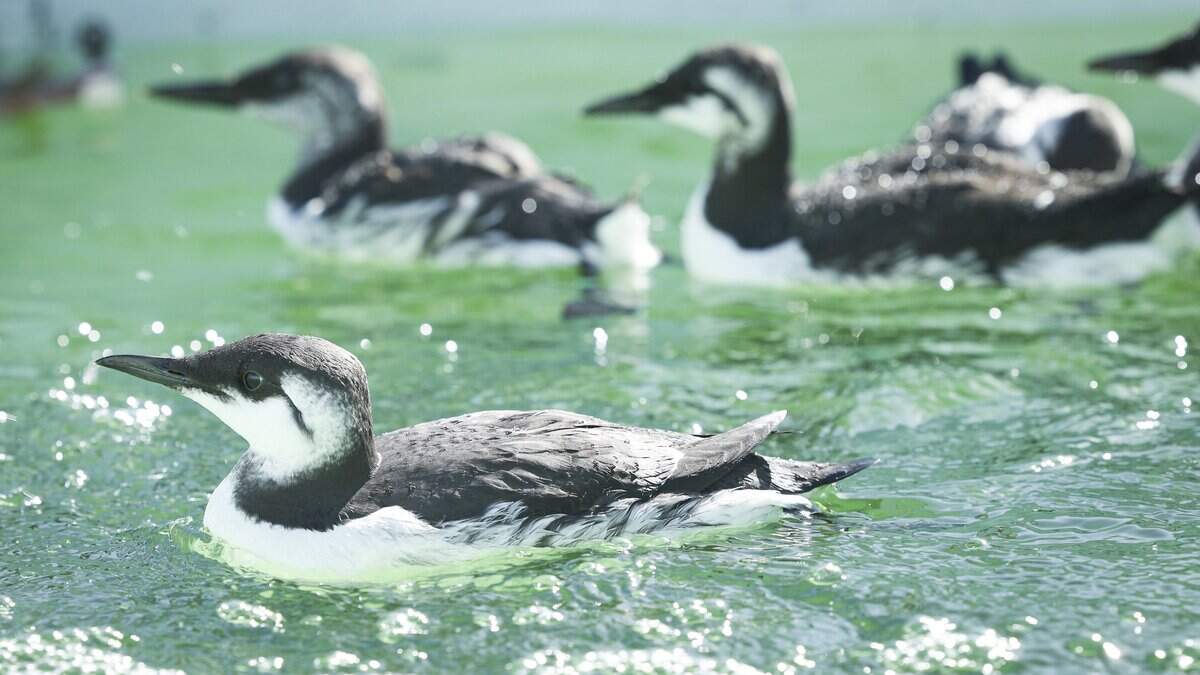
Murres resemble penguins with dense, waterproof feathers that look like a tuxedo and function like a wetsuit — trapping a layer of air against their skin to keep them warm and dry, Boland said.
They spend most of their lives at sea, then during the summer, they breed in the Farallon Islands off the coast of San Francisco and in the Channel Islands off of Santa Barbara County.
“Anytime people are seeing common murres washed up on a beach, that’s a sign that something’s wrong,” Boland said.
Common murres require lots of food to survive.
“Imagine trying to live your life out on the ocean,” Boland said. “You have to spend so much energy to stay dry and to stay warm and to be able to eat enough — so they’re they’re sort of living on the cusp of their energy capabilities.”
El Niño condition have increased sea surface temperatures on the Central Coast, which pushed prey fish deeper into the ocean. Murres can dive up to 600 feet deep, but this burns lots of energy — and it’s not sustainable for them to hunt fish at such extreme depths all the time, Boland said.
These conditions are especially difficult for juvenile murres who are still learning how to dive.
“They lose body reserves very quickly when there’s not enough prey available,” she said.
As a result, some of these murres can’t eat enough to stay healthy, and they wash up on the beach in need of help.
The lack of prey fish may not be the only challenge faced by the murres.
After the murres breed each summer, the fledglings leave the nest, and the father will continue to swim with the young bird while it learns to dive and fish independently.
“It’s possible that some of these young birds are getting abandoned because there’s just not enough food for the adults to take care of them,” she said.
Meanwhile, murres molt their feathers at the end of the summer, and it’s “energetically expensive” to grow new feathers, she said.
These factors have likely combined to contribute to a mass starvation event, Boland said.
Read more A body was found in a Tesla trunk on a California highway. Now a suspect is charged
A day in the life of a seabird at Pacific Wildlife care
When a murre enters the clinic, it receives a full intake exam, and the veterinary staff assigns it a treatment plan.
If the bird is dehydrated, it receives fluids. If it’s cold, staff might place it in an incubator to warm up. Then, the bird receives a parasite treatment.
Every two hours, the murres are tube-fed 30 cubic centimeters of a fish slurry, which is blended fish and “a powdered diet that packs a really good nutritional punch,” Boland said.
The feeding must be done carefully because the esophagus is small and close to the wind pipe, she said.
“Rehabilitating an aquatic bird — it’s tough work,” Boland said. “It involves a lot of steps and monitoring.”
On Oct. 12, rehabilitation technician Veronica Trosper plucked murres out of a drying pen and fed them fish slurry. The birds had arrived the day prior, and they wore tiny socks to protect their feet.
“They’re sort of our most critical patients,” Boland said. “They’re still very, very debilitated.”
For about five days, the murres rotate between the drying pens — which blow warm air on the birds — and 80-degree pools of water inside the clinic. The goal is to keep the birds warm while they gain weight and repair their waterproof feathers.
“These birds are meant to be on the water for most of their life, and if they stay on land for prolonged periods of time, they can develop secondary problems just like if humans laid in bed all day. We would get bed sores,” she said — so it’s critical to keep them in the water as often as possible.
When their health improves, they move to an outdoor pool kept at about 50 degrees, and they’re fed whole fish.
On this warm, October day, five murres paddled around the pool — waiting for a technician to drop a bucket of smelt into the water.
Sometimes, the technicians inject the fish with air so they float on the surface of the water — a more appetizing experience for the murres, Boland said.
“This is good behavior, when the birds are bright and alert and responsive,” Boland said.
The murres typically receive treatment at the clinic for two to three weeks. If they achieve a healthy weight and are able to hunt fish and thermoregulate on their own — the clinic sends them back into the ocean.
Pacific Wildlife Care has an agreement with the Morro Bay Harbor Department, who will boat them out a few miles offshore to release the rehabilitated murres near a flock of wild murres.
Read more DOJ threatens to prosecute California election officials. Experts call it ‘absurd’