 By admin
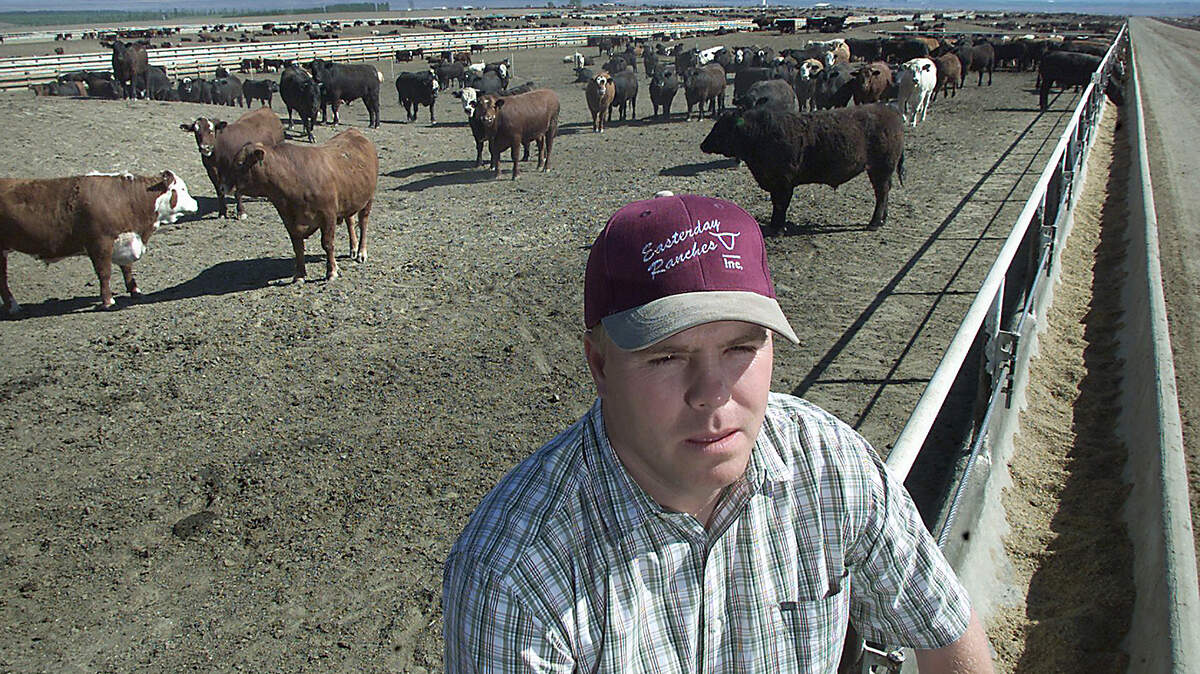
A prominent Eastern Washington businessman sentenced in 2022 to 11 years in federal prison for a massive “ghost cattle” fraud is no longer behind bars.
Read more Daughter forced to carry family safe to suspects’ car, police say. Teens caught 40 minutes later
The Federal Bureau of Prisons says that Cody Easterday, 55, is now in “community confinement” overseen by its Seattle Residential Reentry Management Office.
Community confinement means that Easterday is either in home confinement or one of the seven residential reentry centers, or halfway houses in Washington state.
The Bureau of Prisons does not disclose locations of people in its community confinement program.
Easterday is on track to be released by the Bureau of Prisons at the end of May 2028, about five and a half years after he self-reported to prison, according to federal court and Bureau of Prisons documents.
After the initial sentence, his prison term was reduced to eight years and nine months in prison.
In addition, Easterday filed a petition last year for clemency. The Department of Justice lists the status of his request to have his sentence reduced as pending.
Easterday, the owner of the former Easterday Ranches in Franklin County, Washington, stole $244 million over about four years by manufacturing false invoices and other information, according to court documents.
Easterday Ranches had an agreement to purchase cattle on behalf of Tyson and then provide feeding space for the animals until they were sent for slaughter at Tyson’s plant south of Pasco. Tyson advanced him about $233 million for the costs of purchasing and growing the cattle, and he was obligated to pay back the money with interest.
In addition, he also defrauded Segale Properties of about $11 million in a similar scheme, for a total of $244 million.
Read more California high-speed rail CEO quit, Trump pulled funding. Yet tracks might soon be laid
The invoices Easterday created hid the fact that instead of purchasing and delivering more than 265,000 head of cattle, he used nearly a quarter of a billion dollars to cover huge losses he had incurred in the commodities futures market and to shore up the finances of his company.
He was sentenced in October 2022 to 11 years in prison and to pay $244,031,132 in restitution. Federal court documents showed that as of January 2024 he had paid about not quite a third of that, or $78,635,054.
Then in February 2024 his sentence was reduced by U.S. Judge Stanley Bastian to eight years and nine months because of a change to federal sentencing guidelines for offenders with no criminal history, which included Easterday.
His attorneys had proposed reducing the sentence to eight years and one month.
In the motion to reduce his sentence, his attorneys said that Easterday had been an exemplary prisoner, earning excellence certificates in the Master Mechanic Program and Agri-Business Vocation Program and an award for working weekends and evenings during harvest season at a prison agriculture program.
The Eastern Washington District U.S Attorney’s Office objected saying that “the sheer magnitude of Easterday’s fraud is staggering.”
During the criminal sentencing, Judge Bastian had described the fraud that stemmed from a gambling addiction as one of the largest he had ever seen. The scam toppled one of the Northwest’s largest ranching families.
Easterday’s conduct in prison and raising money to pay his creditors “does not warrant a reduction in his sentence of more than 25%” as requested, the prosecution said in court documents.
This story was originally published November 15, 2026 at 11:20 AM with the headline “He faked records on 265,000 ‘ghost cattle’ and stole $244M. He wants clemency.”
Read more Could California reading reforms match Mississippi’s gains? Lessons from ‘miracle’