 By admin
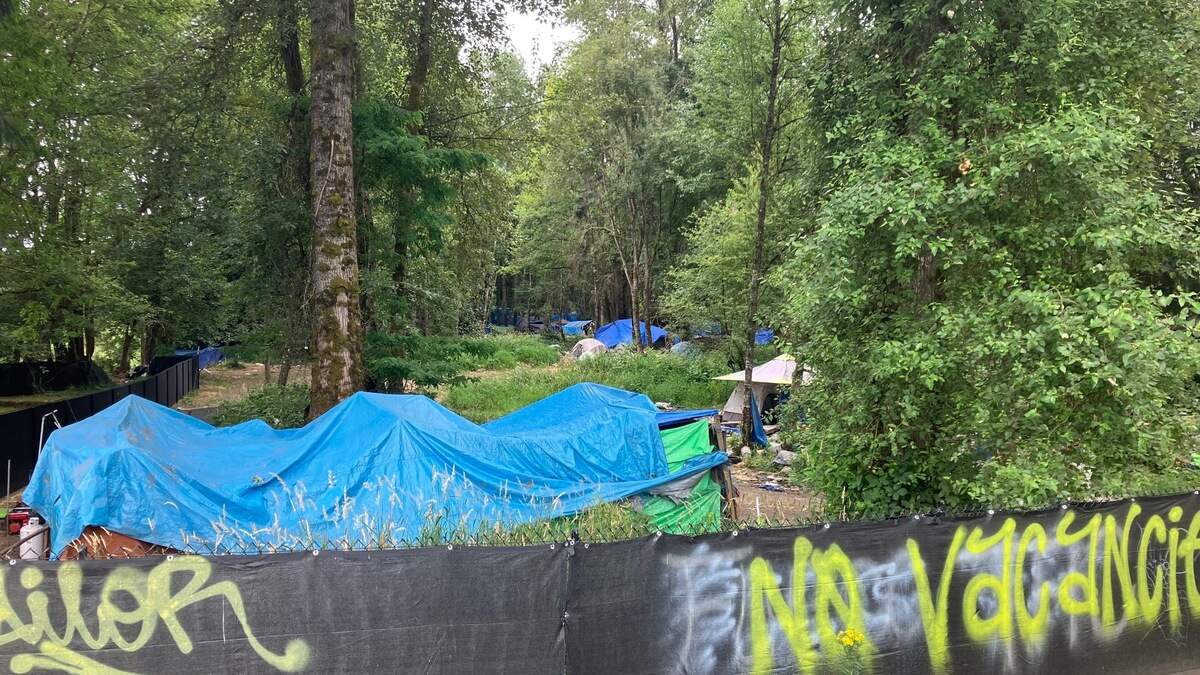
The city of Olympia in Washington state plans to close the first section of the longstanding encampment known as the “Jungle” on the city’s east side before the end of the month, a spokesperson for the city recently told The Olympian.
Read more California rail consultants repay $1.34M after watchdog flags Tiki bar, escape room trips
Brandon Chapman said the city anticipates closing the first section of the Jungle, which will be the north section off Martin Way near the entrance of Fatso’s Bar & Grill, by the end of November.
“An additional cleanup has already started,” Chapman said Nov. 13. “It started this week in the southern part of the Jungle. Next week will be focused on that northern part.”
The city’s website on the Jungle has also been updated with more information regarding efforts to close the encampment and secure housing for its residents.
According to the website, 39 people from the encampment have been housed as of Nov. 1.
Spokesperson Chapman said the city started with a list of 286 people. He said one person died, and there are now 246 people left on the list.
He said staff are working to get seven more people housed “soon.”
Emergency declaration extended
Meanwhile, Olympia City Council extended its emergency declaration related to homelessness for another 12 months during its Nov. 10 meeting.
Housing Director Ashley Chambers said during the meeting that extending the emergency declaration allows the city to continue to prioritize closing the Jungle and work with regional partners to address the housing crisis.
Burney said during the meeting that the city’s current ERP allocation is funded through the end of June 2027. He said if the city’s ERP is reduced or not funded, the city might have to dip into its Home Fund.
According to the city’s website, Olympia’s Home Fund has provided more than $2 million each year to help housing developers to produce affordable housing units. It also supports programs that benefit houseless individuals and families.
Burney said during the meeting that the city’s budget would lose $800,000 in budgeted revenue for half of 2027, followed by $1.6 million in 2028, if the county does not receive ERP funds.
Read more Sacramento International Airport parking rates are going up. Here’s what to know
He said Thurston County mayors have penned a letter to the Regional Housing Council requesting the renewal of funds, and that an RHC member is working on an alternative funding plan for any loss or reduction in ERP funding.
Burney said if the city is not able to secure funding through the RHC or through the ERP, the city could dip into its Home Fund balance. He said it would only be a short-term solution to help get through 2027 and buy the city time to figure out another funding source.
He said the county used to receive $13 million in ERP funding, which was reduced to $8 million and now $5.5 million. He said $5.5 million is the bare minimum that allows the county to maintain all of its sites for unhoused people.
The by-name list
The city started its by-name list in May to keep track of the Jungle encampment’s permanent residents and to ultimately offer those residents housing, according to previous reporting from The Olympian.
The city sought and received approval by the Washington state Department of Commerce to designate the Jungle as an Encampment Resolution Program site. The ERP allows for the city to move people into state-funded beds or housing units, which are mostly at the Franz Anderson Tiny Home Village and Maple Court in Lacey.
Assistant City Manager Stacey Ray said during an Aug. 25 City Council meeting that the city is able to access these extra beds so long as it demonstrates it is actively closing the encampment. People will be moved out in phases, and then portions of the encampment will be cordoned off and made inaccessible to people, and police will monitor those areas.
Ray said during the Aug. 25 meeting that they aren’t adding any names to the list. She said those who continue to come to the encampment and aren’t on the list are still being connected to resources, but those on the list come first.
“We are going to work to connect those people to resources,” she said. “But the Jungle is no longer a place in which any new people can camp.”
The use of the ERP funds allows the city to access up to 196 beds, according to previous reporting. Ray said Aug. 25 that offering everyone on the list housing and closing the Jungle will be a multi-year process that will require a “sustained regional commitment.”
Read more Sacramento council meeting disrupted again amid tensions over ICE enforcement