 By admin
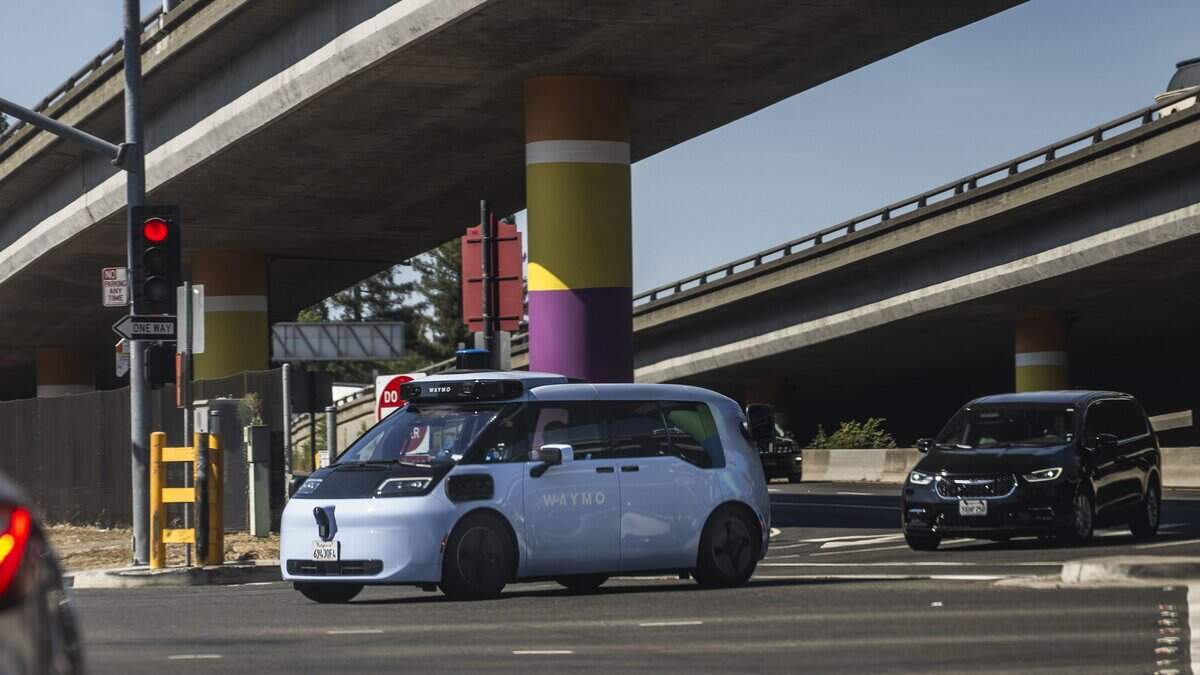
The California Department of Vehicles could have done Waymo a favor in banning its driverless vehicles from state freeways, according to transportation and autonomous vehicle experts.
Read more Powerboat racer selling Miami mansion for $43M. It comes with a 16-car garage
The DMV barred the robotaxis from the state’s high-speed roadways on Nov. 11 following two instances where the autonomous vehicles acted inappropriately, almost passing two law enforcement vehicles with their lights activated and entering in a construction zone. No one was injured, which is a good thing from both a human and autonomous vehicle industry perspective.
“One thing we know about this industry is, while the general population is perfectly comfortable with human drivers killing other people, we are certainly not very happy about it when a machine does it,” said Mark Fagan, a Harvard lecturer in public policy whose research focuses on the role of regulation in competitive markets.
Stopping freeway action, which Waymo decided to do across the country, will give the AV company more room to train the vehicles to better address these types of “edge cases.” These cases are situations considered outside normal, but that still happen periodically and for which errors have higher consequences, Fagan said.
Some deregulation advocates are pushing against the ban and saying it is too broad of a punishment for the issues shown. Experts say the ban will allow these driverless cars, which are monitored remotely, to get better at driving in these high-speed situations before they hit the road again.
Overreaction or appropriate regulation?
The DMV banned Waymos from California freeways following two incidents captured on video.
During one, three autonomous vehicles entered a closed, active construction zone on Highway 101 near Burlingame, according to the DMV. In the second situation, a Waymo driverless vehicle attempted to pass two California Highway Patrol cruisers — lights activated, side-by-side — as they were blocking traffic on Interstate 280 in San Francisco, according to a video posted on social media. The law enforcement vehicles had to swerve to block the AV as it tried to get by.
“The department determined that Waymo’s driverless freeway operations pose an imminent hazard to public safety due to recurring incursions by its vehicles,” the agency said. Waymos began operating on freeways about a year ago.
The autonomous robotaxis will be barred from freeways “until Waymo demonstrates to the department that it has taken effective corrective actions to address the deficiencies that precipitated the restrictions,” the DMV said.
Waymo will continue moving throughout Sacramento city streets with no changes, city spokesperson Jennifer Singer said.
Although the California Public Utilities Commission approved Waymo’s application to operate in Sacramento and San Diego, the company has not yet begun offering rides to residents.
James Czerniawski, head of emerging tech policy Consumer Choice Center, described the freeway ban as “a blunt fix for a narrow problem.” The independent organization advocates for deregulation and consumer choice.
“Waymo must adapt to better handle dynamic situations as human drivers do, such as construction zones and highway patrol stops, and do so correctly every time,” Czerniawski said. “The goal should be to incentivize fixing the tech, not putting Waymo in an indefinite timeout.”
In contrast, Chandra Bhat, a professor and the Joe J. King Chair in Engineering at the University of Texas in Austin, said he believes the ban is “prudent.” And Bhat thinks that Waymo pulling its vehicles from all freeways is a sign that the company agrees.
“It is appropriately going to slow down the introductions of autonomous vehicles in specific operating situations,” Bhat said, adding that he believes more testing is needed.
Read more Rocklin approves 281 apartments despite parking concerns. Here’s what changed
Waymos have been in city-like situations — watching out for pedestrians, reacting to stop lights and traveling at slower speeds — since launching the driverless service in October 2020. However, Waymo has less experience with freeway service and highway driving situations.
The edge cases can be spontaneous and unpredictable, such as police pursuing a speeding vehicle, Bhat said. So it will take more energy to figure out how to efficiently test the Waymo vehicles.
“An interesting and challenging part is those edge cases are not always something we can conjure up in pilot-related testing. They just happen at the spur of the moment,” Bhat said. “So, in part we also need to be more creative in imagining what those test cases might be.”
Basar Ozbilen is an assistant director of the 3 Revolutions Future Mobility program and an assistant professional researcher at the Institute of Transportation Studies at UC Davis. He said he believes the ban could affect Waymo’s immediate ability to offer competitive regional travel because the lack of freeway access could lengthen trip time for longer distances.
However, Ozbilen said this could be an opportunity for Waymo to not only improve its service but also its transparency. This could include Waymo showing its quarterly reporting before and after it makes the adjustments needed to get back on the freeway.
Transparent reporting would not only be one way to increase trust with the public, it could also be evidence that Waymo could use to push for resuming operations faster, Ozbilen said.
Bottom of the pyramid
Fagan, who has written about the AV industry and touted the safety benefits of the vehicles, said he is happy that Waymo has taken a step back.
One of the issues facing the company was scaling the business across the country, Fagan said. Over about six years, Waymo has expanded to 15 cities, each with different driving styles, geography, weather and traffic patterns.
“(The AV industry) is a significant opportunity to enhance the safety on our roads, but you can’t just assume that what we were able to do in five geographies we can do in 15 or 20 geographies,” Fagan said. “I think the industry needs to have a perhaps more measured pace to ensure that as it walks in multiple locations at the same time, it can manage them all successfully.”
The pause presents an opportunity for Waymo to scale better and to figure out how to fix these issues, which were low-consequence but are “a leading indicator of the potential for a problem,” Fagan said. Essentially the incidents were the bottom of the safety pyramid — a model in occupational safety that illustrates the relationship between fatalities, serious injuries, near-misses and unsafe acts.
So it’s good to address the issue now before it escalates to a situation similar to when a Cruise AV struck and dragged a pedestrian in October 2023, said Fagan, who wrote a report that analyzed crash and introduced a phased regulatory approach in the industry.
All experts consulted for this story agreed that, at most, this ban will temporarily pause AV expansion, but will not stop its use.
“I expect progress to continue, although not uniformly across markets or driving environments,” Bhat said.
Read more CA home sales hit lowest level as prices, mortgage rates rise. What you’ll pay