 By admin
The California Governor’s Office has called this year’s El Niño weather system “historic” and issued a state of emergency in late September to bolster preparedness. However, some state workers were left to scramble when storms hit the Capital Region this month — even as Gov. Gavin Newsom’s return-to-office mandate offers to review telework requests on a case-by-case basis.
Read more Forgot a holiday food? What’s open, closed on Thanksgiving in the Sacramento area
“There’s a policy that seems to recognize flexibility on paper … but employees are struggling to find out whether that flexibility exists in practice,” said SEIU Local 1000 steward Steven Boyd, who works for the Employment Development Department. “In many cases, they’re finding that it does not.”
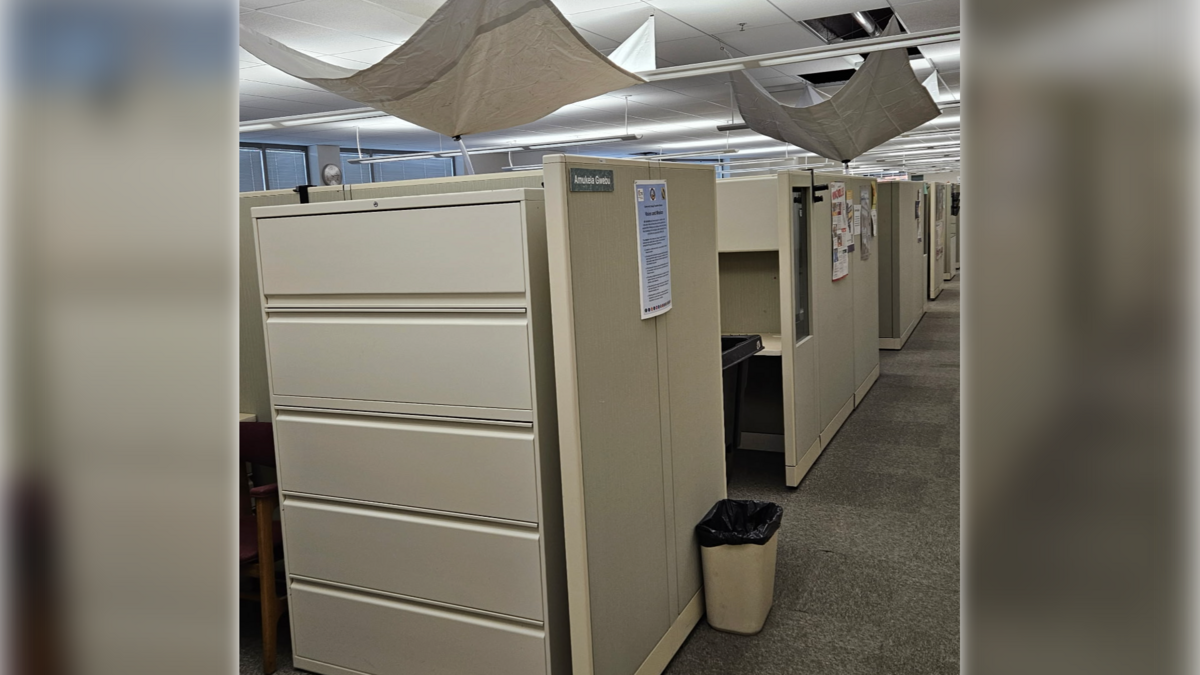
Those who made it to the office were also affected as workplaces were met with facility woes. The California Department of Education headquarters had water leaks, according to SEIU Local 1000 steward Gina Garcia-Smith. Workers at the California State Library in downtown Sacramento are also concerned about water damage.
Rural state workers hit hard
Elizabeth Campbell, an analyst at EDD, lives in rural El Dorado County where the National Weather Service had a winter storm warning from last Wednesday to Friday morning. Her commute takes an hour and a half, as she navigates local streets before reaching a major corridor like Highway 50.
While getting ready Thursday morning, she looked down an outdoor staircase that leads to a dirt road. She couldn’t see the path. A pool of water greeted her instead. Living in the Sierra Nevada mountain range, Campbell said a snowy-slush covered parts of the ground, making the trek to downtown Sacramento feel unsafe.
“It’s been going between snow and rain, and creating this slushy ice concoction,” said Campbell, who once worked entirely from home.
She asked management if she could work remotely that day. Campbell was accommodated, partly, as she was initially told to switch her telework day from Friday to Thursday, meaning she’d still have to commute the following day — when the winter storm warning ended shortly before her drive.
Campbell didn’t accept the deal and contacted SEIU Local 1000 stewards. After stewards took action, EDD management allowed her to work telework Friday as well. However, according to an email from management reviewed by The Sacramento Bee, that won’t be the path moving forward.
» The State Worker newsletter: The news state workers need to know
An EDD manager wrote to Campbell that telework “may be considered when there is official confirmation from the California Department of Transportation that the primary routes between her residence and work location … are closed.” The email specifically mentions Highway 50 and State Routes 49 and 193.
Living in a remote part of El Dorado County, Campbell said she relies on side streets and county roads that might not be monitored by Caltrans. She can’t get to those “primary routes” if those smaller streets are affected by inclement conditions.
This isn’t the first time Campbell said weather has complicated her commute. This summer when heavy winds sparked PG&E to issue turn-off notices to prevent wildfires, she said a wire fell on the road. Not knowing what exactly it was, she didn’t want to risk damaging her electric car. She was also uncertain if other dangers were further along in her commute. That request, she said, was denied.
Screenshots of Microsoft Teams messages show it can take more than an hour to get a telework request decision. Waits have extended beyond her start time.
When asked about Campbell’s telework accommodations last week, EDD spokesperson Greg Lawson said the agency “continues to follow statewide telework guidance, and does so consistent with operational needs.” He did not directly address any of The Bee’s questions.
The California Department of Human Resources directed The Bee to its telework guidance document. It assigns departments the responsibility of establishing written policies around remote work requests. The report also hyperlinks to a Department of General Services page on the statewide telework policy. That page outlines incidental and emergency telework options.
Read more Famous Sacramento turkey struck by car is receiving medical attention
Incidental telework, according to the outlined policy, allows an employee to ask a supervisor to work from an alternate work location if an “unplanned situation” arises. Emergency telework addresses “inclement weather, a declared state of emergency or closure of government buildings.”
Concerns about workplace rain damage
Union stewards at the California Department of Education and California State Library — both in downtown Sacramento — said their buildings leaked amid the heavy rain.
Leaks at the California State Library’s 900 N St. building range from upper floors where SEIU Local 1000 steward Lance Earl said water gets through balcony doors and seeps into the break room to lower levels. He also said some windows have problems as well.
When heavy rains are expected, Earl said, management brings in sponge-like devices to soak up water. Dehumidifiers are also deployed. Even with these strategies, concerns about mold hiding underneath the carpet linger.
Water leaks at the DGS-managed building could also affect the library’s books.
“Some of them that are over 100 years old have been impacted,” Earl said. “These are original materials that are not replaceable.”
Fallon Okwuosa, a spokesperson for DGS, said there are policies to protect such items.
“Climate-control measures are maintained to help preserve historical materials, and many documents are stored on elevated shelving to reduce the risk of damage from water intrusion,” she said in a statement. “In the event of a water intrusion incident, affected historical materials and documents can be transferred to another facility for protected safekeeping while remediation and restoration activities are completed.”
Those at CDE shared a similar experience, according to Garcia-Smith. She said the building has leaks each year when it faces heavy rainfall. Most recently, the fourth floor of the building had dripping on the inside of windows and coming down from the ceiling.
Tarps and trash cans were set up to catch dropping water, Garcia-Smith said, as workers who wanted to temporarily swap desks for the day were accommodated.
DGS said its short-term plans include, but aren’t limited to, identifying and correcting the source of the leaks, removing standing water, drying affected materials and performing moisture verification.
Okwuosa said there are long-term solutions.
“(DGS) repairs building deficiencies that contribute to moisture intrusion, conducts inspections and hazard assessments, follows formal remediation procedures, verifies complete drying, and maintains ongoing preventive maintenance programs to ensure a safe and healthy workplace for employees and visitors,” Okwuosa said.
In conversations between stewards and CDE leadership, Garcia-Smith said it doesn’t appear as though DGS, which oversees the building, has a long-term plan to prevent leaks from happening again. Workers at the building have shared concerns about DGS before the latest leaks. The agency had several bedbug incidents in recent years.
“It happens every year and to my understanding, (DGS doesn’t) necessarily fix the underlying issues or at least not well enough,” Garcia-Smith said.
Read more Sierra College named one of nation’s best community colleges by Time magazine
This story was originally published November 25, 2026 at 5:00 AM.