 By admin
This story is part of The Bee’s Dream Big for Small Nonprofits holiday drive. For more stories, go to sacbee.com/dreambigstories. To donate, go to sacregcf.org/dreambig.
Read more New matcha cafe with specialty drink that has gone viral opens in Sacramento
At Placer Nature Center, some of the biggest lessons in nature begin with something incredibly small.
This month, the Auburn-based nonprofit is continuing its tradition of raising and releasing Chinook salmon, welcoming a new batch of fertilized eggs that will eventually make their way to the Sacramento River.
Now in its third consecutive year, the program gives students and families a firsthand look at the life cycle of one of California’s most important migratory fish.
Provided by the California Department of Fish and Wildlife, the eggs arrive through an educational program that allows organizations to raise salmon in a controlled environment. Granite Bay Flycasters sponsors the program, delivering the eggs and providing ongoing support.
This year, Placer Nature Center expects to raise 35 salmon, monitoring their development from tiny eggs to young fish, known as fry, before releasing them into the Sacramento River in early January 2027.
For Amanda Hawkins, the center’s programs director, the experience is about more than watching fish grow. It’s an opportunity to help people understand the connections between humans, wildlife and the environment.
“We are better at being stewards of the land when we know what we’re protecting,” Hawkins said.
Hawkins, who began volunteering at the center in 2022 before joining the staff in 2024, brings a background in biology, science education and academic research to her work. She said the center offers the kind of experiential learning she always hoped to provide as a classroom teacher.
“I’ve always been a believer in hands-on learning and being able to make things accessible and relatable for students, so that they’re actually connecting with the material rather than just memorizing it,” Hawkins said.
Placer Nature Center is a participant in this year’s Dream Big for Small Nonprofits collaboration with The Sacramento Bee. The Dream Big initiative, the successor to our longtime Book of Dreams holiday drive, seeks to raise money for the center and two other emerging nonprofits that do notable work — but might not get the attention that larger organizations do. Dream Big aims to raise at least $60,000, $20,000 for each of the three nonprofits.
The Placer Nature Center hopes to use the funds to improve their outdoor learning spaces with interpretive signage and educational exhibits.
What students learn
At the nature center, students don’t just read about the salmon’s life cycle. They watch it unfold.
Chinook salmon, also known as king salmon, spend much of their adult lives in the Pacific Ocean before returning to freshwater rivers and streams to spawn. Their journey brings vital ocean nutrients into freshwater ecosystems, supporting wildlife and contributing to the health of surrounding habitats.
That connection makes protecting waterways especially important.
“If we were to let our rivers get polluted, not only does that mean that we don’t have water for ourselves, but it also means that the salmon can’t come up here and spawn,” she said. “If they can’t spawn, then the salmon are wiped out.”
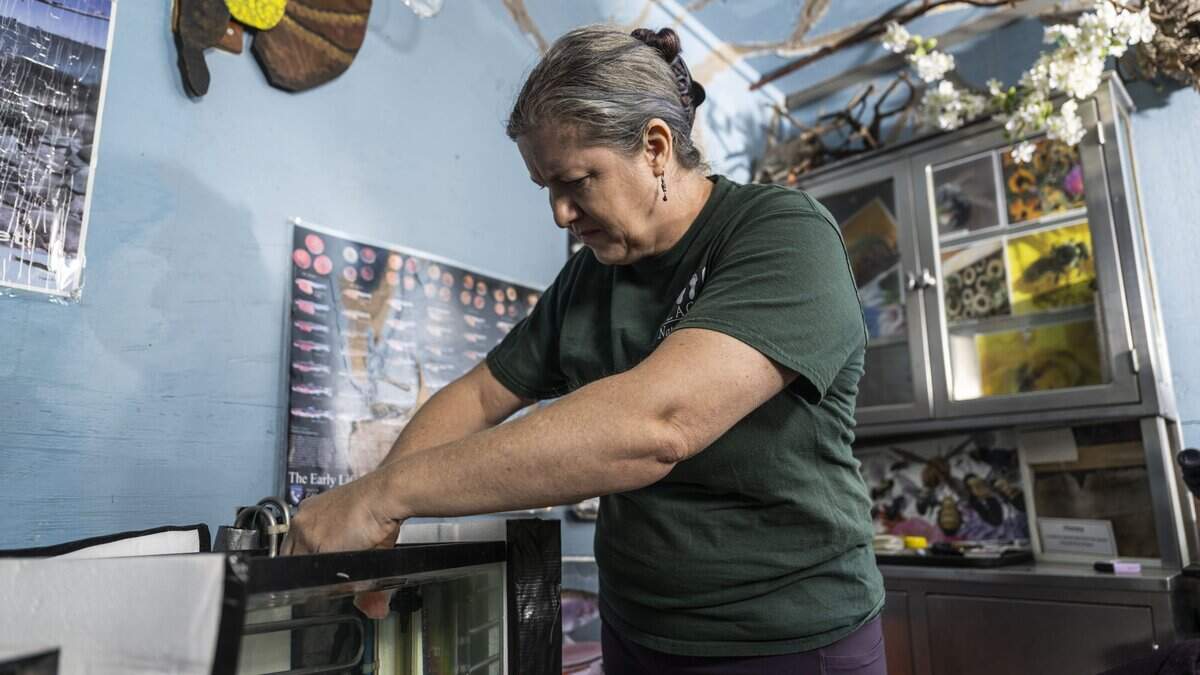
The eggs require cold, oxygen-rich water and protection from ultraviolet light. A specialized tank equipped with a water chiller and aeration system maintains the conditions, which Hawkins checks daily.
Read more 33 years of Sacramento’s Thanksgiving Run to Feed the Hungry. Learn its history
After hatching, the baby salmon, called alevins, carry yolk sacs that provide nourishment as they develop. As they absorb the sacs, they grow fins and eventually become strong enough to swim independently.
Students and families can follow each stage through observation books, hands-on activities and games, recording or drawing what they see along the way.
Placer Nature Center works primarily with schools and families with elementary-age children, offering programs exploring local wildlife, plants, geology and ecology. Its Little Tykes Family Nature Program also introduces children ages 2 to 6 to the natural world through interactive experiences.
Whether searching for worms, examining animal skulls or looking for acorns beneath oak trees, Hawkins said those discoveries help build lasting curiosity.
“I just love that energy that this is the kind of teaching I always wanted to be able to do,” she said.
Salmon run offers ‘rich experiences’
The salmon program culminates in early January with a free public release event at a Sacramento park along the Sacramento River. Families can participate in activities about salmon migration, life cycles and habitat before helping send the young fish downstream.
Using a small fish chute, participants place each salmon in an individual cup and gently release it into the river. Hawkins said children often become especially excited, sometimes naming their fish and wishing them luck.
The salmon will travel toward the Pacific Ocean, where they will mature before some eventually return to fresh water to spawn.
For Hawkins, the release is also an opportunity to connect with families beyond the center’s Auburn grounds and leave them with a greater appreciation for the natural world.
“We have to take care of the land that provides us these rich experiences,” she said.
Through the program, Placer Nature Center hopes to show that environmental stewardship doesn’t begin with grand gestures. Sometimes, it starts with a single egg, a curious child and a closer look at the world around them.
How to donate
Donations to Placer Nature Center through The Bee’s Dream Big Fund can be made online at sacregcf.org/dreambig, where you can make a tax-deductible gift. Here you will find instructions on how to give and information about the other two nonprofits: NAMI Sacramento and Bishop Gallegos Maternity Home.
The page includes the fields for paying by credit card. To give by check, make your check payable to Sacramento Region Community Foundation, with “Dream Big” noted in the memo line, and mail it to: Sacramento Region Community Foundation, 955 University Ave. Suite A, Sacramento, CA 95825
To donate appreciated assets, or to set up a wire or ACH transfer to the fund, please reach out to Chelsea Fahr, the Foundation’s Senior Director of Philanthropy, at [email protected] for instructions.
Read more Support Sacramento businesses by shopping local on Small Business Saturday. Here’s how