 By admin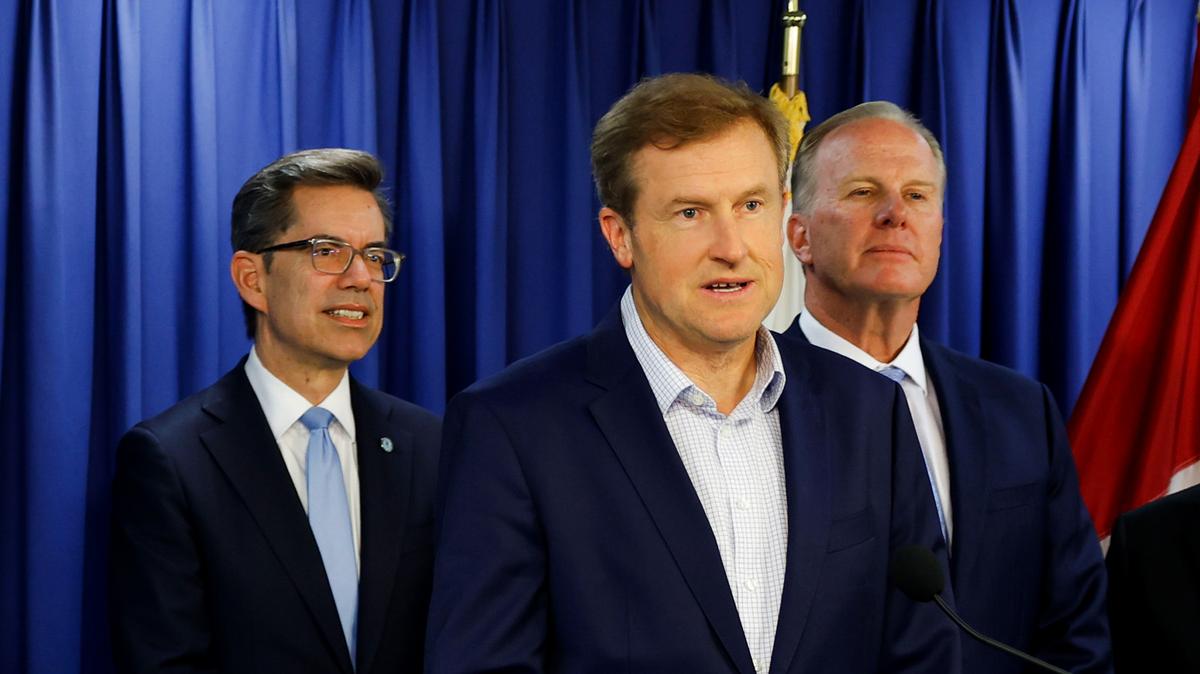
Last week’s unusual, bipartisan deal to end paid parking in Balboa Park and slash new trash fees comes with many consequences and some hidden costs – but also with some new hope for San Diego’s future, the city leaders behind it say.
The deal could be a sign local leaders are starting to rise above the petty politics that have plagued the city for decades, which have often made San Diego feel more like a small town than the nation’s eighth largest city.
The deal simultaneously resolves two of the most fiercely controversial issues facing the city, eliminates the push for a ballot measure that could have posed a major threat to city finances and could help rebuild many San Diegans’ trust in City Hall.
The complex agreement involving multiple organizations and a wide-ranging set of deal points could have fallen apart many times – but those behind it say humility, perseverance and common sense ended up prevailing.
Council President Joe LaCava handed off his unsuccessful efforts to broker a deal to Councilmember Stephen Whitburn, who worked with the city’s top labor leader to finalize a deal with one of the region’s leading right-leaning organizations.
“We thought the visual of having this motley crew assembled together would send a potent message about working together,” said Mike Zucchet, who heads a union that represents thousands of white-collar city workers, during a Wednesday news conference where everyone involved announced the deal.
LaCava agreed, adding that he’s been getting compliments for not being petty after his earlier proposed deal got rejected by the council – allowing fellow Democrat Whitburn to take over and run with it.
“Sadly, this doesn’t happen often enough,” LaCava said by phone Friday. “People have their silos.”
Former Mayor Kevin Faulconer, a Republican who played a key role in the negotiations as head of the Lincoln Club Business League, said he agreed to a deal rather than pursue his ballot measure because the deal lowers costs for ordinary San Diegans and restores free access to iconic Balboa Park.
Still, the deal also comes with major consequences – and some costs that were downplayed when the agreement was announced.
The deal will lower trash bills significantly for two years starting next summer. But in the long term, the city will still be able to charge for trash service at single-family homes and small apartment complexes – a power it lacked for more than a century, until voters in 2022 approved a ballot measure to let it.
And the reduction in trash bills will likely come with major rollbacks on services residents had been promised – including bulky trash pickup and a planned shift to weekly recycling pickups instead of every other week.
The deal also essentially cements long-term free parking in Balboa Park parking lots, and could turn any proposal to revive paid parking there into the new third rail of San Diego politics.
While the deal doesn’t prevent the City Council from reviving paid parking any time it chooses after next January, such a proposal seems unlikely for many, many years – if ever.
There are also consequences for the city budget – not so much for the fiscal year that starts July 1, but more for the next two fiscal years after that.
Whitburn said the deal was expected to reduce city revenue by only about $14 million during each of those two fiscal years – $10 million each year from the trash deal and $4.4 million each year from the loss of parking revenue.
But the deal lowers the trash fees customers will pay by $85.7 million total during those two fiscal years, by $41 million in fiscal 2028 and by $44.7 million in fiscal 2029.
Because monthly fees for standard service will be $38.75 in fiscal 2028 instead of $55, the city is now projected to collect $102.2 million that fiscal year instead of $143.2 million.
And because monthly fees for standard service will be $39.91 in fiscal 2029 instead of $57.55, the city is now projected to collect $105.3 million that fiscal year instead of $150 million.
Whitburn is saying the impact on the city budget will be far less than $85.7 million, contending it will be only about $20 million – $10 million per year for two years – because he expects the council to dramatically roll back trash and recycling services.
Bailing on plans to add bulky trash pickups and weekly recycling in fiscal 2028 would save the city a total of about $39 million total across fiscal 2028 and 2029 – $22 million from eliminating bulky pickups and $17 million from sticking with every-other-week recycling.
The city could also abandon plans to shift to all-electric garbage trucks, saving another $5 million over the two years. And several other efforts to cut costs are being considered.
LaCava said city officials have roughly a year to decide which trash services to cut and which to keep and potentially subsidize with general fund money instead of fees.
“We’re going to start peeling off the nice-to-haves,” he said.
The deal is also a chance for the city to do a major reset on its trash and recycling program, which some critics say prioritized adding staff and services over keeping costs as low as possible for customers.
The city will do a new analysis of costs and services in anticipation of a new rate structure starting in fiscal 2030 that could lead to higher monthly bills.
But the backlash against the current rates could still play a key role in shaping the new structure. And if the new fees for 2030 are seen as too high, the Lincoln Club or another group could again pursue a ballot measure to overturn them.
Read more High costs for fuel, insurance force hiring freeze for transit district
Whitburn’s estimate that no longer charging drivers to park in lots in Balboa Park will cost the city $4.4 million per year in fiscal 2028 and fiscal 2029 doesn’t include the potential loss of another $3 million per year in revenue if the zoo stops charging for parking.
The zoo’s recently updated lease currently requires an annual $3 million payment to the city – but that goes away if the zoo eliminates its own paid parking, which the lease allows if the city gets rid of paid parking elsewhere in the park.
Zoo officials said last week they are unsure about their next steps.
While last week’s deal requires the city to eliminate paid parking in Balboa Park parking lots by the end of the year, it allows the city to keep in place new meters recently installed on streets within the park and just outside it.
One impetus for a settlement was the Lincoln Club ballot measure, which could have forced the city to charge nothing at all for trash in fiscal 2028 and 2029 – blowing a $150 million hole in the city budget.
Another factor was a lawsuit filed by former City Attorney Mike Aguirre and his partner Maria Severson, but those involved in the negotiations said the potential financial impact of that litigation was far smaller.
A trial in that case had begun a few days before the final deal was approved and announced on Wednesday.
Negotiations on a potential deal to kill the ballot measure began when LaCava and Faulconer bumped into each other in Washington, D.C., late last month on a lobbying trip coordinated by the San Diego Regional Chamber of Commerce.
Faulconer and LaCava came up with a proposed settlement in early May and presented it to Mayor Todd Gloria, City Attorney Heather Ferbert and the lawyers who filed the trash lawsuit.
That earlier proposed deal – which didn’t mention parking – would have reduced monthly trash bills much more sharply, and would have forced the city to bill customers directly instead of adding the fee to property tax bills.
Such a change, called direct billing, would have cost the city about $25 million per year. The city would have had to create a billing system from scratch, and the system could have made failure-to-pay incidents more common than under the property tax method.
The first settlement proposal also would have lowered monthly bills to $29, the high end of the range that voters were told the new monthly fee would cost just before the 2022 ballot measure. Slashing fees that steeply would have reduced city revenue another $55 million beyond the $85.7 million loss from the finalized deal.
LaCava’s initial proposal was soundly rejected by the City Council in a session that was closed to the public because it was a discussion of ongoing litigation.
That rejection could have spelled the end of negotiations. Then Zucchet stepped in, letting Faulconer know why the deal had been rejected and what issues weren’t negotiable for the city and suggesting Whitburn as his new negotiating partner.
Zucchet also suggested the city could agree to the $29 monthly bill concept if the figure were adjusted for inflation during the years since that amount had been suggested by the city’s independent budget analyst back in 2021.
Faulconer agreed, and then he, Zucchet and Whitburn spent about a week brainstorming what concessions the city could make to account for drawing such a hard line on the monthly billing amount and direct billing.
“After the City Council considered and decided not to move forward with the initial settlement proposal, Mike Zucchet and I communicated,” Whitburn said last week. “Both of us felt like there may be other opportunities to achieve a settlement, and we thought Balboa Park paid parking could be a part of that.
“Knowing that some of the same folks who were calling for repeal of the trash fee were also calling for the repeal of the Balboa Park paid parking made me think there could be some synergy there, and the conversation evolved from there,” Whitburn added.
When Faulconer suggested eliminating Balboa Park paid parking as an adequate concession, Whitburn embraced it, and the three men were on their way to the deal that was eventually approved.
Ferbert signed off on the deal, and her aides presented it to the council in closed session Wednesday. She did not attend the news conference announcing it, and a spokesperson said Friday she does not plan to comment.
Mayor Todd Gloria didn’t play a key role in negotiations but made his staff available for questions from those involved.
“The settlement is a compromise that resolves multiple existing threats that could have forced more than $150 million in additional cuts to city services,” Gloria said Wednesday. “It is not perfect or ideal, but my responsibility is to protect what matters most for San Diegans.”
The deal could also have some political consequences – including by eliminating two of the most potent campaign issues for critics of City Hall in four ongoing City Council races.
And it boosts the profile of Faulconer and the Lincoln Club. They risked being blamed for a ballot measure that could have forced the city to make major cuts to cherished programs. Instead, they can now claim credit for making Balboa Park parking lots free again and lowering trash fees.
LaCava said he is optimistic the deal will create a new vibe at City Hall and a commitment by city leaders to do better. He said he’s already sensing more openness, transparency and cooperation among the mayor and council in ongoing budget negotiations.
Read more Chula Vista council unanimously adopts $661 million budget
“I’m feeling very good about the changing atmosphere,” he said.
Copyright 2026 Tribune Content Agency. All Rights Reserved.
This story was originally published May 24, 2026 at 5:24 AM.