 By admin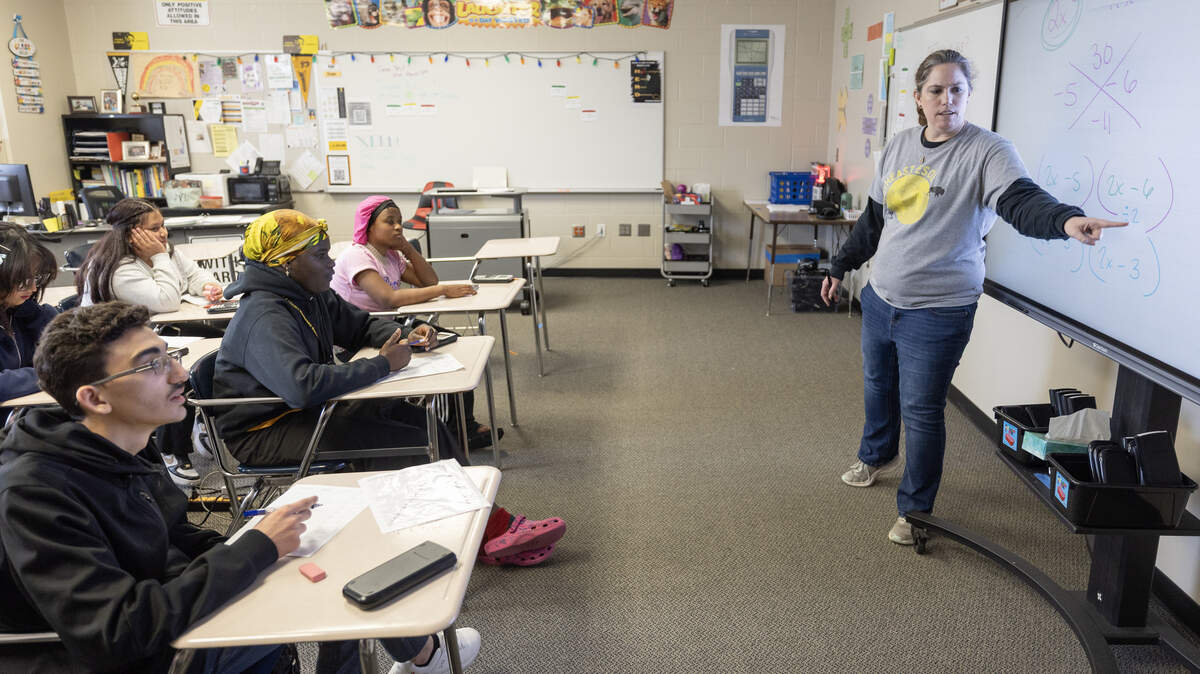
College instructors across California increasingly report that they are spending valuable class time reteaching math concepts that students should have mastered years earlier, including foundational middle-school mathematics. A recent found that the number of incoming students unable to demonstrate high school-level math skills increased thirtyfold in just five years. At UC Berkeley, nearly one-third of first-semester calculus students demonstrated “severe preparation deficits” for three consecutive years.
Read more No majors for Scottie Scheffler in 2026 after late push at Open
These findings point to a problem that begins long before students reach college. Because math learning is cumulative, students who don’t master foundational knowledge in the early grades — such as counting, number comparison, basic operations and simple word problems — rarely catch up to their peers without additional support. This is evidenced by state data showing that 46% of third grade students were proficient in math in 2025, compared with just 33% of 11th graders.
The decline is so pronounced that over 1,600 University of California math and science professors recently signed an open letter urging the UC system to reinstate SAT/ACT mathematics requirements for students applying to STEM majors.
That is why I introduced Senate Bill 1067, which would require all public schools to annually assess students’ math knowledge in kindergarten through second grade using brief, culturally and developmentally appropriate tools approved by the state. Students whose results indicate a need for additional support would receive evidence-based instructional interventions chosen by their school to best address their challenges.
Parents and caregivers would be provided with their child’s results along with clear information on how to interpret them and the school’s plans to support their child.
Importantly, these assessments are not designed to label students, evaluate staff or diagnose disabilities. The sole purpose is to identify learning gaps early so that schools can provide support before students fall significantly behind. Teachers gain information to better tailor instruction, parents receive timely updates about their child’s progress, and students build both foundational skills and confidence in math.
The research behind early assessment and targeted intervention is clear, and the need is urgent. Twenty states have already incorporated early math assessments into their academic improvement strategies and are beginning to see results. Some California schools have already incorporated K-2 math assessments into their instructional practices, but access depends largely on where a child attends school.
Read more Brooke Henderson announces engagement to Twins prospect
California does not universally assess students’ math knowledge until third grade. By then, years of opportunities to identify learning gaps and provide support have already passed.
Today, only 37% of California’s K-12 students perform at grade level in math, and our state ranks 43rd in the nation in fourth grade math proficiency. The results are even more alarming for historically underserved students: Just 20% of Black students, 26% of Latino students and 26% of low-income students are meeting grade-level math standards.
These outcomes are not a reflection of our students’ capabilities. They are the result of an education system that too often identifies gaps in math knowledge after they have already compounded, limiting opportunities in higher education and beyond.
Some have rightfully questioned whether schools will have the resources needed to successfully implement SB 1067. I share that concern, which is why I am committed to fighting for additional state funding to support the professional development and evidence-based interventions needed for effective implementation.
As a physician, I learned that early intervention is key. We do not wait until a patient’s health has deteriorated before assessing potential health concerns; we identify risks early, act on the information and give patients the best possible chance at a healthy outcome. The same logic applies in education. SB 1067 puts that logic into practice.
Senator Akilah Weber Pierson, M.D., represents California’s 39th Senate District, which includes portions of San Diego County and the cities of Coronado, El Cajon, La Mesa and Lemon Grove. She is a board-certified OB/GYN and serves as chair of the Senate Health Committee.
Read more Chargers Roster Spotlights: Nikko Reed, the Most Surprising Undrafted Free Agent