 By admin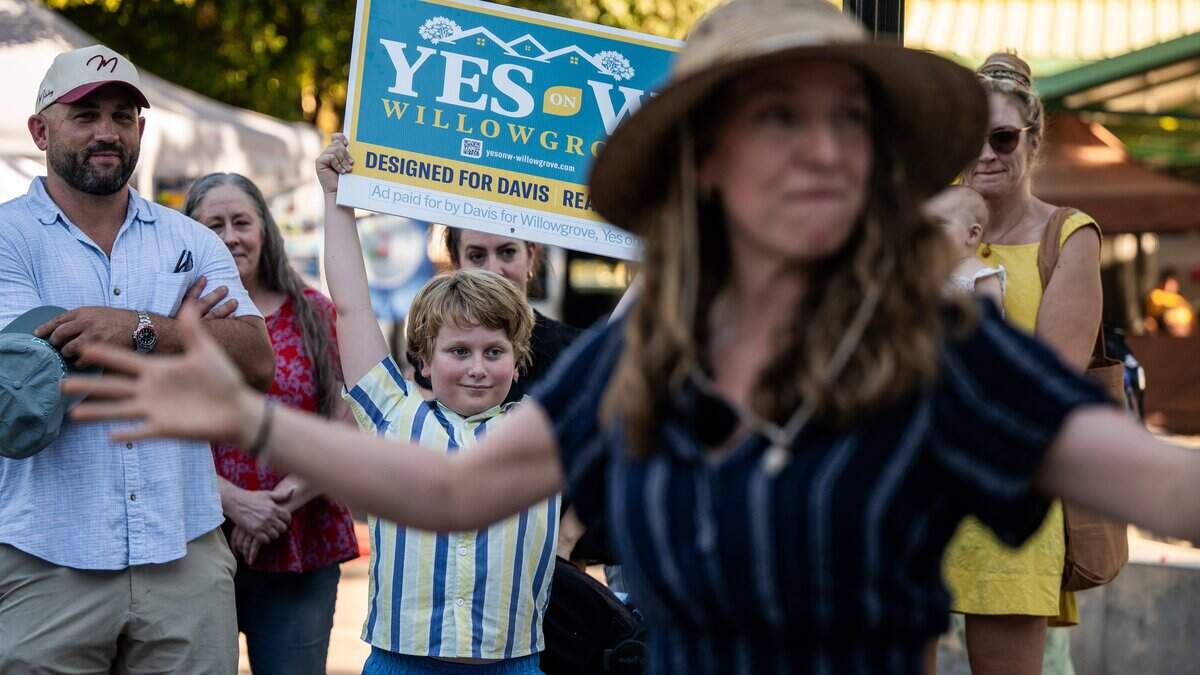
The team behind the 1,250-unit Willowgrove development proposal appearing on the November ballot as Measure W launched its campaign Wednesday at the Davis Farmers Market.
Read more Sunrise Mall youth sports project advances with new real estate deal
The development requires voter approval under Davis’ Measure J-R-D, which requires voter approval for any development that rezones open land for urban use.
Several local elected officials stopped by the booth to lend their support, including Davis Mayor Donna Neville, who sported a “Yes on W” hat; Vice Mayor Gloria Partida; Davis school board President Hiram Jackson; and Yolo County Supervisor Lucas Frerichs.
The proposal won unanimous approval from both the Davis Planning Commission and City Council. The proposal “goes above and beyond,” City Councilmember Ryan Chapman said before the council vote in May that sent the project to voters.
The developer behind the project, James Koppert, made opening remarks at the campaign launch. He thanked the City Council, Planning Commission and community members who offered feedback. “They pushed us, but we have a better project for it,” he said. Koppert said the development team had made a concerted effort to listen to the Davis community and craft a project responsive to its needs.
Willowgrove project would add 1,250 homes
Willowgrove would include 1,250 housing units on 232 acres north of East Covell Boulevard and east of the Wildhorse neighborhood. The proposal called for 197 low-density, single-family homes; 515 medium-density homes, typically smaller detached homes or townhouses; and 538 high-density homes, usually condos or apartments. Willowgrove was the largest development in Davis’ housing pipeline.
Forty-three percent of Willowgrove homes would be designated as affordable or attainable, with costs limited for low- and moderate-income families.
The project would include 288 units priced for middle-income families, an effort to increase Davis’ stock of “missing middle” housing for young families who have long struggled to settle in the city because of its tight housing market. It also would include 250 units of affordable housing, 20 moderate-income townhomes and 20 units set aside for people with physical or developmental disabilities.
Neville said she ran for office because she saw Davis becoming less affordable. “It really saddened me to see that, and I wanted to do something about it,” she said. “Willowgrove is a great project.”
The team’s commitment to listening to the community made the project stand out, she said. “It’s a project that reflects the community,” she said. “Which is incredibly important.”
Neville praised the development team for producing a subdivision map before the vote, an expensive and unusual step that allowed voters to see what they would be voting on.
“It’s time for us to welcome the next generation of Davis families and Davis kids into our community,” Neville said. “Let’s keep the door open and approve Measure W.”
School leaders link housing to enrollment
The developers said they were confident they could build the housing by 2028, which they said would benefit the Davis Joint Unified School District, which is weighing school closures in response to declining enrollment. The school board has become more active in Measure J-R-D votes in recent years, in the hopes that building more housing will mean more students at Davis schools.
Davis school board President Hiram Jackson endorsed Measure W at the campaign launch. He said the dramatic decline in the number of adults ages 30 to 50 in the city had contributed to a sharp decline in school enrollment, leading the school board to weigh school closures.
Read more The Biggest Mistake the Yankees Can’t Afford at the Trade Deadline
“They’re not pleasant conversations, I can tell you,” Jackson said.
By passing Measure W, Davis could bring those families back to the city, he said. “We can make room for the younger generation,” Jackson said. “We can welcome them.”
Project includes park, traffic improvements
Developers estimate the project would add more than $1.2 billion to Davis’ property tax roll. The development also would include $11 million in traffic improvements along the Mace Boulevard corridor, East Covell Boulevard and the Interstate 80 interchanges.
An element of the proposal that led many to advocate for City Council approval was a 17-acre community park featuring a playground, indoor gym, lighted sports fields, pickleball courts and a dog park. Developers pledged more than $21 million to create the park.
Several speakers, including some as young as 10, told the City Council that the illuminated sports fields were needed for Davis’ young athletes.
» Davis/Yolo news in your inbox: Get our free Davis/Yolo email newsletter here
What’s different from Measure V?
Davis voters recently rejected Measure V, an 1,800-unit development proposal known as Village Farms, by a margin of about 240 votes. That project had similar support from the City Council, Planning Commission and school board but faced significant public opposition over concerns that included its proximity to the Old Davis Landfill, its potential impact on neighborhood traffic and the high cost of the proposed housing, which opponents said could have been prohibitively expensive for moderate-income families.
Leading the opposition to Village Farms was Citizens for Responsible Planning, a local organization that has opposed several Measure J-R-D proposals.
Among those who opposed Measure V, Willowgrove was an example of well-designed, community-centered development, Eileen Samitz, who chaired the No on Measure V campaign, said in a spring interview.
Matt Williams, a member of Citizens for Responsible Planning, said he strongly believed Davis should prioritize housing but was happy to see the Village Farms proposal fail.
The Willowgrove developers’ commitment to community input, their willingness to make specific plans and promises, and the way they tailored the project to Davis’ needs made Willowgrove a “smart project,” said Williams.
Measure W faces no formal opposition
Willowgrove’s support among politically active Davis residents became clear last week when the deadline to submit ballot arguments for Measure W passed without an opposition argument being submitted. The lack of formal opposition meant Davis voters would not see an argument against the development in their ballot materials, which Williams said may be a first for a Measure J-R-D vote.
Other local officials also supported Measure W.
“The Willowgrove project is almost unparalleled in terms of its quality,” Yolo County Supervisor Lucas Frerichs said. “This is such an incredible moment for our community, this is the moment to get this project across the finish line.”
Social Services Commissioner and Davis City Council candidate Judy Ennis also encouraged those assembled to support Measure W, saying the project would create more than a new neighborhood.
“Yes, we’re talking about building homes,” Ennis said. “But we’re really talking about building more community.”
Read more The NFL’s 7 Best Multi-Gap Defensive Linemen for 2026