 By admin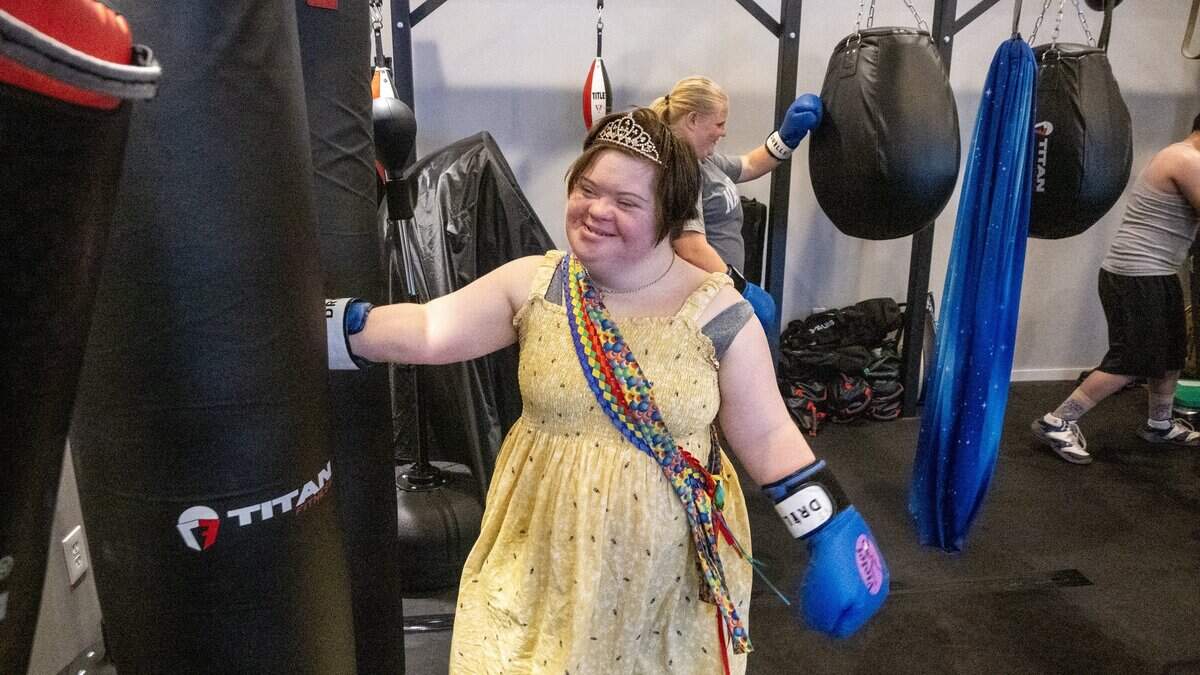
Violet Spurgeon wears a yellow dress, a rainbow sash, a tiara and a pair of boxing gloves with her name printed across them. As she hits her coach’s punch mitts, she smiles widely.
Read more Downtown Sacramento bar reboots, aims to be one of the top 50 in the world
Spurgeon, an 18-year-old with Down syndrome, is among a group of individuals with developmental disabilities who attend inclusive fitness classes at Quinn’s Gym in Carmichael. There, they engage in boxing and other forms of physical exercise.
“She fell in love with it,” said Paul Spurgeon, Violet’s father. “She’s always asking, when can we go boxing?”
The gym’s Resilience, Inclusion, Strength, Empathy — or RISE — program serves children and adults with disabilities such as autism, Down syndrome and cerebral palsy. Its mission takes on a special significance during July, which is Disability Pride Month.
“Getting strong and learning how to move well is incredibly helpful to everyone,” said gym owner Kevin Quinn. “To create an environment where everybody feels comfortable doing that, feels safe doing that, feels accepted, feels celebrated — that’s the goal.”
Located in Carmichael, the gym initially offered Rock Steady Boxing, a non-contact, boxing-based fitness program designed for people with Parkinson’s disease. Quinn said his father, who had a brain tumor as a teenager that produced Parkinson’s-like symptoms, inspired the program.
He decided to start RISE in 2023, he said, when one of his clients told him the space would make a great sensory gym for people with autism. Quinn said the idea especially resonated with him because his older brother was severely autistic, blind and developmentally disabled.
“That’s why I’m supposed to have a gym. It’s for them,” he recalled thinking.
Quinn said RISE is about fitness through play. Exercise provides major physical, behavioral and cognitive benefits for people with autism, he explained — increased strength and mobility benefits the brain and central nervous system, while also building confidence.
Quinn added that the program gives neurodivergent people a “place to belong.”
“They’re not just welcomed when they come in the door; they’re celebrated,” he said.
Gym manager Jess Lemos, who oversees RISE, echoed this sentiment.
“Here they’re just like everybody else,” Lemos said. “These kids get to run around and play … They get to be their absolute authentic selves and not be punished for it.”
The majority of families in the program are funded through the Alta California Regional Center, a private, nonprofit corporation working under contract with the California Department of Developmental Services to provide services to individuals with a developmental disability.
Rachel Villalobos’ 9-year-old son Noah was born with schizencephaly, which causes motor skill delays. She said he tried several fitness programs but didn’t stick with any for more than a couple of weeks. He couldn’t keep up with the other kids, which made him feel bad about himself, she explained.
RISE is the first program her son has enjoyed and wanted to keep attending, Villalobos said. She noted that he has become more confident and active since he started at Quinn’s Gym.
“Everyone is pretty similar to him, or at least he knows that everyone is different like he is,” she said.
Read more Cops in cowboy hats? Lincoln saddles up with new option to the police uniform
Rosemary Madden likewise said the program has been a “huge help” for her and her family.
Her 20-year-old son has autism, bipolar disorder and oppositional defiant disorder, which she explained produce behavioral issues. She said he once experienced a manic episode during which he attacked her and punched a hole through a wall.
Quinn sat her son down for a heart-to-heart, Madden said, and he lost his chance to use punching gloves at the gym — both of which helped him learn and grow from the experience. She added that she took a women’s self-defense class at the gym to learn how to protect herself.
For Quinn, it’s hearing parents like Madden thank him for accepting their children as they are that keeps him going.
“Having a mother tell me, you accept my child, you’re not going to kick them to the curb because they’re different, or they’re loud, or they cry, or they’re upset or they get mad — to me, that’s why I get up in the morning. That’s why I come here,” he said.
Quinn said when starting the program, children may feel uncomfortable and cry or scream.
“To see them go from that to, ‘I love being here. I’m so glad I came. I don’t want to leave,’” he said, “that part gets you.”
Lemos, who uses they/them pronouns, said the most fulfilling part of their job is helping their clients achieve victories that might seem minute to others, whether it’s going to the bathroom alone, going on a walk without falling over, pushing the cart at a grocery store or pulling a blanket over one’s body.
Growing up with ADHD, standard physical education in school didn’t suit them, they said. Lemos explained they realized early on in life that fitness caters to able-bodied individuals, and described their goal at Quinn’s Gym as to help change that norm.
“I want people to have a good relationship with movement, and that doesn’t look the same for everybody,” they said. “This place thinks about the person first, rather than, ‘You need to fit into a mold.’”
RISE participants including Spurgeon ran, bounced tennis balls and hit punching bags during Tuesday’s class. Quinn said many experience joint hypermobility, lower endurance and less control of their bodies. To accommodate these differences, the classes feature lighter weights, frequent breaks and a high coach-to-child ratio.
Quinn and the other gym staff said their desire to help others drew them to this line of work.
“This life doesn’t have much meaning unless I’m able to help other people who need it the most,” Quinn said. “That’s everything to me.”
Read more This Sacramento chef transformed Clarksburg into a Delta dining destination