 By admin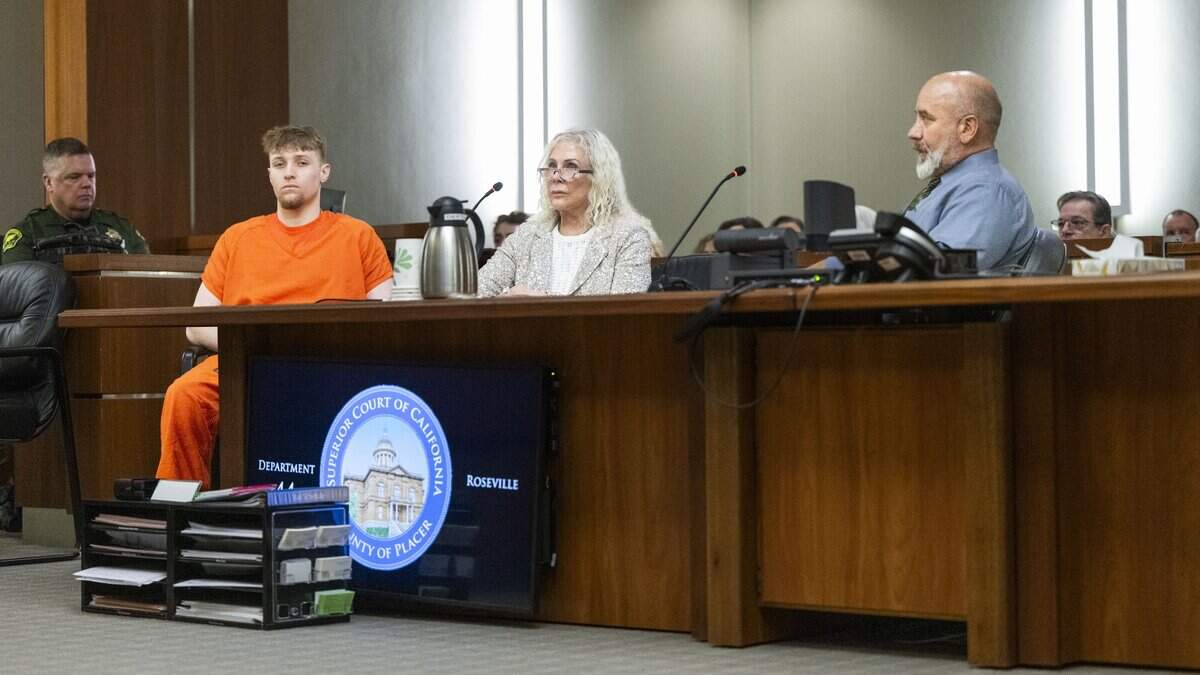
AI-generated summary reviewed by our newsroom.
Read our AI Policy.
- Blake Rakela and Anthony Rakela were sentenced for a deadly road rage confrontation.
- Blake Rakela was sentenced to four years in prison for Jeremy Styles’ March 2025 death.
- Anthony Rakela was sentenced to 90 days in jail for his role in the Rocklin assault.
Jeremy Styles left his home alone one evening last year to buy his daughter a sandwich so she could have something to eat before she drove back to college.
Read more Cookies, seafood, fruit and more: Here’s your guide to food recalls in California
But the 55-year-old husband and father of three never saw his family again. He got caught up in violent road rage clash in Rocklin.
“My husband never came back,” Carla Combe Styles said Tuesday morning in Placer Superior Court. “The pain has not disappeared with time.”
The grieving widow spoke in court moments before Blake Anthony Rakela and his father, Anthony David Rakela, were formally sentenced for their roles in Styles’ March 2025 death. Last month, the Rakelas agreed to plea deals with prosecutors that resulted in convictions to lesser crimes.
Judge Colleen Nichols sentenced Blake Rakela, 21, to four years in prison for using a metal wrench in the road rage confrontation that killed Styles. He has already served 450 days in jail while awaiting trial. With an additional 67 days of credit for good behavior, he has received a total of 517 days of credit toward his four-year prison sentence.
Nichols sentenced Anthony Rakela, 61, to 90 days in jail followed by probation on a misdemeanor assault charge for his role in the violent confrontation. The judge said he has 85 days of his jail sentence remaining, which he can serve in an alternative sentencing program, such as community service.
Deputy District Attorney David Tellman, who prosecuted the Rakelas, told the judge that Styles and Blake Rakela both set out that evening on routine errands to get food. The prosecutor said their paths crossed by chance and that the roles in the criminal case could easily have been reversed.
“It wasn’t fear, it was a desire for violence that led to this,” Tellman told the judge.
Linda Parisi, Blake Rakela’s defense attorney, told the judge that she strongly disagreed with the prosecutor. She said her client has no previous criminal record indicating a desire for violence.
The defense attorney said her client feels immense remorse for what both his family and Styles’ family have been through. She said the case resulted from tragic circumstances and the actions of both men that night.
“It is a loss for everyone,” Parisi said in court.
Both attorneys agreed that the plea agreements represented the best possible outcome in the case.
Blake Rakela pleaded no contest to the lesser homicide charge of voluntary manslaughter in Styles’ death. He also admitted an enhancement for using a deadly weapon — the wrench — in the crime.
His father pleaded no contest to assault with force likely to produce great bodily injury. That felony charge was reduced to a misdemeanor under the plea agreement. Prosecutors formally dropped the other felony charge against him.
Before the Rakelas were sentenced, Styles’ widow was given a chance to speak in court about her husband’s death, which she said has left a “devastating and permanent impact” on her family.
She told the judge that her husband was not perfect but nobody is. She said he had his struggles in life but worked hard to support his family. Combe Styles said her husband had been scheduled for surgery days after the attack to deal with a serious colon condition that he feared was cancer.
Combe Styles told the judge that her husband’s death left the family with emotional and financial hardship, along with a “permanent loss we didn’t choose and cannot escape.”
Judge spoke about anger
The judge said Blake Rakela had many opportunities to make a different choice that night despite his then-girlfriend begging him not to continue.
“If you’re afraid, you don’t follow the person,” the judge told Blake Rakela. “Nobody called the police. Instead, you tried to take the issue into your own hands.”
Nichols asked why he responded that night with so much anger.
“This is a senseless crime,” the judge said before sentencing the Rakelas. “A tragedy for both families.”
Read more California player wins five-figure Powerball prize as jackpot hits $786 million
Styles died at the scene after the confrontation, which was reported about 8:45 p.m. March 15, 2025, at the intersection of Whitney Ranch Parkway and Whitney Oaks Drive in a residential neighborhood southwest of McCormick Park.
The Rakelas, both of Rocklin, were initially arrested shortly after the confrontation on suspicion of homicide and criminal conspiracy in Styles’ death, the Rocklin Police Department announced in a news release.
The father and son remained in custody until their March 18, 2025, arraignment. The judge ordered them released after prosecutors informed the court they would not file charges at that time.
After the arraignment, the Placer County District Attorney’s Office said in a written statement that “additional time is needed to ensure that the charges brought, if any, are supported by the facts and the law.”
Criminal grand jury indicted Rakelas
After prosecutors presented evidence in a closed-door hearing, a criminal grand jury indicted the Rakelas in Styles’ death. The son was charged with murder, and his father faced two felony charges: assault with a deadly weapon other than a firearm and assault by means of force likely to produce great bodily injury.
On May 15, 2025, authorities arrested the Rakelas again. Anthony Rakela was released after posting a $50,000 bail bond. His son remained jailed, and whether he should be eligible for bail became an issue argued by attorneys for more than a year.
Tellman argued in court last year that Styles lost his life over a dispute when the two vehicles driven by Blake Rakela and Styles merged that night.
The prosecutor said Blake Rakela “chased” and “goaded” Styles for several miles and called his father for help. Tellman told the judge that the defendant, wielding “a very large wrench,” took multiple swings at Styles before taking “a baseball-style swing to the head.”
Anthony Rakela, who was waiting at the intersection after his son called him, tackled Styles and disarmed him when his son swung the metal wrench at Styles, the prosecutor said. He said the confrontation then became “a two-on-one fight.”
Parisi argued that Styles got out of his vehicle with a tire iron and struck her client’s vehicle while threatening to injure him. She told the judge the confrontation began after Styles exited his vehicle first, introducing “not only physical confrontation, but physical threats.”
The defense attorney argued that Styles had tried to run her client’s vehicle off the road and that the younger Rakela followed Styles to obtain his license plate number. Parisi also said her client and his father called 911 and remained at the scene, taking turns performing CPR on Styles until authorities arrived.
Appeals court questioned bail ruling
In subsequent bail review hearings over the past year, Parisi asked the court to set bail and allow her client to be released while the homicide case proceeded. She argued that Blake Rakela acted in self-defense and was protecting his girlfriend and father, who were both present when Styles allegedly threatened them. Parisi said the facts of the confrontation showed “no evidence of malice.”
At those hearings, the court ruled that Blake Rakela would pose a threat to the public if he were to be released from jail. Parisi appealed the rulings.
California’s 3rd Appellate District Court, in a June 22 letter, said it appeared the Superior Court “did not sufficiently articulate its reasons” for deciding that bail conditions such as GPS monitoring, home detention, driving restrictions and third-party guardianship could not reasonably address the court’s public safety concerns.
In her petition to the appellate court, Parisi argued that Styles had a history of road rage incidents before the confrontation, according to the appellate court letter. She also argued that Styles was under the influence of cocaine and alcohol and escalated the confrontation when he struck Rakela’s vehicle with a tire iron before Rakela hit Styles in the head with a box wrench.
The appellate court said it was aware that evidence showed Blake Rakela enlisted his father’s help in the confrontation, and the then 20-year-old man continued to pursue Styles “when the victim began to backpedal” and “was down.”
However, the appellate court in Sacramento also considered Rakela’s age and lack of criminal history. It said it was considering issuing a ruling but informed the Superior Court that it could avoid the issue by vacating its previous ruling and scheduling another bail review hearing that addressed the appellate court’s concerns.
On June 24, the Superior Court vacated its previous ruling and scheduled a new bail review hearing for June 29. That hearing never took place. Rakela appeared in court that afternoon, but prosecutors and defense attorneys informed the judge they were working on a plea agreement that would make the bail review hearing unnecessary.
Read more Man with Sacramento ties who confronted Idaho mass shooter faces long recovery