 By admin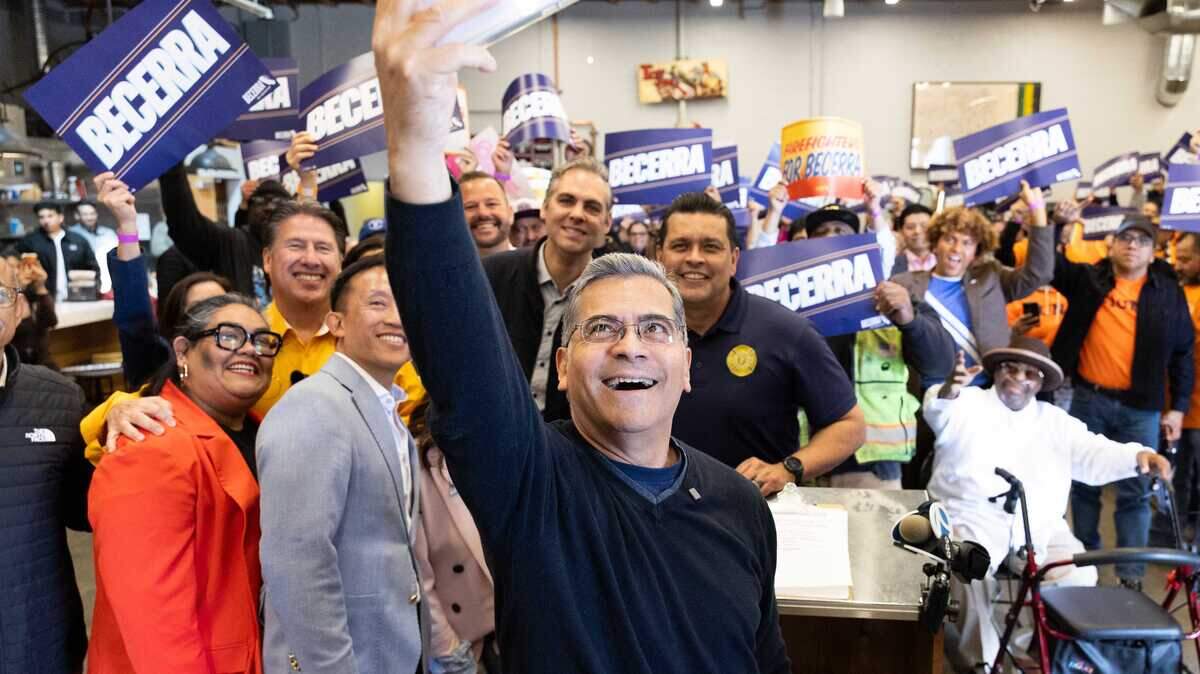
Two years ago, I wrote a book called “The Latino Century” with a simple premise: The government and the major political parties were out of touch with a Latino community that had grown, changed and moved beyond 20th century stereotypes.
Read more New road repair machine could help Sacramento County tackle maintenance backlog
By 2024, the year my book was published, Latinos had nearly doubled in size since 2000 to a total population of 68 million. They were younger than other ethnic and racial groups and less partisan. Nearly 80% of Latinos were now American citizens. They were primarily English-speaking, and the vast majority traced their roots to Mexico.
I argued that Latinos knew and understood American politics, even though American politics didn’t understand them. I also predicted that political parties would pay at the ballot box if they stayed ignorant about Latinos and ignored the economic issues they cared about.
Then a historic number of Latinos rejected the identity politics of Democrats and helped reelect Donald Trump as president with 48% of the Latino vote, the highest percentage ever recorded for a Republican presidential candidate.
By 2025, polls showed that Latinos had soured on Trump because they felt his economic policies made their lives worse.
Then we saw an equally historic swing to the left in 2025, when Democrats in New Jersey, Virginia, Texas and Miami won big, in some cases over Trump-backed candidates.
But it was California’s June primary results, where Democrat Xavier Becerra surged to the top on the strength of his working-class sensibilities, that blew up old ideas about the Latino community.
California counted 9,446,461 ballots, or 40.8% of registered voters. The Secretary of State’s own records say that’s the highest turnout for a gubernatorial primary since the state started keeping records in 1914.
The fastest-growing slice of that electorate is Latino, the voter bloc neither party organizes effectively.
In fact, some California insiders are working to shut Latino voters out of a voting process where they are finally ascending.
The current push to repeal an open California primary where the top-two candidates advance to the general election for a return to partisan primaries deserves to be called what it is: voter suppression.
Voter-file work from California’s leading political data vendors, Political Data Inc. and L2, is still being finalized, but both show No Party Preference and American Independent registrants up somewhere between 56% and 63% over 2022 numbers. Independents also grew just as Latino registration numbers were rising rapidly.
Read more California hate crimes worry advocates despite recent drop. ‘The data is clear’
They are increasingly the same voters.
The Latino number is the one policymakers need to sit with, because it wrecks models tracking what’s happening in California. Latino independents turned out at about 11.8 percent in 2022. This year that’s tracking near 16.5 percent and still climbing. Call it a 40 percent jump, roughly three times the growth of the electorate as a whole.
Latino voters are dealigning from both parties faster than any racial or ethnic group in the country, and it’s happening fast in California. Like Latinos nationally, Latinos in California are the least partisan bloc of voters in the state and the trend line has been unmistakable for years.
I want to be careful about what the voter-file can and can’t tell us. It tells us who returned a ballot. It doesn’t tell us how they marked it, but there’s a lot that can be inferred by the explosion of Latino independent voters.
The Democratic race for governor came down to Becerra, who finished first at 28%, and billionaire Tom Steyer, who finished third at 23% and missed the runoff. Steyer ran the most partisan campaign in the field, which was a smart way to win a closed primary.
But it was bad for an open primary with hundreds of thousands of independents and irregular Latino voters who carry no party card and don’t respond to party signals. Those voters are the hardest to reach with a partisan pitch.
Steyer’s coalition got outvoted by people who are usually not there. Whether that surge lifted Becerra specifically is conjecture and not a certified number, but it’s hard to argue the clear benefit to Becerra’s campaign any other way.
Becerra is a former state attorney general and a former federal cabinet secretary. Nobody would call him an outsider. But in contrast to Steyer, Becerra ran the least partisan primary this state has produced in a century. It made a difference that showed up in the results.
None of this happens without the open primary. Every registered voter got the same ballot and could vote for any candidate for governor. That structure is what let five million independents and a fast-growing Latino bloc into a race the old rules would have decided without them.
Voters just dealigned from both parties in record numbers, and the two establishments that lost their grip on them are moving to shut the door again. This isn’t a neutral argument about primary structure. This is voter suppression aimed at the fastest-growing share of the electorate, dressed up as a return to party order. A dying party establishment does not react well to more voters demanding more choices.
The goal should not be who wins one primary, but whether the electorate that just showed up gets to keep showing up. Our state is on the precipice of a new chapter in our political history. The question before us now is whether either party will embrace it or keep trying to suppress it.
Mike Madrid is a political analyst and a special correspondent for McClatchy Media.
Read more Poison control agency warns of synthetic supplement sold in some herbal products