 By admin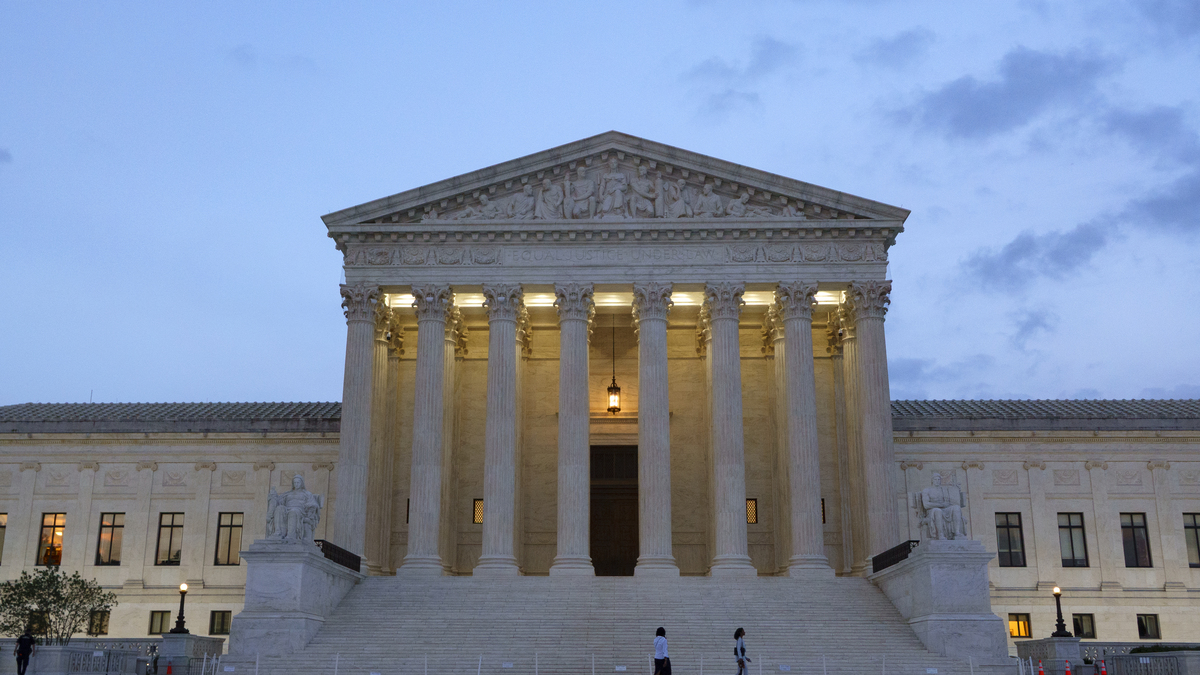
Weeks after the Supreme Court rejected President Donald Trump’s effort to end birthright citizenship through executive action, some conservative activists are already looking beyond the courtroom defeat and toward a longer-term goal: shaping the judges who may one day revisit the issue.
Read more From flash flooding to wildfire danger, extreme weather targets US
At a late-July gathering of conservative lawyers, immigration advocates and former Trump administration officials in Washington, participants discussed ways to keep the birthright citizenship debate alive following the court’s June ruling. According to Politico, some attendees argued that views on birthright citizenship should become a factor in evaluating future judicial nominees.
Why the fight didn’t end with the Supreme Court
The discussion comes weeks after the Supreme Court ruled 6-3 in Trump v. Barbara that children born in the United States to parents who are unlawfully or temporarily present in the country are citizens at birth under the 14th Amendment, rejecting Trump’s executive order limiting birthright citizenship.
Trump’s allies, however, have argued that the Citizenship Clause has been interpreted too broadly and that the court’s decision should not end efforts to revisit the issue. Justice Clarence Thomas and Justice Samuel Alito both dissented from the ruling, with Thomas writing that he was not convinced the court’s interpretation would “stand the test of time.” That dissent has become a rallying point for conservatives seeking to continue the fight.
The White House on Thursday unveiled new executive orders targeting birth tourism and other narrow categories it argues fall outside traditional birthright citizenship protections, underscoring that the administration is not retreating from the issue. The measures are expected to face legal challenges. The moves came just weeks after Trump vowed to continue pursuing the issue despite the Supreme Court ruling.
Trump’s allies turn their attention to judges
At the gathering, Mike Davis, founder of the Article III Project, a conservative legal group that has championed Trump-era judicial priorities, argued that conservatives should focus on shaping the courts and elevating judges more receptive to challenges to the prevailing interpretation of birthright citizenship. Pointing to Justice Samuel Alito, who dissented from the court’s birthright citizenship ruling, Davis said: “We need nine Alitos on the Supreme Court,” according to Politico.
Participants also discussed pursuing the issue through legal scholarship, conferences, law schools, legislation and future litigation. But the conversation around judicial nominees stood out because it suggests conservatives increasingly view the judiciary itself as the most important battleground.
Such an approach would mark a significant shift in how conservatives discuss judicial nominees, elevating birthright citizenship from an immigration policy debate into a question of constitutional interpretation.
Birthright citizenship wouldn’t be the first judicial litmus test
The idea of evaluating judges through the lens of a single constitutional issue is hardly new.
For decades, conservatives closely examined judicial nominees’ positions on abortion after Roe v. Wade. Questions about constitutional interpretation, unenumerated rights and judicial restraint became central features of confirmation battles long before the Supreme Court overturned Roe in 2022.
Gun rights also became a key flashpoint after major Second Amendment rulings, while conservatives frequently scrutinized nominees’ positions on religious liberty, administrative power and how much deference federal agencies should receive from courts.
More recently, conservative legal groups have closely tracked nominees’ views on administrative power, religious liberty and constitutional originalism. Activists discussing birthright citizenship appear to envision a similar strategy, using judicial appointments to influence the legal landscape over time rather than relying solely on legislation or executive orders.
Many legal scholars argue that the conservative legal movement’s long-running focus on judicial appointments helped shape a Supreme Court willing to revisit precedents that earlier generations considered settled.
The Roe v. Wade comparison
Some activists explicitly compared the birthright citizenship debate to the decades-long campaign against Roe v. Wade.
Read more Breaking: New wildfire reported in Los Angeles County on Aug. 9
Article III Project’s Davis said the Supreme Court’s ruling had effectively turned birthright citizenship into “the next Roe v. Wade” and suggested conservatives may spend years trying to reverse it.
The comparison reflects a strategy used by conservatives for decades after Roe established a constitutional right to abortion, culminating in the Supreme Court’s 2022 decision to overturn the precedent.
That comparison is notable because the movement against Roe extended beyond lawsuits. It involved legal scholarship, state legislation, public advocacy campaigns, judicial nominations and efforts to influence legal education.
Participants at the gathering suggested a similar roadmap for birthright citizenship, according to Politico.
Why conservatives believe they’ve made progress
Even though the Supreme Court ruled against Trump, some proponents of restricting birthright citizenship argue the case helped move the issue into mainstream political debate.
John Eastman, who has advocated for a narrower interpretation of birthright citizenship for years, told Politico that reaching the Supreme Court itself represented a significant milestone.
“It was a success that we got as far as we did,” Eastman said, adding that the conversation is now taking place among lawmakers, judges and ordinary Americans.
Supporters of the movement believe heightened public attention, combined with legislative proposals and continued litigation, could gradually build support for their arguments even if they were unsuccessful in the most recent case.
What happens next
For now, the Supreme Court’s ruling remains the controlling law. Children born in the United States continue to receive citizenship under the court’s interpretation of the 14th Amendment, and legal experts expect Trump’s latest executive actions to face fresh court challenges.
But comments from conservative activists suggest many are already looking beyond those immediate battles.
Rather than focusing exclusively on the next lawsuit or executive order, they appear increasingly interested in a longer-term project: shaping the lawyers, legal scholarship and judges who could influence how future courts view birthright citizenship.
If that effort gains traction, debates over judicial nominees could eventually include a question that rarely surfaced in confirmation hearings a decade ago: whether the Constitution’s Citizenship Clause means what courts have long said it means.
Read more Is ICE using too much force? New poll shows big public opinion shift
2026 NEWSWEEK DIGITAL LLC.