 By admin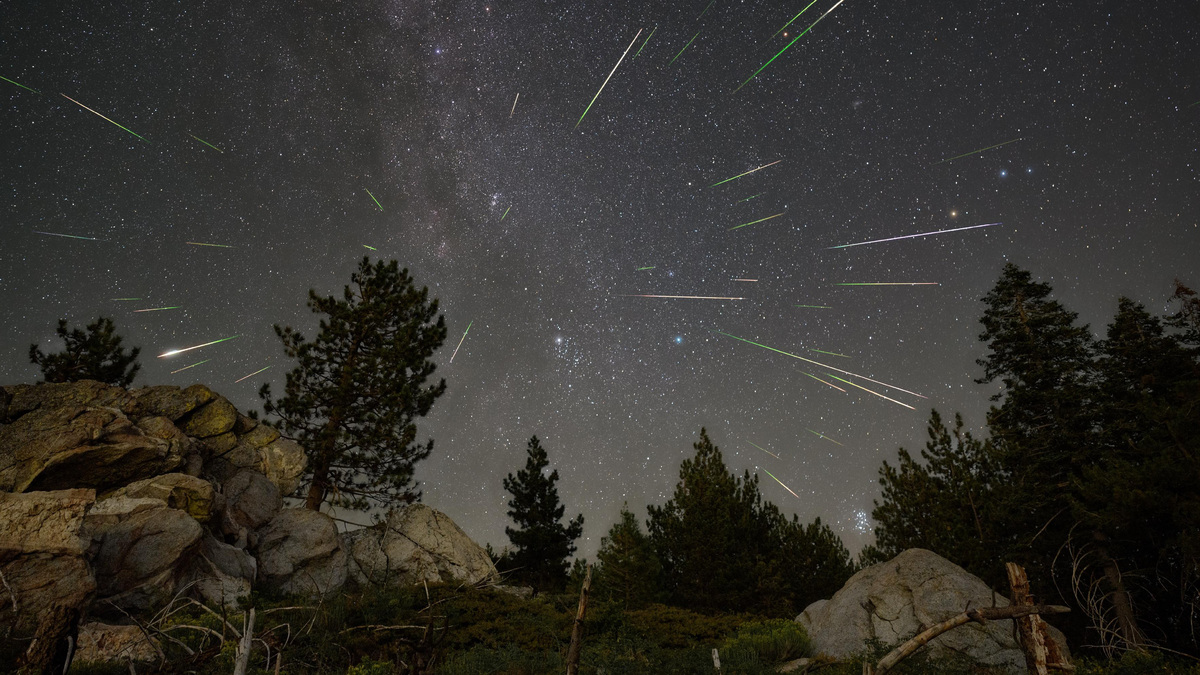
Every year in mid-August, hundreds turn out at the Community Observatory in Placerville to witness the Perseid meteor shower, and observatory guides say the lead up to this year seems to be no less busy.
Read more Rancho Cordova’s Soil Born Farms teaches sustainability, equity on urban farm
“The amount of interest that we have gotten just in terms of social media messages and emails through our website — it could be up to 1,000 people if the weather cooperates,” says Jena Minassian, a lead guide at the observatory.
One of the most popular astronomical events of the summer, the meteor shower has been visible in the Northern Hemisphere since mid-July but is set to peak on the night of Wednesday, Aug. 12 through the early hours of Thursday, Aug. 13.
“Last year during the Perseid meteor shower, I was inside running one of the big telescopes, and every minute or so, I would hear ‘Wow! Whoa! Ah!’ People were just screaming with joy for seeing them,” says Randall Hodges, a volunteer educator and retired astronomy professor at Jessup University in Rocklin.
This year, the observatory’s viewing party begins at 10 p.m. Wednesday and will last through 1 a.m. Visiting the observatory is free, though parking at the nearby El Dorado Center of Folsom Lake College costs $2.
The Perseids, like all meteors, are offshoots from comets, specifically the Swift-Tuttle Comet which orbits the Sun every 133 years. “Meteors are basically dirty snowballs,” says Hodges. “They’re ice with little bits of rock and debris in them. As they get close to the sun, that melts that and that debris is loosened and left in the trail behind them. The Earth’s orbit intersects with that trail every August 12th.”
Unfortunately, cloudy conditions may obscure views of this year’s showers. The Sacramento Bee’s meteorologist Sean Macaday estimates cloud coverage of 50% to 100% in the Placerville area for the night of Aug. 12.
Read more Rural California counties urge statewide partnership for indigent defense | Opinion
Chief Docent Chris McCown says the guides will be there regardless of the clouds, and they are prepared to entertain guests with other activities, including tours of the observatory and lectures in the classroom space. If weather conditions allow, they will break out their telescopes to show off parts of the night sky that are visible.
“I can’t really tell you if there are more adults or more young people who look into a telescope the first time and see something like that, and go, ‘Wow.’ It’s about even,” says McCown.
The observatory will provide updates on weather conditions and meteor visibility on its website and social media accounts, according to McCown. Aside from Wednesday’s viewing, the observatory hosts observation hours from 9 p.m. to 11 p.m. every Friday and Saturday in the summer.
Weather aside, Hodges encourages people to look for the Perseids wherever they find themselves. He says to go somewhere with low light pollution and look northeast.
“There’s nothing special about the observatory other than it’s moderately dark,” says Hodges. “A lot of times, people think I’ve got to go to the observatory to see this, but this is something that’s going to span the whole sky.”
Minassian echoes the sentiment. “What I would recommend is to find the darkest skies you can with an unobstructed view, let your eyes adjust to the darkness for about 15 minutes and enjoy the show,” says Minassian.
Read more California AG, Paramount debate landmark merger in separate appearances