 By admin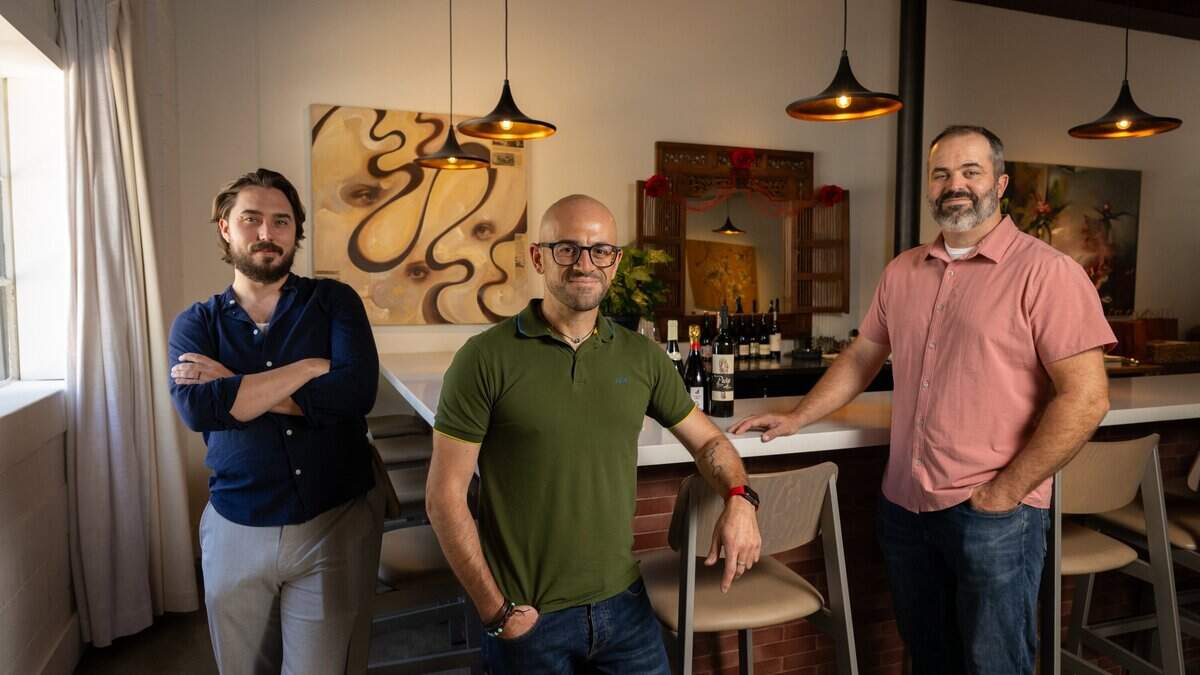
If you’ve ever looked beyond the California cabs and Chardonnays on a restaurant’s wine list, you may have spotted some selections that spark curiosity. Wines from the Balkans, Switzerland and some less familiar regions of Italy are popping up on menus around town, and they’re making their way here thanks to three Sacramento-based importers.
Read more Sacramento can prevent child drownings with more affordable swim classes | Opinion
From Eastern Europe, with love
Eric Danch first experienced Eastern European wines while working at the circus dinner theater Teatro Zinzanni in San Francisco.
“After each show, we would sit at a big table in the back of the house, and we would eat together, all these Ukrainian jugglers and Russian acrobats and Bulgarian strong men. And what do people bring from home? They bring pickles. They bring booze. They bring wine. They bring fermentable anything that can survive in their bag and reminds them of home,” he said.
As the rigors of life under the big tent became too much, Danch gravitated toward wine. He ended up working with Frank Dietrich and Zsuzsanna Molnar of the Blue Danube Wine Company, a pioneering importer of Central and Eastern European wines. When they decided to retire, Danch and colleague Katherine Granger took it upon themselves to carry the torch, launching Danch & Granger Selections. By this time, Danch had moved with his family to Sacramento.
Danch travels to Europe twice a year to seek out new partners. His objective is, of course, to find good wine, but the people matter, too.
“It’s basically like speed dating in a way. We have a general rubric: They don’t have to be organic or better farming, they have to be good, sound people, both in their community and their family. We literally have to just jibe with them,” he said.
Maintaining tradition and good stewardship are also key to a good partnership.
“The other focus is on native grapes and kind of traditional styles, so we don’t have a strong-arm approach on the wines. If we like it, we let them do their thing. We’re not hyper dogmatic. We’re not about zero sulfur only or whatever. That’s not our model, but there should be kind of a generational thinking toward the health of the soil,” he said.
Despite being little known across the pond, wine traditions in the region run deep and have survived despite nearly overwhelming odds.
“I work with a winery in Austria called Geierhof, 14 generations in the same home. Herr von Trapp used to be the manager there, literally The Sound of Music father. It’s like painfully Austrian, to an almost comical degree, and it’s amazing. And then you have the more gritty stories, where we have former Yugoslavian soldiers who were forced to do pretty horrific things against their will, and now they choose to invite the people they fought against to work harvest together. It’s less romantic, but I think it’s quite powerful,” he said.
The Italian connection
Giuseppe LoCascio launched Lucidity Wine Merchants in 2021, after moving to Sacramento from New York City with his wife. He moved to be closer to family in Davis and San Diego, but also for the weather.
“I grew up as a young adult in Sicily, and so I was missing the sunshine. I was missing the Mediterranean weather,” he said.
Leaning into LoCascio’s roots, Lucidity exclusively imports Italian wines from small, family-owned and run wineries. As with Danch, he weighs multiple factors when selecting his providers.
“We look for wines that are done with the least amount of intervention, that are clean. I want my wines to really be expressive of the variety that they are made from, and they need to also speak about the place and the person that has made them. What we really are looking for is the typicity, the varietal character, the sense of place, and really the hand of the winemaker, because for us, a bottle of wine is very much like a painting,” he said. t
LoCascio’s goal is to offer a full spectrum of what Italian wine has to offer. This informs his selections.
“So if we’re missing a region, or if we’re missing an expression of a variety, then that’s when the search starts. It’s a lot of connections. I normally rely on a lot of colleagues and friends whose advice I take seriously. And sometimes we pick up wines even though we didn’t really need them in our book, but we fell in love with the people, and they have a beautiful story. That’s what’s also very important to us,” he said.
Finding gaps in the portfolio is not difficult. Italy’s wine culture is one of the most diverse in the world.
Read more Nido de víboras… celulíticas
“From a commercial standpoint, there are categories or appellations or regions that are must-haves. So you have to have a Chianti. You have to have a Barolo. One of our pillars is the native varieties of Italy, and we make wine from more than 500 varieties. Sometimes we would fall in love with a wine that maybe is unheard of from a grape that is obscure, but it fits in what the consumer of today is looking for, and in that case we will work with it,” he said.
An example is the rare Enantio, from the mountainous region straddling Veneto and Trentino. LoCascio says there are fewer than 60 acres of it planted in the tiny appellation, but it was known to Pliny the Elder 2,000 years ago.
Another is a Sicilian red variety called Perricone, a grape variety that traditionally was used as a blending partner for Nero d’Avola. About 15 years ago, producers started bottling it on its own, and LoCascio considers it an extremely contemporary red, light in body and chillable.
Small country, big wines
“A lot of people have never had Swiss wine before; they didn’t even know Switzerland made wine,” said Brandon Austin, co-founder of DDI Wine, which exclusively imports wines from Switzerland.
He launched the company with his best friend Dylan Stine. Both are of Swiss heritage and grew up visiting the diminutive alpine country.
“Dylan and I, we were both coming off the heels of starting our own businesses and either exiting or selling out. And we both were just like, what would happen if we brought over the family’s wine? We were just like, we can’t find Swiss wine here. Why is that? How hard could it be to bring over Swiss wine? And turns out, it’s a very hard thing to do,” he said.
For a small country, Switzerland has a surprisingly rich and diverse wine producing culture. There are six primary regions. Geneva, in the southwest, is perhaps the smallest. The most prestigious region is Valais, akin to Napa or Sonoma in terms of fame. It’s also the most dramatic, where vineyards are terraced up the Alps on both sides and vintners have to use helicopters to pick the grapes and deliver them to the wineries.
Lavaux, along northern Lake Geneva, is among the oldest, with wineries dating back 2,000 years. North of that is Neufchâtel, along the French border. The German-speaking area around Zürich and Stäfa borders high-quality Pinot Noir and Müller-Thurgau, and includes the area of Graubünden.
“It’s one of the most wild wine-growing regions on Earth right now. Graubünden has a really unique climate. It’s what Burgundy was 80 years ago, before climate change, and the soil composition is almost identical with the high limestone, small red clay deposits, they’re making some of the best Pinot Noir and Chardonnays on earth right now,” Austin said.
The furthest south is Ticino, in the Swiss Italian area, with a Mediterranean climate surrounded by mountains and palm trees growing in the middle of the Alps.
Getting these lesser-known wines on the shelves and menus in the U.S. is as much of a challenge as getting them into the country. Some restaurants are reluctant to branch out beyond the more familiar regions.
The wines are not luxury-label, but are approachable in price. The Korcula Posip from Croatia, for example, costs $49 bottle at Good Neighbor and the Weingut Edgar Brutier Sefu is $40 a bottle at Alma Wine Bar.
“If you see a wine from Serbia or Romania or Slovakia, give some thought as to how that got there. That means someone took a major risk on the importing side, then someone had to take a bigger risk and buy that wine, and then someone had to take even bigger risk and sell it by the glass,” Danch said.
You can find selections from these importers at various places around town, including Alma Wine Bar, Sacramento restaurants Allora and Aiona, where co-owner Elizabeth-Rose Mandalou is an accomplished sommelier, and at Corti Brothers in Sacramento and Beyond the Fig in Rocklin.
Read more What was halted by key legislative hurdle? Immigration, rooster limitations stalled