 By admin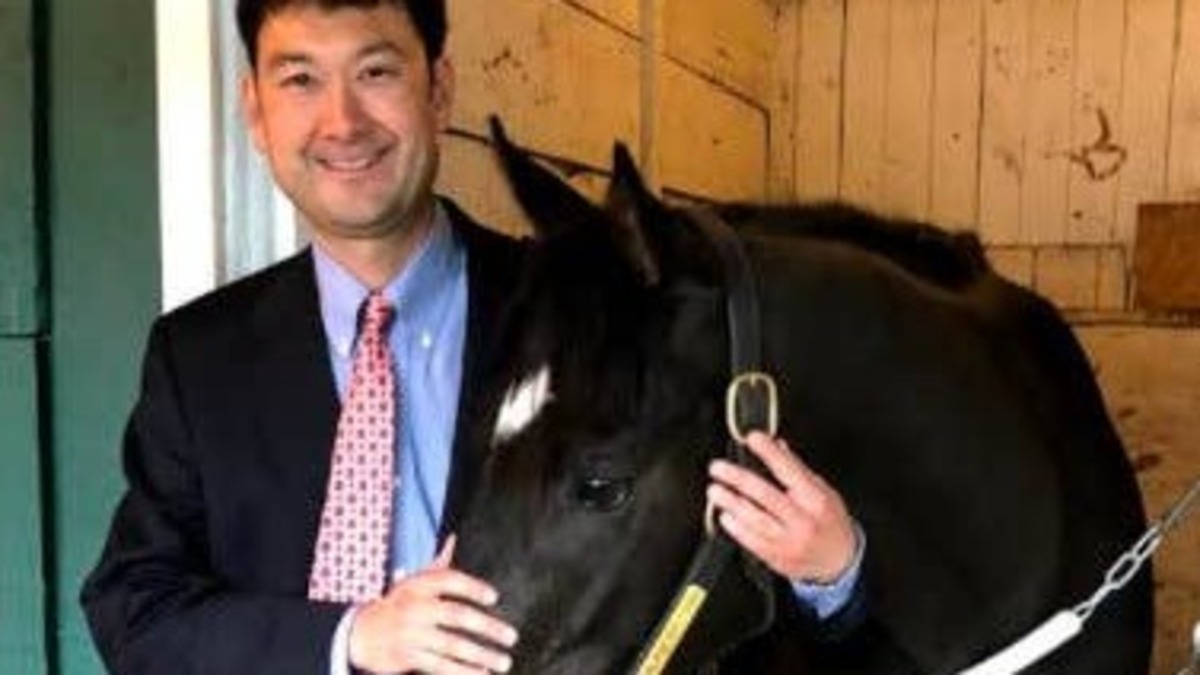
The Horseracing Integrity and Safety Authority says Marshall Gramm accessed confidential health information on each of the nine horses he claimed during an approximately six-week period during which the organization alleges he improperly obtained confidential veterinary records through the HISA Portal.
Read more Dolphins Unleash Swiss Army Knife Kyle Louis at New Position
HISA CEO Lisa Lazarus disclosed the connection Monday during a press conference held hours after the organization announced two disciplinary charges against Gramm, a prominent owner, handicapping contest participant, college professor, and data analyst.
HISA had said in its initial announcement that Gramm claimed “several” horses while accessing confidential information between early May and mid-June. During the press conference, Lazarus said Gramm claimed nine horses and that HISA investigators confirmed he had accessed confidential information about each before the claims were made.
“The way we really characterize this and understand it is fraud on the market, like insider trading,” Lazarus said. “He had access to information that nobody else did. He was able to use that information to monetize it.”
Lazarus said HISA found the claiming activity “especially concerning and damaging,” arguing that access to confidential horse-health information before a claiming race would provide a “massive advantage.”
HISA plans to reimburse the previous owners of those horses for purse earnings generated after the claims, then seek to recover that money from Gramm through its disciplinary proceedings. Lazarus estimated the purse money involved at approximately $80,000 to $90,000.
The Paulick Report reviewed claiming records at Churchill Downs, Monmouth Park, and Parx Racing and identified nine horses claimed by Ten Strike Racing, either solely or in partnerships, between May 9 and June 30. The claims totaled $210,500.
Equibase charts reviewed by Paulick Report show the nine horses have since earned $80,455 in purse money while racing for their new ownership groups, closely matching Lazarus’s estimate. Two, Scribble and Dispersion, were subsequently claimed away, while Coastal Breeze and Lex have not raced since being claimed.
|
Horse |
Claim date |
Track |
Claim price |
New ownership |
Post-claim earnings** |
Status |
|---|---|---|---|---|---|---|
|
Dispersion |
May 9 |
Churchill Downs |
$30,000 |
Ten Strike Racing; Four Corners Racing; Cory Moelis Racing LLC |
$9,800 |
Claimed away June 14 for $20,000 |
|
Scribble |
May 10 |
Churchill Downs |
$30,000 |
Ten Strike Racing; Four Corners Racing; Cory Moelis Racing LLC; Jeremy Sussman |
$34,952 |
Claimed away June 26 for $30,000 |
|
Tiger Moon |
May 10 |
Monmouth Park |
$5,000 |
Ten Strike Racing |
$27,325 |
Remains with ownership |
|
Coastal Breeze |
May 22 |
Churchill Downs |
$16,000 |
Ten Strike Racing; Four Corners Racing; Cory Moelis Racing LLC; Jeremy Sussman |
$0 |
Has not raced since claim |
|
Dancewhenyoucan |
May 25 |
Churchill Downs |
$20,000 |
Ten Strike Racing; Four Corners Racing; Cory Moelis Racing LLC; Jeremy Sussman |
$1,593 |
Remains with ownership |
|
Split Success |
June 4 |
Churchill Downs |
$30,000 |
Ten Strike Racing; Four Corners Racing; Cory Moelis Racing LLC; Jeremy Sussman |
$3,403 |
Remains with ownership |
|
Barksdale |
June 6 |
Churchill Downs |
$40,000 |
Ten Strike Racing; Four Corners Racing; Cory Moelis Racing LLC; Jeremy Sussman |
$978 |
Remains with ownership |
|
Real Macho |
June 25 |
Churchill Downs |
$32,000 |
Ten Strike Racing; Four Corners Racing; Cory Moelis Racing LLC; Jeremy Sussman |
$2,404 |
Remains with ownership |
|
Lex |
June 30 |
Parx Racing |
$7,500 |
Ten Strike Racing; Corey Moelis Racing LLC |
$0 |
Has not raced since claim |
|
TOTAL |
$210,500 |
$80,455 |
Asked whether the horses themselves could be returned, Lazarus said HISA had hoped a settlement could include an opportunity for previous owners, or losing claimants in a shake, to take the horses back at their original claiming prices. Because settlement negotiations with Gramm broke down, she said HISA cannot currently require that, though the organization intends to seek that remedy where it remains relevant.
Gramm, in a statement issued Monday, disputed HISA’s characterization of his conduct and said he intends to vigorously defend himself.
“The information at issue was available through my authorized HISA account,” Gramm wrote on X. “It was a large dataset, and at the time I accessed it, I had not fully reviewed its contents or understood the scope of the information it contained.”
Gramm said he used his own account and credentials, never attempted to conceal his identity, and did not bypass security protocols or safeguards within the HISA portal. He acknowledged exercising poor judgment by failing to alert HISA sooner to what he described as an access-control vulnerability.
“Making me the focus of this matter is a distraction from the fundamental issues HISA needs to address with its systems,” Gramm said.
HISA, however, disputes Gramm’s characterization of how he accessed the records and what he did with them.
Lazarus said Gramm had legitimate Portal credentials through his association with Ten Strike Racing, allowing him to access records for more than 75 horses associated with the operation. She said investigators determined Gramm used an automated internet browser and wrote computer code to obtain records for horses he was not authorized to view, ultimately accessing “millions of records.”
According to Lazarus, the automated process downloaded records in batches of 500 or fewer, which HISA believes was intended to remain below a threshold that would trigger a security alert. She acknowledged Gramm has not conceded that was his purpose of limiting the downloads. Lazarus said investigators determined Gramm was downloading a significant portion of the records available during the relevant period rather than targeting individual race cards.
Read more Yankees to reinstate LHP Carlos Rodon from 15-day IL
Lazarus also described an unusual episode on July 17, the day HISA investigators confronted Gramm about their findings.
According to Lazarus, Gramm participated that morning in an approximately hour-long call organized by The Jockey Club to discuss the leaked past performances and whether the industry should change its policies by disclosing veterinary records to the public. Lazarus said participants included Gramm, Lazarus, Patrick Cummings – employed by Mike Repole’s National Thoroughbred Alliance – and Jockey Club executives Jim Gagliano and Charlotte Clément, among others. Gramm was elected to membership of The Jockey Club in 2024.
Lazarus said Gramm offered ideas during the discussion but did not disclose that he was responsible for obtaining the information that had prompted the meeting. HISA investigators confronted Gramm at approximately 5 p.m. that day, she said, and Gramm then acknowledged responsibility for the leaked information.
Lazarus later clarified that she knew during the morning call where HISA’s investigation was headed, but said the other Jockey Club participants were not aware of Gramm’s role in the scandal.
Gramm acknowledged in his statement that he did not bring to HISA’s attention what he described as the vulnerability after the matter became public.
“I should have done so, and I regret that I did not,” he said.
HISA and Gramm also gave different accounts of why settlement discussions between the two sides broke down.
Gramm said they had “come very close” to resolving the matter but could not agree on several issues, including his ability to speak publicly and tell his side of the story.
Lazarus said the principal obstacle was that Gramm wanted HISA to withhold some information from the public as part of a settlement, something she said HISA would not agree to.
HISA ultimately charged Gramm with violating Rule 2251, governing access to veterinary treatment records, and Rule 8100(h), which prohibits fraud, attempted fraud, or misrepresentation in connection with the care or racing of a Covered Horse. HISA alleges Gramm improperly accessed confidential records for horses with which he had no authorized connection and did so to gain, or attempt to gain, an advantage in racing activities, including potential wagering or claiming decisions.
Gramm has until Aug. 24 to respond to the charges. The fraud allegation is scheduled for a Sept. 14 hearing before a three-member panel of HISA board members, while the Rule 2251 matter is scheduled for a Sept. 16 hearing before the Racetrack Safety Committee.
Asked whether Gramm’s horses remain eligible to race, HISA outside counsel John Roach said Gramm’s Portal access has been revoked, but his HISA registration remains active pending the outcome of the disciplinary proceedings. Roach said HISA enforcement counsel is expected to seek severe sanctions, potentially including a lifetime ban.
HISA also intends to share evidence gathered during its investigation with racing commissions, wagering entities and law enforcement. Lazarus said the organization has asked the team that handles its relationships with federal authorities, including the FBI, to begin that process.
Lazarus emphasized that HISA has not determined what laws or rules those outside entities might consider applicable, saying those decisions will be left to the respective agencies and organizations.
HISA says the method Gramm used to obtain the records has since been closed and that its investigation found no evidence anyone else used the same method. Lazarus said the investigation is complete and HISA is confident Gramm was the only person involved.
Read more New Guardians hurler Foster Griffin aims to cut down slumbering Giants
Copyright 2026 The Arena Group, Inc. All Rights Reserved
This story was originally published August 17, 2026 at 2:19 PM.