 By admin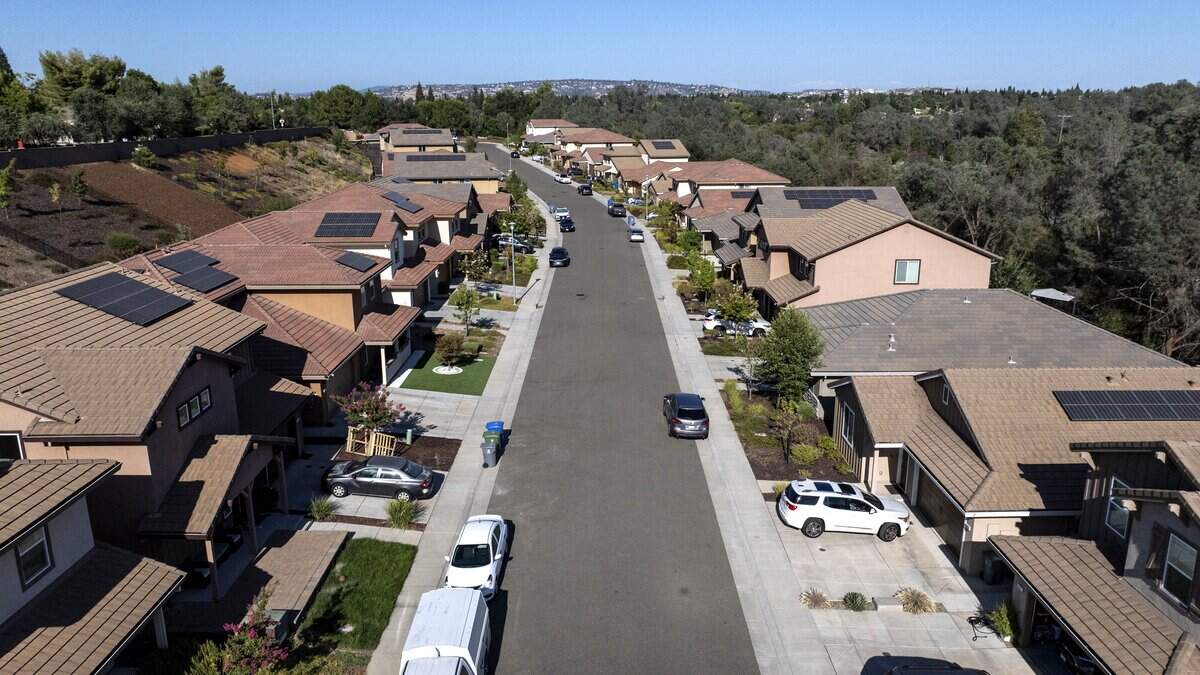
A decision made more than two decades ago forever changed Folsom, an eastern suburb of Sacramento known for its high-performing schools, robust trails and a slogan often echoed by city officials: “Distinctive by Nature.”
Read more Armed gangs went on another killing spree in Haiti, leaving a trail of dead
By approving Measure W in 2004, voters expanded the city’s limits south of Highway 50, triggering a wave of development that will bring roughly 13,000 homes to the area over three decades. Today, with about 5,000 of those homes built, around 10,000 residents already call this part of town home — that’s about 15% of the city’s entire population when Measure W passed.
Folsom’s population has since grown to 91,983, a 46% increase from an estimated 63,000 residents in 2004.
Growth remains a two-sided coin in Folsom. As city leaders like Mayor Justin Raithel generally support development that positions Folsom for economic stability, some residents argue poor execution can alter the suburb’s identity, leaving them feeling as though they’ve lived in two versions of the same city.
Bonnie London is one of them.
The newly minted grandmother first lived in Folsom during the 1990s but left before the end of the decade when her husband’s job took the family to Loomis. Her two oldest children went through the public school system, and she enjoyed the city’s outdoor amenities.
But when she moved back in 2023 to be closer to her grown son and give her youngest a spot in the Folsom Cordova Unified School District, she noticed something a little different — even with the top-rated schools and more than 50 miles of paved trails.
“The first observation is the south and north divide,” she said. “A lot of the north people blame the south for all of the growth, all of the traffic.”
A stretch of East Bidwell Street — a corridor near the Palladio shopping center connecting many newly built homes to the rest of the city — has seen a 78% increase in traffic since 2019, up to roughly 66,000 vehicles a day from about 37,000.
Meanwhile, the school district’s three high schools are projected to reach a combined 110% capacity by 2030, with Folsom High School possibly exceeding 140%. The suburb is also approaching its cap on preserved oak woodland south of the highway, even as more development applications are expected.
With those issues in mind, London and other concerned residents say they aren’t opposed to growth, but rather poor planning. Because development conversations south of Highway 50 span multiple decades, current city leaders find themselves balancing new proposals against inherited decisions, all while critics point to daily side effects.
These tensions took center stage in June when the 1,424-home Toll Brothers at Alder Creek project gained approval.
That Toll Brothers vote encapsulated south Folsom’s shrinking oak woodland. As construction crews come in, the city approaches its acreage cap for preserved trees south of the highway, causing some to question the city’s “Distinctive by Nature” slogan.
The new 464-acre development is expected to clear more than 100 acres of oak trees, according to the development’s application. That leaves the area just 29 acres away from hitting its 396-acre preservation threshold established in a plan outlining Folsom’s growth.
Councilmember Barbara Leary, a longtime environmental activist and the lone opposing vote on the Toll Brothers project, said applications calling for the removal of those 29 acres have already been submitted.
Leary was surprised by the number of trees being removed since developers must maintain 30% of land as open space. Having not been on the council in the early days of development south of Highway 50, Leary said, she assumed that would be the oak woodland, but that 30% can also include infrastructure like drainage canals.
The adaptable oak varieties are native to the capital region and, when mature, can often survive the hot, dry summers without being watered — something Leary points to when advocating for preserving the trees rather than planting new ones.
For Leary, the tree debate isn’t just about environmental policy. It touches the core of Folsom.
“People love our trails,” she said. “Our trails, for the most part, are tree-lined because who wants to walk in the sun throughout the summer?”
South Folsom already has paved trails, but those who live south of 50 say these paths won’t be the same as north of the highway. In Folsom’s northward Natoma Station neighborhood, many residents walk the Humbug Willow Creek Trail, a portion of nature Leary said was preserved in the 1980s when development started there.
Newer plantings may eventually offer that shade, according to Councilmember Sarah Aquino, who said development south of Highway 50 is still in its early phases.
“Landscaping takes a while to grow in,” she said. “Single-family homes always come first and the amenities — the schools, the shopping centers, the parks, the trails, all of that — follows.”
But the higher survival rate of the native trees in dry conditions stuck with Leary, who asked her colleagues to delay a vote on the development until another meeting. Her fellow council members didn’t back her up, giving residents like London something to point to.
“It kind of died right there, and they quickly just moved to approve it,” London said. “I’m just shocked by that.”
Aquino, who represents the neighborhood, said she didn’t support continuing the conversation because not much was left to be discussed.
“I think everyone was pretty well-versed on the project and had their questions answered by that point,” Aquino said.
Read more ‘The north and south divide’: Folsom feels effects of south of Highway 50 growth
Raithel said the Toll Brothers at Alder Creek project considered oak trees when planning roads, saying this recently approved proposal is better than some of the company’s previous applications.
“They came in much more open to saving a lot of these oaks because they see the value of them,” Raithel said.
Toll Brothers may have worked to preserve more oak trees than before, but this isn’t the last time Folsom will likely hear about preserving oak woodland. New industrial projects planned just south of Highway 50 near Prairie City Road still have to be approved, according to city spokesperson Christine Brainerd, potentially bringing additional tax revenue to a city struggling with deferred maintenance costs.
Once the final 29 acres are allocated, Brainerd said a developer would have to ask the City Council to amend the threshold and conduct an environmental review. Otherwise, projects would be denied or required to modify plans to accommodate existing oak woodland.
While the overarching tree debate still has time to play out, existing developments east of Alder Creek are putting immediate pressure on East Bidwell Street.
Just across the highway sits the Palladio — an outdoor shopping center with a movie theater, shops and restaurants that draw visitors from across the region. Nearby are a Costco and the Broadstone Marketplace, funneling regional shoppers directly onto East Bidwell Street.
When residential development started just south of this commercial corridor, concerns about traffic congestion became a reality. The number of vehicles increased 78% since 2019, up from about 37,000 a day to roughly 66,000.
The increase drove Chad Vander Veen and other residents on the other side of town to find restaurants and entertainment closer to home.
“We love the historic district … and it’s close to us,” said Vander Veen, who is running for City Council in the 1st District. “That’s just the easy solution for us.”
East Bidwell Street traffic has drawn broader concern from residents. In a survey of more than 1,000 Folsom residents conducted by Ideas for Change, addressing congestion at East Bidwell Street and Highway 50 received 100% support among participants.
These woes aren’t news to city staff, who met with residents last month to discuss possible solutions, such as new turn lanes and improved bicycle connections, that would be funded by nearby developer fees.
An interchange at Empire Ranch Road is also expected to start construction in 2028, according to the city’s website. Raithel said the interchange was supposed to be built when the Empire Ranch neighborhood was built out, but the funds went to build Folsom Lake Crossing — a project that started after the two-lane road atop Folsom Dam closed in the early 2000s.
“That’s going to pull some traffic away from that (East Bidwell Street corridor),” Raithel said.
Longtime residents north of Highway 50 can see new rooftops as the source of traffic and lost open space, but for newcomers it’s home.
Alayna Wagner lived south of Highway 50 for six years before moving to Roseville last month. She and her husband used an inheritance to buy a new home, hoping to use the money to provide their children with the best education.
It was an exciting place to live, Wagner said. There were lots of children and the community would celebrate festivities like the Fourth of July together.
“Everyone was just so close and so excited about the prospect of building a totally new community from the ground up, and all the benefits that came with that,” Wagner said.
And while she loved her community south of Highway 50, Wagner became concerned about the number of students in schools, and how that might affect her children’s education.
By 2030, FCUSD’s elementary schools could reach 86.2% capacity while the middle schools would be at 92% and high schools at 110%.
“There’s only so many spots on the basketball team, and so if you (increase) a school population, you’re not (increasing) that opportunity,” Wagner said.
To accommodate growth, the school district hopes to build seven new schools in the next decade, including two high schools. However, if class sizes exceed expectations, students could be assigned to a different school within the district — a move that coincides with reduced bus stops in recent years.
“A school can reach a point where there are no additional classrooms available,” district spokesperson Angela Griffin wrote in a statement. “At that point, students will be enrolled at another district school with available space.”
But uncertainty about Folsom’s schools coincides with the traffic and environmental concerns. Residents like London are left wondering how Folsom will look in a decade or two. For her, it’s partly about her new grandson.
Read more Regional Transit is reimagining Roseville Road station access. Here’s how to weigh in
“It’s not the same,” she said.