 By admin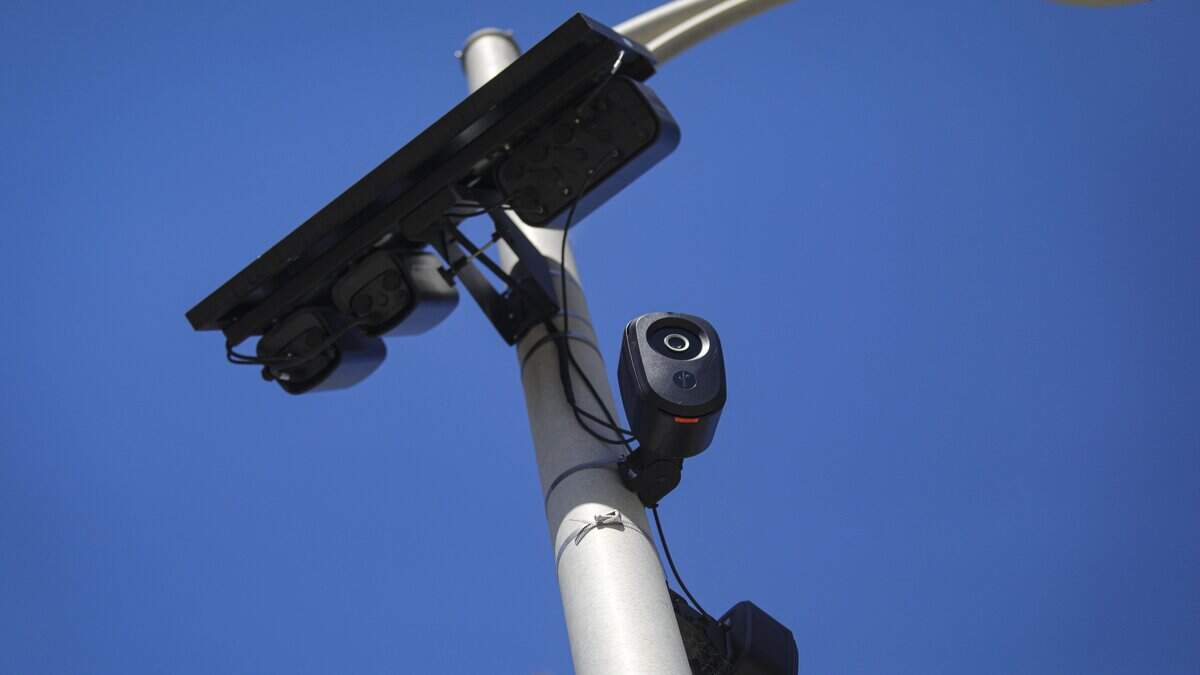
In cities across California, more than 16,000 automatic license plate readers are collecting data about vehicles.
Cameras manufactured by Flock Safety are among the most common tools used to track vehicles and collect information, storing records for users to search. Clients include local governments, public agencies and private companies.
More than 100,000 Flock cameras have been installed around the country since 2017, when the company first started rolling out prototypes.
Reports of law enforcement misuse of the surveillance technology have also increased.
So far, at least 69 police officials have been accused, charged with or convicted of misusing Flock’s system or other license-plate readers for “unauthorized purposes” such as tracking a spouse, The Washington Post said.
As tensions rise around the use of Flock cameras and government surveillance, the United States has seen an increase in the destruction of the cameras, according to The Post.
In 2026, multiple Flock cameras in California were vandalized, torn down or destroyed by civilians leading to arrests in Sacramento County, Monterey County, Placer County and Alameda County.
Can you get arrested for blocking, covering or otherwise tampering with surveillance equipment in California? What are the penalties for damaging a security camera?
Here’s what California state law says:
What are Flock cameras?
Flock cameras are automatic license plate readers manufactured by Flock Safety that help “authorized users” “find information relevant to an incident,” the safety company said.
Agencies and other entities that use APLRs include law enforcement and fire departments, as well as schools, residential communities, businesses and parks and recreation departments.
Flock cameras are used to:
- Record vehicle sightings at a specific place and time
- Capture license plates and vehicle characteristics
- Help authorized users find relevant vehicle evidence
- Provide leads for investigators to assess alongside other evidence
Data collected by Flock cameras are controlled by their owners and automatically deleted after a week unless a law or authorized investigation requires information to be saved, according to Flock Safety.
Flock said it “does not contract with the U.S. Immigration and Customs Enforcement and Palantir,” a software company that partners with government and commercial clients.
According to Safe and Sound Security, Flock Safety products can be leased between $2,500 and $35,000 a year per product, with an installation fee of more than $250, depending on the product.
Replacing Flock camera equipment specifically due to vandalism can cost up to $5,000 per camera, according to Flock Safety.
How many Flock cameras are in California?
DeFlock, an organization that raises awareness about automatic license plate reader technology, has mapped a total of 135,955 license plate readers across the United States.
Parts of California had some of the highest numbers of Flock cameras per capita in the United States as of Wednesday, Aug. 26, according to an interactive map created by DeFlock.
The Sacramento County Sheriff’s Office and police departments in Sacramento, Elk Grove, Folsom and Galt, use automatic license plate readers, The Sacramento Bee previously reported.
According to Flock Camera Locations, a website tracking flock cameras and updating its data continuously, there were 292 Flock cameras within a 10-mile radius of Sacramento as of Thursday, Aug. 27.
There were about 200 Flock cameras and automatic license plate readers in San Luis Obispo County and the Fresno area as of Thursday.
In Modesto, more than 100 cameras and readers were reported on Flock Camera Locations and more than 30 in Merced.
Can I get arrested for tampering with a Flock camera?
Covering or blocking a Flock camera’s view without damaging it is a “gray area,” according to the Law Office Of Sheny Gutierrez.
However, people can still face vandalism, tampering, trespass or theft allegations, the Santa Ana law firm said.
When a Flock camera is altered by someone other than the owner, that’s considered vandalism under California law.
California law makes it “a crime to maliciously deface, damage, or destroy property belonging to another person or entity,” according to the Law Office of Sheny Gutierrez.
What are penalties for vandalism in California?
In California, you could face a misdemeanor if you’re caught causing less than $400 of damages to property.
That’s punishable by up to a year in county jail, a fine up to $1,000 or both.
If you’re convicted of vandalism more than once, the fine could reach as high as $5,000.
If you’re convicted of causing more than $400 in property damages, you could be sentenced to up to three years in jail and a maximum fine of $10,000.
Damages exceeding $10,000 can result in a $50,000 fine.
If you’re caught vandalizing property with graffiti, you could be expected to clean, repair or replacing the damaged property.
Parents could be legally held responsible if their minor child is convicted of vandalism.
A minor may be required to “keep the damaged property or another specified property in the community free of graffiti for up to one year,” according to California law.
Other charges such as trespassing, conspiracy, theft and charges tied to fire risk can be added to cases of vandalism, according to the Law Office of Sheny Gutierrez.