 By admin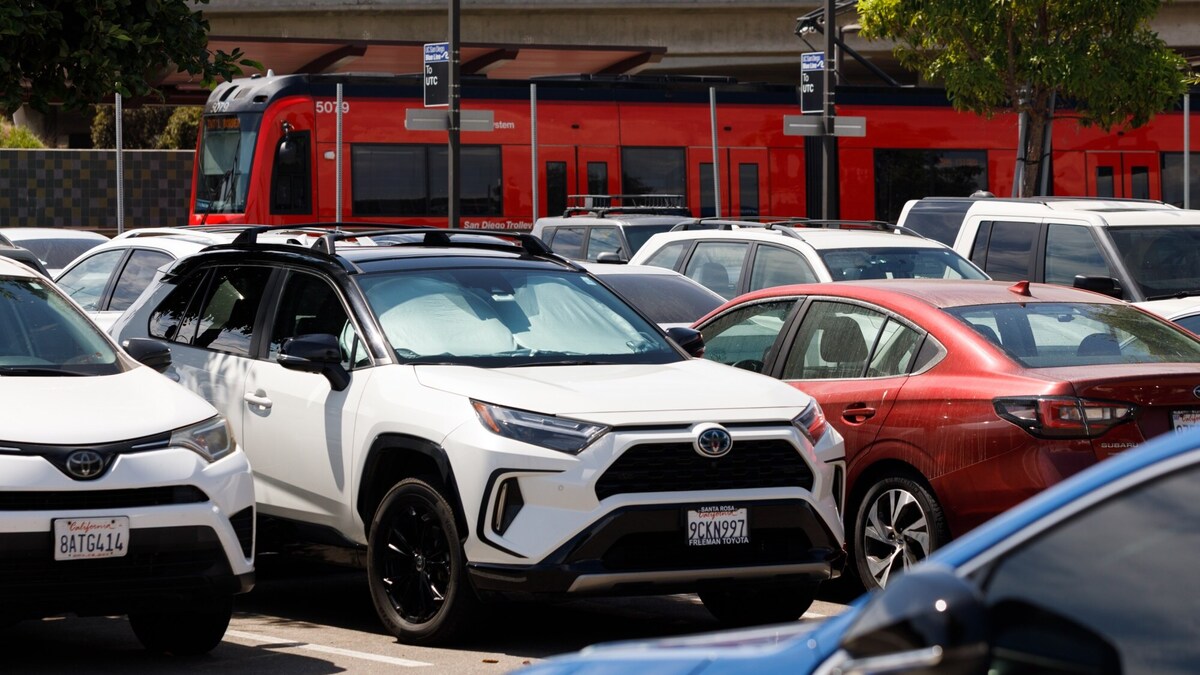
Rising demand is prompting San Diego transit officials to keep expanding park-and-ride options, simultaneously showing the potential of local transit but also the need for more convenient trolley and bus stops.
Read more Prepping your fall garden? Learn about Sacramento’s frost dates, what to plant now
Transit advocates call the park-and-ride lots a necessary evil that could be eliminated once the region’s transit system has expanded enough to allow more people to walk or bike to transit instead of needing to drive to stations.
While the lots might go away someday, transit officials have a different long-term plan: transforming many of the lots into mixed-use projects with high-rise housing above ground-level parking for transit users and residents.
Several projects of that kind have already been completed – including a seven-story apartment building at the Rancho Bernardo Rapid Bus Station that opened earlier this year – and several more are in the planning stages.
Park-and-ride lots have become a bigger part of the trolley system during the five years since the Blue Line was extended north from Old Town to La Jolla and University City.
Some of the park-and-ride lots along the extension fill up completely during peak periods – particularly the lots at the Nobel Drive, Balboa Avenue and Tecolote Road stations.
And the Metropolitan Transit System added a 145-space park-and-ride lot at the Clairemont Drive station in July. The lot is only about 10% full on typical days so far, but MTS officials said they expect usage to steadily grow.
Those lots, which allow many people to more easily use transit who otherwise couldn’t, have helped boost overall MTS ridership enough that it’s almost back to pre-pandemic levels.
Bill Long, who lives in Escondido and works in Old Town, frequently parks at the Tecolote station and rides the Blue Line to Padres games downtown.
“It’s very convenient,” he said just before boarding the train Monday afternoon.
At the Balboa Avenue station a bit farther north on the Blue Line, Maria Sanchez exited the trolley and headed to her car that afternoon.
Sanchez says she parks there and takes the train to her job at the VA Medical Center in La Jolla, where parking is scarce.
Transit advocates say there are two sides to those stories: A primary goal of transit is getting people out of their cars to reduce greenhouse gases. But San Diego’s transit system is so incomplete, driving to stations continues to be necessary for many users.
“Ideally, we want to see as little park-and-ride as possible,” said Leif Gensert, who helps lead RideSD. “But we can acknowledge the reality that the trolley doesn’t go everywhere, and bus coverage is a bit spotty.”
Park-and-ride lots have always been part of the MTS system. Some of the busiest are at the Iris Avenue station near Imperial Beach, the Grantville station, Old Town and two National City stations – Eighth Street and 24th Street.
Read more Sacramento weekend roundup: Sac City Unified fiscal fight, Folsom Boulevard fire and more
Overall usage of the nearly 6,000 total parking spaces at MTS park-and-ride lots hovers around 60% during peak hours. While that might seem to suggest that some of the lots could be smaller, MTS officials disagree.
“It’s important to recognize that park-and-ride facilities are not designed solely for average daily demand,” said Mark Olson, MTS director of marketing and communications. “Maintaining capacity is critical for accommodating periods of surge ridership when San Diegans and visitors choose transit to avoid traffic and parking challenges.”
He pointed to events like Comic-Con, Padres games, concerts and festivals. When someone tries transit as an option, MTS doesn’t want them to struggle to find a parking spot.
“Available parking helps ensure customers have reliable access to the trolley and bus network during these high-demand periods,” he said.
But when demand is relatively low at some lots, MTS often leases out some of the spots. For example, 50 spots at the Grossmont Center station have been leased to the county, and 50 spaces at the Morena station have been leased to Jewish Family Service.
There are also sometimes complaints and problems.
Olson said MTS officials are trying to work out a deal with the Westfield UTC mall in University City to allow transit users to park there and avoid a fee paid by shoppers. He said the problem is that the MTS parking area is “nested” inside the UTC parking area.
Gensert, the transit advocate, said another problem is the Nobel Drive station, where he contends too many spots are devoted to retail only and too few are devoted to park-and-ride.
“We get lots of complaints that the parking garage is empty, but trolley users can’t park there anyway,” Gensert said.
MTS has big plans for many of the lots, contending that high-rise projects on them help solve the local housing crisis while also boosting ridership because they put thousands of new residents at major transit stops.
“MTS is taking a long-term approach to maximizing the value of its transit properties by reimagining select park-and-ride locations as transit-oriented development projects that integrate housing, commercial uses and transit access,” Olson said.
The transit agency has completed housing developments at the Grossmont Transit Center, Morena/Linda Vista, Grantville, Encanto/62nd Street and other locations. More projects are planned for 12th & Imperial downtown, Spring Street in La Mesa, E Street in Chula Vista and Palm Avenue and Beyer Boulevard in south San Diego.
“As travel patterns and ridership continue to evolve, MTS will continue evaluating parking utilization across its system to ensure customers have access to transit while advancing thoughtful development,” Olson said.
Read more Back in Big Ten, Katin Houser all-in at Illinois, opens with UAB
Copyright 2026 Tribune Content Agency. All Rights Reserved.
This story was originally published August 31, 2026 at 5:12 AM.