 By admin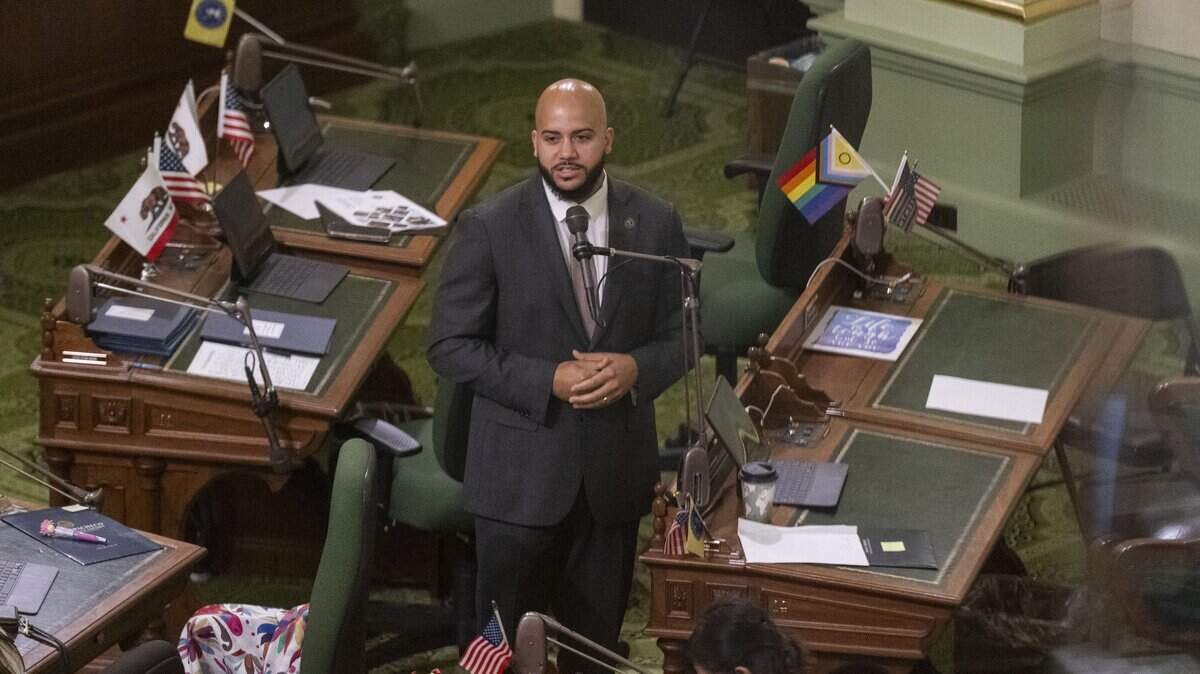
When the clock struck 11:45 p.m. Monday evening, Assemblymember Isaac Bryan, D-Jefferson Park, was already on the floor of the California Senate, waiting with his arms folded for his bill regulating ticket sales to be heard. He only had a short time for the measure to pass or it would die.
Read more California lawmakers try — again — to put restrictions on use of ‘robo bosses’
Assembly Bill 1349 would prohibit sellers from marketing or offering tickets to sporting events or concerts by people that don’t actually have them. Bryan is an avid concert-goer and said he has been the victim of so-called speculative ticket sales. But the bill faced strong opposition and he had filed amendments at almost the last possible moment.
The measure needed to be approved by the Legislature before Sept. 1, but it was only eligible for a vote just 15 minutes before that deadline. So, Bryan said he worked with Senate and Assembly staff to quickly get the bill from one chamber to the next.
“Let’s go,” Bryan said after the measure passed the Senate in less than two minutes. An Assembly clerk had to carry a paper copy of the bill out of the chamber and physically take it to the other house. The assemblymember and several of his staff began to run, cutting through lobbyists huddled under the Capitol dome and to the door of the Assembly, where the clerk prepared the bill.
Bryan introduced the measure moments later.
It would also make it unlawful for people to use bots or other automated systems to evade electronic waiting periods to secure tickets or get around purchase limits. The measure faced strong opposition from StubHub, the online marketplace where tickets can be bought and sold. The company has spent more than $3 million in lobbying California lawmakers and the state Department of Justice so far this year and AB 1349 was one of its targets.
Read more California lawmakers try — again — to put restrictions on use of ‘robo bosses’
The measure had faced criticism from the National Independent Venue Association, a trade group representing concert venues. Stephen Parker, the group’s executive director, in a statement said it failed to stop “the sale of ghost tickets.”
“It puts the small business and nonprofits that put on shows every night at risk,” he added. “It endangers fans’ economic wellbeing. Lawmakers that care about preserving live music and performance should have voted against this bill.”
The efforts to sway lawmakers didn’t work. The measure easily passed the Assembly, with more than six minutes to spare. It now heads to Gov. Gavin Newsom who has until the end of September to decide its fate.
“I knew, whatever happens, we needed to run to move with urgency,” Bryan said after. “You can’t take a minute for granted.”
Read more California becomes first state to pass electroshock gloves ban for law enforcement