 By admin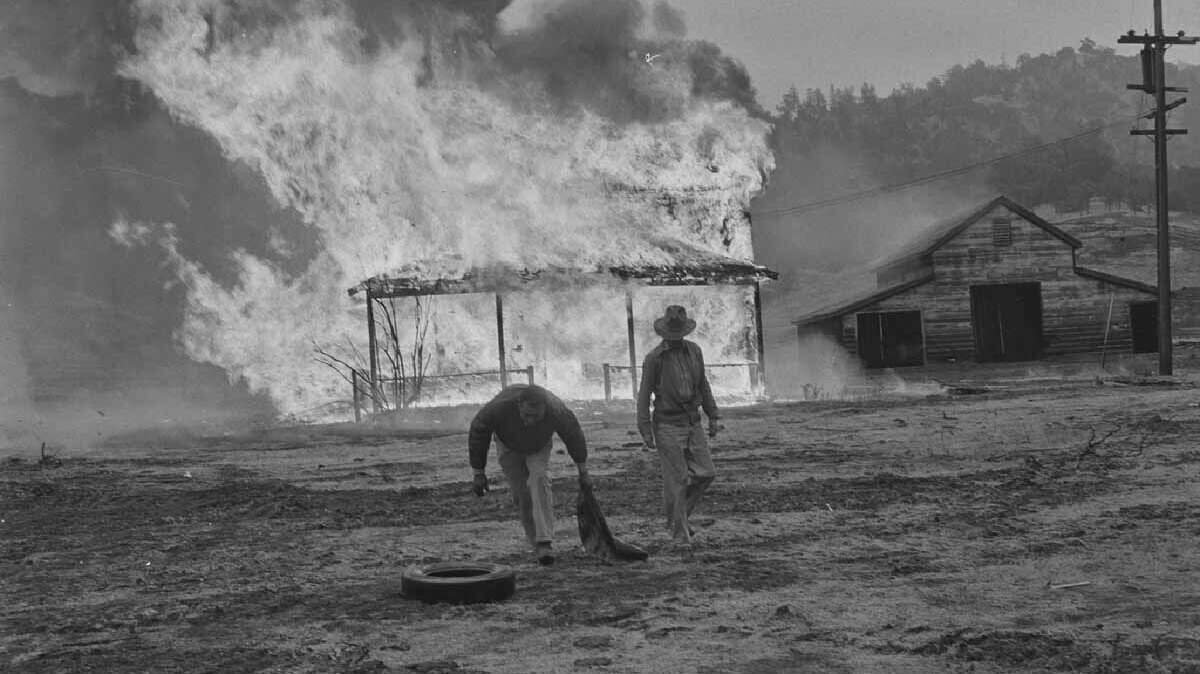
Patrick Scribner has only limited memories of what, for generations, was home to his ancestors.
Read more What are former Israeli soldiers doing in a Cal Poly classroom? | Opinion
His family lived in Monticello, a former ranching community of around 300 people in Napa County that dated to the mid-19th century. It was razed in 1956 and submerged after the construction of Monticello Dam to create Lake Berryessa. Today the lake provides water for much of Solano County.
Scribner was born in 1952 in Esparto, not long after his immediate family left Monticello. He remembered going to his grandparents’ Grecian Revival home, the Scribner Mansion, as a young child. His father didn’t offer hints as to where the foundations of the house wound up under the lake.
“I never knew where the house was and where the buildings were and he would never speak of it,” Scribner said. “It was that painful.”
Roughly 70 years on from the submersion of Monticello and the Berryessa Valley, the former town is seeing new life online. UC Santa Cruz recently published an archive of 3,200 pictures made by groundbreaking photographer Dorothea Lange and Pirkle Jones. The project, titled “Death of a Valley” by its creators, chronicled the final year of Monticello’s existence.
The images are a haunting reminder of the price of change.
The town of Monticello
Monticello was located on Putah Creek about 9 miles northwest of the dam that now bears its name.
At that time, Highway 28 (later renamed Highway 128) ran along the floor of the southern end of the valley.
Just east of the creek – which was crossed by a stone bridge built in 1896 – Monticello’s main street branched north from the highway near Gunn Ranch.
Not much remains today of Monticello. The government razed or burned its buildings to keep them from becoming underwater hazards in the lake.
While foundations and roads subsumed by Lake Berryessa have resurfaced in drought, the old town largely exists in two places: Jones and Lange’s photos, and the memories of the people who once called it home.
Janice Gauthier, 82, said her family was among the last people to leave Monticello in 1956.
“It was a great time growing up in Monticello, that’s all I can say,” Gauthier said. “It was fresh air. We had a great school and the teachers were usually husband and wife and they always became close friends with my family. In fact, they still were until they passed a few years ago.”
She noted that the town had its own forestry department and community center.
George Griffin, 63, grew up in Winters, where several generations of his family have lived and where some former Monticello residents moved after the town vanished.
“I’ve had people tell me that it was just as pretty, just as nice as Napa Valley. And if it hadn’t got flooded, it might have been another one of those,” Griffin said.
Griffin described Monticello as “kind of a cowboy town.” It had a popular rodeo run by Scribner’s family. The land was also fertile, good for vineyards or wheat when it wasn’t being used for cattle. “We had the best soil anywhere,” said Gauthier, whose family owned 200 acres. “It was just unbelievable.”
Monticello was one of many towns or settlements lost to dam projects in the United States in the 20th century.
Historic settlements that were submerged by other dams near Sacramento include Mormon Island and Salmon Falls, which were subsumed around 1955 by Folsom Dam; Camanche and Lancha Plana, which were lost to Camanche Dam in 1964; and Bidwell Bar, Enterprise and Las Plumas, all displaced in 1968 by Oroville Dam.
The last major dam built in California, which created New Melones Lake, was completed almost 50 years ago. It submerged the old mining town of Melones and the original Melones dam.
The proposed Sites Reservoir would inundate the small community of Sites if the controversial project is constructed. A wildfire burned much of the town in the 1960s, but the new lake would displace 17 potentially historic residences and two cemeteries, according to the project’s environmental documents.
More than 300 former communities and 65,000 people across the U.S. have been displaced by dam projects, according to the website The Atlas of Drowned Towns.
“I would categorize them as marginalized places, which makes them easier to displace than someplace with deeper and more politically, culturally and economically powerful roots,” said Bob Reinhardt, an associate professor at Boise State who heads up the online atlas.
Monticello residents resisted when the government began its efforts in the late 1940s to take land for the reservoir.
Scribner’s uncle, Stanford-educated mining engineer Thornton Scribner, made a trip to Washington, D.C., in 1948 in a futile bid to save the town. He suggested construction of a smaller series of dams on Putah Creek, according to his son Jim Scribner, who is 92 and lives near Oroville.
In the end, it was all for naught, leaving families like Gauthier’s to hold out as long as they could.
“You didn’t sell,” Gauthier said. “They just took it and gave you what they thought it was worth.”
The dam was completed in February 1957 at a cost of $47 million, according to The Sacramento Bee. That May, the paper wrote about road closures needed because “boating and water skiing enthusiasts had been flocking to the new lake.”
Witnessing the end of Monticello
Rep. Mike Thompson, D-Napa, grew up near Monticello in Saint Helena and was about 6 when the dam was completed and the valley began to fill with water.
Read more New engineering building at Sac State is good news, not just hype | Opinion
Thompson remembers going into the valley with his father while the dam was under construction. His father parked his truck by a store and spoke with men who had heavy equipment and were working on the project.
“I think the history of any area is important for a whole bunch of reasons,” Thompson said. “I think we need to honor our ancestors and have a clear understanding of what took place before we got here.”
Thompson noted that he has extensively toured the potential area for Sites Reservoir, which he said could be located in his district. “When that goes in, that’s going to change the countryside,” Thompson said. “There’ll be bridges and roads and things of that nature under that as well.”
Notably for Monticello, the stone Putah Creek Bridge that dates to 1896, submerged deep under Lake Berryessa, has been visited by SCUBA divers.
Jones and Lange also witnessed Monticello’s coda. They were commissioned by Life magazine to photograph the doomed town and surrounding valley.
Lange was already famous as a photographer. She is best known for “Migrant Mother,” her 1936 photo of itinerant laborer Florence Owens Thompson and her children. Jones, who was nearly 20 years younger than Lange, had studied under celebrated photographer Ansel Adams.
The two spent a year on the assignment. Drew Johnson, a curator for the Oakland Museum of California, which holds Lange’s collection, shared Adams’ description of her work ethic.
“He said that Dorothea had a way of making you feel guilty that you weren’t as committed as she was,” Johnson said.
For his part, Jones told the publication Art & Antiques late in his life, according to his 2009 New York Times obituary, that he “always thought of my career as a bridge between the classic photography of Ansel Adams and the documentary work of Dorothea Lange.”
After Life magazine passed on publishing the photos from Lange and Jones, some of the photos were published in Aperture magazine for its fall 1960 issue.
“It’s an extraordinary document of a moment in time and the type of growth that was happening in California at that time,” said Teresa Mora, head of special collections at UC Santa Cruz, which scanned the collection several years ago and made them available online late last year.
Monticello today
The Monticello Public Cemetery was moved to the small Napa County community of Spanish Flat, near the banks of Lake Berryessa, ahead of the submersion of Monticello. Today the cemetery is a tribute to the former town.
Generations of families stayed in the Monticello area for ranching or other purposes. Surnames like McKenzie, Adams and Scribner make frequent appearances on headstones at the roughly 600-grave cemetery, which is still allows burials of descendants of the town or people who live nearby.
Spanish Flat was intended to be a new version of Monticello, but it hasn’t worked out that way. The area has the feel of a ghost town and shows how hard it can be to recreate a sense of place or community in a new destination. Sometimes, the magic is simply gone. Practical challenges have also confounded Spanish Flat.
“They have infrastructure problems,” Thompson said. “There was a pretty sizable housing component built on the lake and they don’t have the water resources that they need for that. So utilities are real high.”
Thompson added that wildfires have burned the area in recent years, leading him to believe that rates for home insurance were unaffordable. Burnt trees dot the hillside near the cemetery.
Time has reduced the number of living Monticello residents. The community went in different directions as the town’s demise approached.
“Both of my dad’s best friends ended up going elsewhere,” Griffin said. “They were farming families and they were trying to buy land someplace that they could afford with what the government gave them for what was buried or flooded.”
Griffin is board president of the Historical Society of Winters, located in a building that the U.S. Bureau of Reclamation constructed when it built the dam. The society has a room devoted to Monticello.
“The most important thing … is recognizing that the things we do for public work projects has a cost beyond the taxpayer dollars because it displaces other people,” Griffin said. “You build a freeway, you displace people. You try to build high-speed rail, it displaces people. You build a lake, it displaces people.”
“And those people had lives there and some of them for a very long time,” Griffin added.
Residents of the former town now gather at Monticello Public Cemetery.
“We have a reunion every year, a Memorial Day there, those that are left,” Gauthier said. “This year, it was very sparse.”
Gauthier serves on the board of the Monticello Public Cemetery District. So does Patrick Scribner, who was so young when Monticello was inundated with water that he doesn’t remember the area beyond the visit to his grandparents’ house.
“It’s been so long I think it’s kind of faded in the past,” he said. “What keeps us together are the people. So that’s why I think these Memorial Day get-togethers are so important.”
Gauthier suspected that the recent Memorial Day gathering would be the last one. But it won’t be her last time in the cemetery. She has a plot to be buried there. So does Patrick Scribner.
Read more How many smoke shops in Sacramento are selling addictive, illegal products? | Opinion
“I wouldn’t pick any other place, to be honest with you,” he said.
Photo editing and presentation by The Bee’s Hannah Ruhoff and Nathaniel Levine.